

Why Air Duct Repair Could Be the Best Home Fix You’re Overlooking
Air duct repair is the process of sealing, patching, or replacing damaged sections of your home’s ductwork to restore proper airflow and HVAC efficiency. Here’s a quick overview of what you need to know:
- Common signs you need it: Uneven room temperatures, high energy bills, dusty vents, weak airflow, or musty smells
- DIY options: UL 181 foil tape and mastic sealant work well for small, accessible leaks
- Professional methods: Internal sealing technology and rubberized duct lining for larger or hidden damage
- Typical cost: $200-$1,000 for repairs, averaging around $600
- Potential savings: 10-20% reduction in monthly heating and cooling bills
- When to replace instead: If ducts are over 20 years old or repair costs exceed 50% of replacement
Your HVAC system works hard — especially during Florida’s long, brutal summers. But if your ductwork is leaking, according to the U.S. Dept. of Energy, up to 30% of your conditioned air could be escaping before it ever reaches a single room. That means your AC is running longer, working harder, and costing you more, while your home still feels uncomfortable.
The good news? Many air duct problems are fixable. Some you can even handle yourself on a Saturday morning.
Air Shield Heating & Cooling brings decades of hands-on HVAC experience to air duct repair and installation across Manatee County and nearby Florida communities. In this guide, you will learn how to spot, fix, and help prevent common duct problems so conditioned air reaches the rooms where it belongs instead of leaking away.
Recognizing the Signs You Need Air Duct Repair
Most of our ductwork is tucked away in attics, crawlspaces, or behind drywall. Because it is “out of sight, out of mind,” many homeowners in areas like Bradenton and Sarasota don’t realize their ducts are failing until the AC stops keeping up with the Florida humidity.
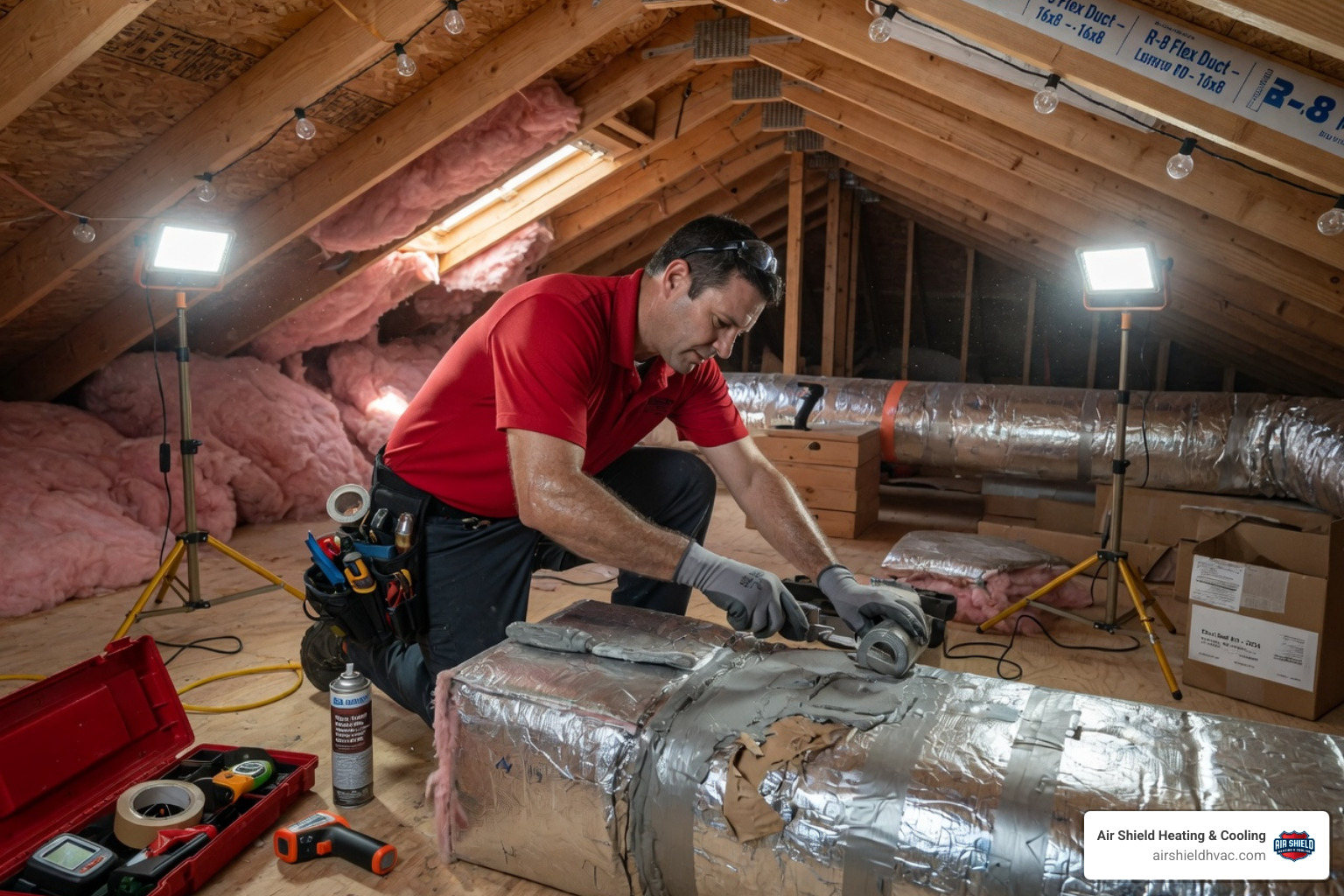
If you aren’t sure whether your system needs attention, look for these common “red flags”:
-
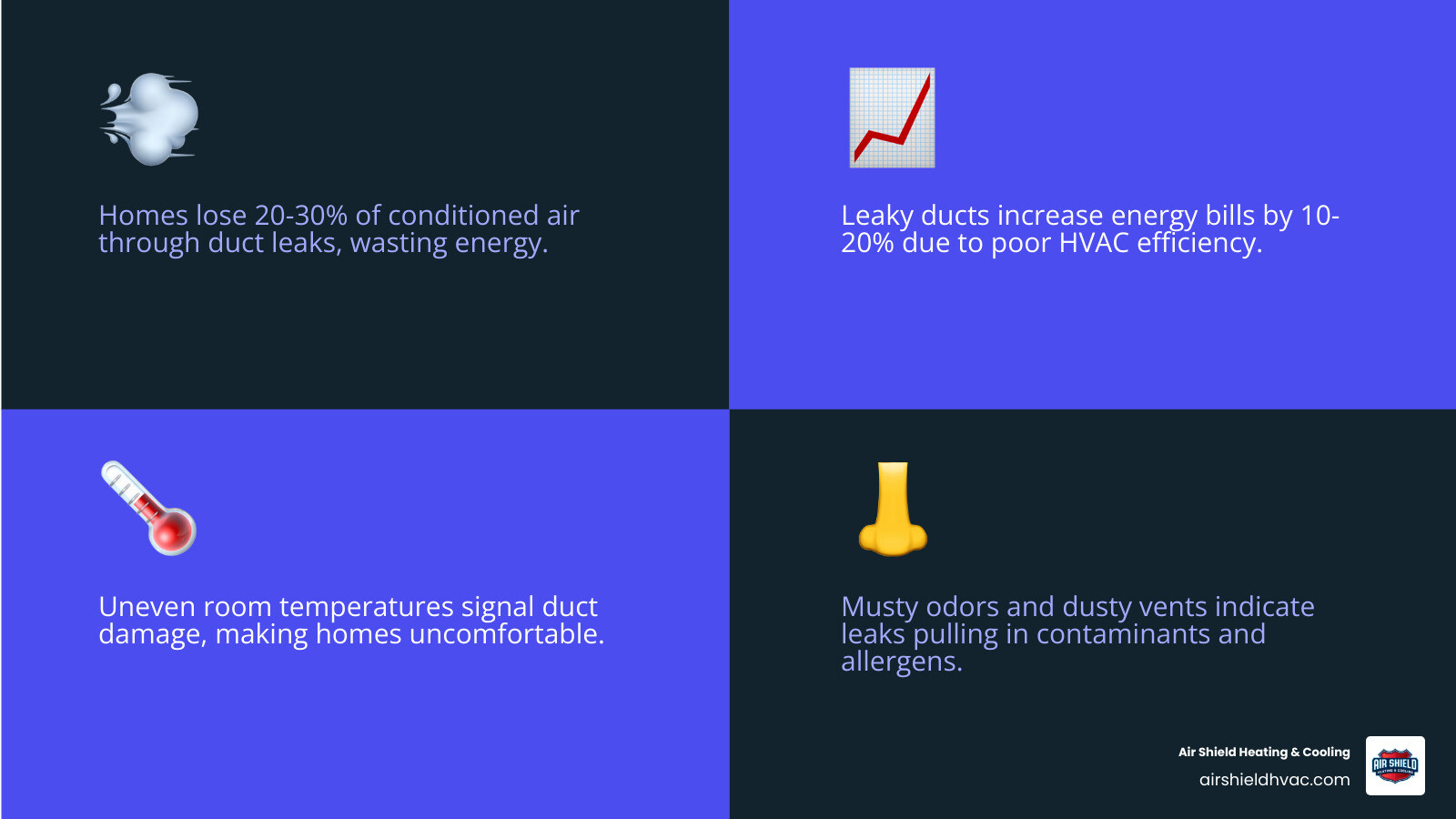
Uneven Temperatures: Does your main bedroom feel hot while the living room stays chilly? If some rooms are much warmer or cooler than others, you may have a disconnected duct or a serious leak that keeps conditioned air from getting where it should go.
-
Sky-High Energy Bills: Have you asked yourself, is leaking air conditioning ductwork costing you money? In many homes, the answer is yes. When 20-30% of conditioned air escapes into spaces like the attic, your HVAC system has to run longer to hit the thermostat setting, which raises monthly energy costs.
-
Dust That Never Goes Away: If you are dusting every few days and it still does not seem to help, gaps in your return ducts may be the problem. Those openings can pull in attic dust, insulation particles, and allergens, then circulate them through your home.
-
Unusual Noises: Rattling, whistling, or flapping sounds can point to loose duct connections or damaged sections. A whistling noise often means air is escaping through a small pressurized gap.
-
Musty or Moldy Odors: In humid climates like Florida, leaking ducts can pull in damp air from unconditioned areas. That extra moisture can lead to condensation and create the conditions for mold growth inside the duct system.
-
Pest Infestations: Rodents and insects often take advantage of the dark, sheltered space around ductwork. If you notice droppings, nesting material, or signs of chewing near registers, pests may have found a way into the system.
DIY Methods for Minor Ductwork Fixes
If your ductwork is easy to reach, such as in an open attic or utility room, you may be able to handle small air duct repair jobs on your own. But the materials matter. Skip regular “silver” duct tape from the hardware store. It usually breaks down fast, and the adhesive often fails when exposed to heat.
For a lasting DIY fix, we recommend:
- UL 181 Foil Tape: This is a professional-grade, heat-resistant tape specifically designed for HVAC systems. It creates a permanent bond and can withstand the high temperatures of a Florida attic.
- Mastic Sealant: This is a thick, gooey paste that you apply with a paintbrush or a caulk gun. It is the gold standard for sealing gaps.
- Fiberglass Mesh: For gaps larger than 1/4 inch, you should apply a layer of mesh tape before slathering on the mastic. This provides structural reinforcement so the sealant doesn’t crack over time.
Before you start, make sure you follow proper ductwork repair & installation safety. Turn off your HVAC system at the breaker before working on it, and wear gloves and a mask to protect yourself from dust and insulation fibers.
Sealing Small Leaks During DIY Air Duct Repair
To fix a small leak, start by cleaning the surface of the duct with a damp cloth to remove dust. If the surface is dirty, the tape or mastic won’t stick.
- Using Foil Tape: Wrap UL 181 foil tape snugly around the joint and let it overlap slightly. Press it down firmly by hand or with a plastic squeegee so you remove bubbles and get a better seal.
- Using Mastic: Spread mastic over the seam in a layer about as thick as a nickel. If you’re wondering why ductwork repairs improve airflow, it is because tight seals reduce air loss and help more conditioned air reach your vents.
- Latex Sealant: Some homeowners use water-based latex sealant because it stays flexible after it dries. That can help on ducts that vibrate or slightly expand and contract over time.
When to Skip DIY and Call a Professional for Air Duct Repair
While we love a good DIY project, some situations require specialized equipment and training. You should call us for a professional evaluation if:
- The Ducts are Inaccessible: If your leaks are located between floors or deep inside wall cavities, DIY methods won’t reach them.
- Major Collapses: If a flexible duct has been crushed or a metal trunk line has completely disconnected, it often requires custom-fabricated parts for a proper fix.
- Mold Remediation: If you see or smell mold, do not attempt to clean it yourself. Disturbing mold spores can spread them throughout your home.
- Safety Risks: Working in a 130-degree attic in July is dangerous. Heat exhaustion is a real threat in Manatee County.
- Testing Needs: Only a professional can perform a “Duct Blaster” test to quantify exactly how much air you are losing and where the hidden leaks are.
Professional Techniques and Advanced Sealing Solutions
When we come to your home in Lakewood Ranch or Parrish, we don’t just slap on some tape. We use a comprehensive approach to ensure your system is performing at its absolute peak.
| Feature | Traditional Mastic Sealing | Internal Sealing (e.g., Aeroseal) | Rubberized Lining (Duct Armor) |
|---|---|---|---|
| Application | External (applied to joints) | Internal (aerosolized) | Internal (coating) |
| Best For | Visible, accessible leaks | Hidden leaks in walls/floors | Deteriorating in-slab ducts |
| Durability | High (15-20 years) | Very High (25+ years) | Extreme (15-year warranty) |
| Cost | Lower | Moderate | Higher |
Our process usually starts with an inspection where we follow a guide to ductwork installation steps in reverse to pinpoint where the system has failed.
One of the most effective professional methods is internal sealing technology. We block off all your registers and inject a pressurized, aerosolized sealant into the ductwork. The particles are drawn to the leaks by the escaping air, where they stick to the edges of the holes and build up until the gap is completely sealed — even if that gap is hidden behind a brick wall!
For homes with underground or in-slab ducts — common in older Florida builds — we often use Duct Armor. This is a rubberized lining that coats the inside of the duct, sealing leaks and encapsulating any debris or old asbestos, essentially creating a “new” duct inside the old one without tearing up your concrete floors.
Finally, we perform Manual D calculations and airflow balancing. This ensures that every room receives the exact volume of air it was designed for, preventing those annoying hot and cold spots.
The Financial Impact: Costs, Savings, and Rebates
Many homeowners hesitate to schedule air duct repair because they fear the price tag. However, when you look at the numbers, sealing your ducts is one of the few home improvements that actually pays for itself.
- Repair Costs: Fixing minor leaks and disconnected joints typically ranges from $200 to $1,000. For most of our customers in Bradenton, the average is around $600.
- Monthly Savings: Sealing a leaky system can reduce your heating and cooling bills by 10% to 20%. In a state where the AC runs almost year-round, those savings add up fast.
- HVAC Lifespan: When your ducts leak, your AC has to work harder. This leads to premature wear and tear on the compressor and fan motor. By fixing the ducts, you can add years to the life of your expensive HVAC equipment.
- Rebates: Depending on your utility provider (like Duke Energy or FPL), you may be eligible for rebates. For example, some programs offer up to $400 toward the cost of duct repair per HVAC system if specific efficiency thresholds are met.
It is especially important to consider how to handle ductwork repair before winter. Even though Florida winters are mild, a leaky duct system still wastes energy when the heat is running, and drier air can make dust and allergen problems more noticeable.
Frequently Asked Questions about Ductwork
How long does residential ductwork typically last?
Most residential duct systems last about 20 to 25 years. That said, flex ducts in hot, humid attics often wear out sooner and may start sagging or breaking down in 10 to 15 years. In older homes, ductwork repairs improve airflow in older homes by addressing long-term settling, loose connections, and material wear. If the outer jacket on flex duct looks brittle, cracked, or flaky, the ductwork may be near the end of its service life.
Can leaky ducts affect my indoor air quality?
Yes. Leaky ducts can do more than waste energy. They can also pull dust, insulation particles, allergens, and other pollutants from attics, crawlspaces, or wall cavities into your system. That means the air moving through your home may be less clean than it should be. Sealing those leaks helps keep conditioned air on track and reduces the chance of contaminants entering the duct system. If buildup is already present, professional air duct cleaning after repairs can help remove lingering debris.
Is it better to repair or replace old air ducts?
We generally follow the “50% Rule.” If the cost of repairing your ducts exceeds 50% of the cost of a full replacement, it is usually better to start fresh. You should also consider replacement if your ducts are over 20 years old, have significant mold growth, or are made of outdated materials like “gray flex” ductwork, which was prone to premature failure and is no longer recommended.
Conclusion
Your home’s ductwork is the “circulatory system” of your HVAC. If it’s clogged, leaking, or broken, your entire system suffers — and so does your wallet. Whether you decide to try some DIY sealing with UL 181 tape or you need the advanced internal sealing technology that only a pro can provide, taking action now will make your home more comfortable and energy-efficient.
At Air Shield Heating & Cooling, we’ve been serving our neighbors in Bradenton, Sarasota, and throughout Manatee County since 2014. As a family-owned and veteran-operated business, we take pride in providing honest, high-quality work. We offer free estimates, 24/7 emergency response, and special discounts for our fellow veterans.
Do not spend another summer paying to cool your attic instead of your living space. If you are ready to see how professional ductwork repair & installation can improve comfort in your home, contact our ductwork repair specialists today. We will help you stay cool and avoid wasting money.