
The cost to replace HVAC ductwork is one of those home maintenance topics that stays “out of sight, out of mind” until your energy bill spikes or your bedroom feels like a sauna while the rest of the house is freezing. As we move into April 2026, understanding these costs is more important than ever, especially with updated energy standards and shifting material prices.
Whether you are in Bradenton, Sarasota, or Lakewood Ranch, the humidity of our Florida climate puts unique stress on your air distribution system. In this guide, we will break down every dollar and cent involved in ductwork projects so you can budget with confidence.
When looking at the national landscape, the average cost to replace HVAC ductwork sits at approximately $3,500. However, averages only tell part of the story. Depending on the complexity of your home’s layout and the state of your existing system, homeowners typically see a range between $1,400 and $5,600.
For high-end projects with custom metal fabrication or especially large floor plans, total costs can rise above $10,000. The final price usually comes down to your material selection, labor time, and how difficult the duct runs are to access inside the home.
If you are noticing hot spots or whistling sounds, you might not need a full overhaul. In some cases, targeted ductwork repair & installation can fix the issue for far less than a complete replacement.
Calculating the Cost to Replace HVAC Ductwork per Square Foot
Square footage is a useful starting point, but HVAC contractors usually price ductwork by linear foot. That means the total length of the ducts running through your attic, walls, basement, or crawl space. Most homes have roughly 100 to 350 linear feet of ductwork.
Here is how the cost to replace HVAC ductwork scales by home size:
- 1,000–1,500 sq ft: Expect to pay between $1,500 and $4,500.
- 2,000–2,500 sq ft: This mid-sized range typically lands between $3,500 and $6,700.
- 3,000+ sq ft: Large or multi-story homes often range from $6,000 to over $10,000.
On a per-foot basis, the total installed cost usually ranges from $25 to $55 per linear foot. This includes the removal of the old junk and the precision installation of the new, sealed system.
New Installation vs. Ductwork Replacement Costs
There is a subtle but expensive difference between “new installation” and “replacement.”
- New Installation ($2,400–$6,600): This usually happens during new construction or a total “down to the studs” renovation. There are no old ducts to fight with, and the walls are often open.
- Ductwork Replacement ($1,400–$5,600): This is more labor-intensive because it involves “demolition.” We have to carefully remove the old, often dusty or moldy materials, dispose of them properly, and navigate around existing drywall and insulation.
Key Factors and Location Impacts on Replacement Pricing
Why is the range so wide? It’s rarely about the price of the “tubes” themselves; it’s about the work required to get them into place. Labor typically accounts for 60% of your total bill, with hourly rates for skilled HVAC technicians ranging from $52 to $115 per hour.
Beyond labor, you have to account for:
- Permits: Most local municipalities in Manatee and Sarasota Counties require a permit for ductwork changes to ensure the system meets fire and energy codes. These usually cost between $50 and $400.
- Design Fees: For complex homes, a “Manual D” calculation (a professional duct design) might cost $200–$600 to ensure every room gets the exact right amount of airflow.
How Materials Impact the Cost to Replace HVAC Ductwork
The “stuff” your ducts are made of changes both the price and the performance.
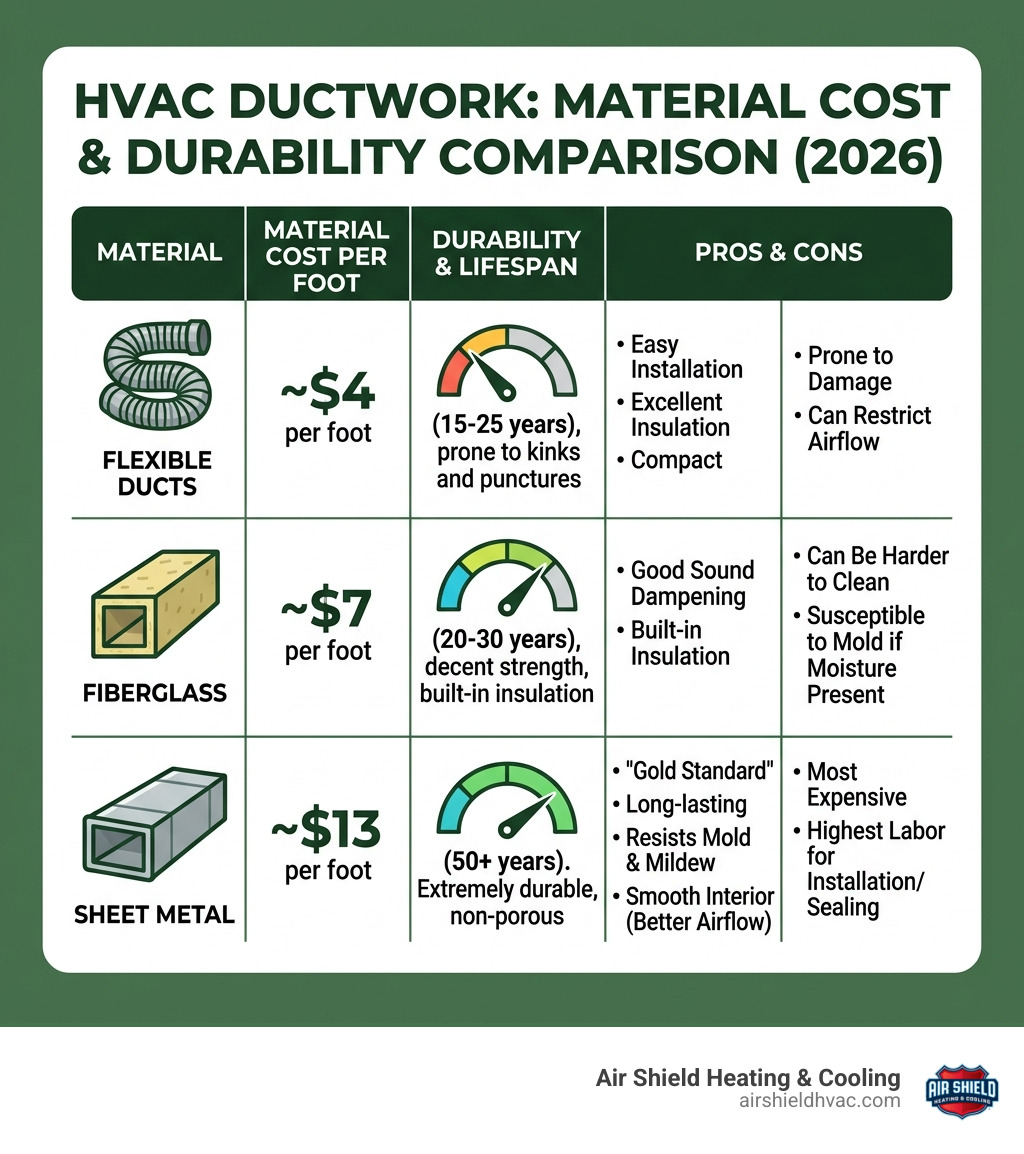
- Flexible Ducts (~$4 per foot for materials): These are the most common in Florida. They are easy to install in tight spaces and provide great insulation. However, they are prone to kinks and punctures.
- Fiberglass (~$7 per foot for materials): These are often used for “duct boards.” They have built-in insulation and dampen the sound of your AC, but they can be harder to clean over time.
- Sheet Metal (~$13 per foot for materials): The “Gold Standard.” It is incredibly durable, doesn’t grow mold easily, and can last 50+ years. The downside? It’s expensive and requires more labor to seal and insulate.
If you suspect your current duct system is wasting money, read our guide on is leaking air conditioning ductwork costing you money? to learn how failing materials can raise your monthly costs.
Accessibility and Regional Cost Variations
In the HVAC world, “easy access” is a myth. Where your ducts live dictates how much sweat (and money) goes into the job:
- Basement ($1,800–$3,100): If you have an unfinished basement, you’re in luck. This is the cheapest place to work.
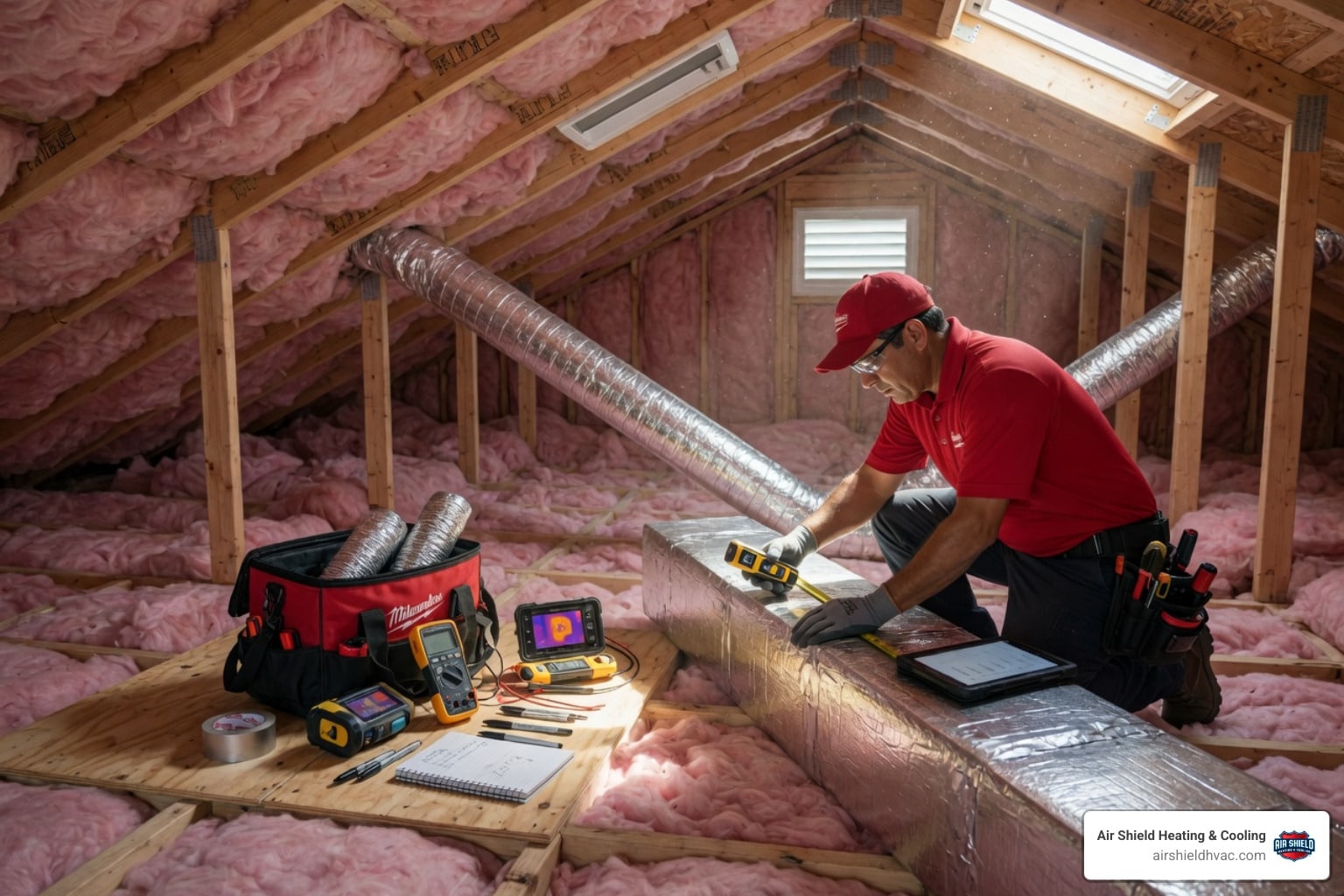
- Attic ($2,200–$5,600): This is the standard for most Florida homes. The heat in a Bradenton attic in July can reach 140°F, which means labor takes longer and costs more.
- Crawl Space ($3,000–$7,300): These are the most difficult. Tight spaces, moisture, and potential “critters” make this a premium-priced job.
While the Bay Area in California often sees higher ductwork costs because of stricter rules, Florida homeowners deal with different issues. High humidity makes regular air duct maintenance in bradenton especially important to help prevent moisture buildup and mold in new duct systems.
When to Repair vs. Replace Your HVAC Ductwork
Most ductwork has a lifespan of about 15 to 20 years. If your ducts were installed when “The Macarena” was a hit, it’s probably time to look at replacements.
However, if your ducts are newer and the problem is limited, repair may make more sense than full replacement. Small leaks, loose connections, or one damaged section can often be fixed. You can learn more about why ductwork repairs improve airflow and how to handle ductwork repair before winter to help your system run better.
Signs Your Ductwork Needs Immediate Attention
Your house usually tries to tell you when the ducts are failing. Look for these “red flags”:
- Uneven Temperatures: If the kitchen is an ice box but the master bedroom is a sauna, your ducts are likely leaking or collapsed.
- Excessive Dust: If you clean your surfaces and they are covered in gray fuzz two days later, your ducts might be pulling in attic dust through cracks.
- Noisy Operation: Rattling, whistling, or “booming” sounds often indicate undersized or loose ductwork.
- The “Moldy” Smell: In Florida, if you smell mildew when the AC kicks on, it often means moisture is trapped in your duct insulation.
If you notice these signs, it may be time to have a professional inspect your ductwork. In some cases, a thorough cleaning can help instead of a full replacement. See: Signs It’s Time for Home Air Duct Cleaning to learn more.
Energy Savings and ROI of New Ductwork
Is the cost to replace HVAC ductwork worth it? From a financial standpoint, the answer is usually a resounding yes.
- Energy Savings: New, properly sealed ducts can reduce your heating and cooling bills by 10% to 40%. In a state where the AC runs almost year-round, that adds up to hundreds of dollars a year.
- Home Value: Duct replacement offers a 50% to 70% ROI (Return on Investment). When a home inspector sees brand-new, high-efficiency ductwork, it’s a major selling point.
- System Longevity: When your ducts leak, your AC unit has to work twice as hard to cool the house. New ducts take the strain off your expensive HVAC equipment, helping it last years longer.
We’ve seen ductwork repairs improve airflow in older homes make a major difference, often turning a struggling AC system into a much better performer by fixing how air is delivered.
Frequently Asked Questions about HVAC Ductwork Costs
Is DIY ductwork replacement feasible?
In most cases, no. Ductwork replacement is not a simple DIY job. It takes proper sizing, airflow planning, sealing methods, and tools most homeowners do not have. If the ducts are the wrong size or poorly installed, your HVAC system can lose efficiency, struggle to heat or cool evenly, and wear out faster. Many areas also require permits and code-compliant installation, which usually means hiring a licensed professional. A DIY mistake can end up costing far more than the money you hoped to save.
How long does it take to replace ductwork?
For a standard 2,000 sq ft home, a professional crew can usually finish the job in 1 to 2 days. If the ducts are located in a particularly tight crawl space or if we have to cut through finished drywall, it might take a bit longer.
Should I replace ducts when replacing my AC unit?
This is the best time to do it! If you are investing in a new, high-efficiency SEER2-rated unit, running it through old, leaky ducts is like putting a Ferrari engine in a golf cart. You won’t get the performance you paid for. In fact, leaky ducts can cause a 25% to 40% drop in efficiency for a new unit. Plus, many contractors (ourselves included!) offer a “bundling” discount when you do both at once.
Before you commit to a new system, it’s smart to start with air duct cleaning and a professional inspection to understand the true condition of your ductwork.
Conclusion
The cost to replace HVAC ductwork is really an investment in your home’s comfort, air quality, and energy efficiency. While replacement is a meaningful project, the long-term benefits can be substantial, including better airflow, more even temperatures, and lower monthly utility bills. For many Florida homeowners, upgrading old or damaged ducts is one of the smartest ways to improve how the whole HVAC system performs.
At Air Shield Heating & Cooling, we’ve been serving Manatee County since 2014. As a family-owned business, we pride ourselves on transparent pricing and expert advice. We offer free estimates, 24/7 emergency response, and special discounts for our veterans.
Don’t let leaky ducts drain your bank account and ruin your comfort. Contact our air duct replacement professionals and schedule your ductwork inspection today, and let us help you breathe easier!