
Which Is Better for Florida Homes: A Heat Pump or a Central AC?
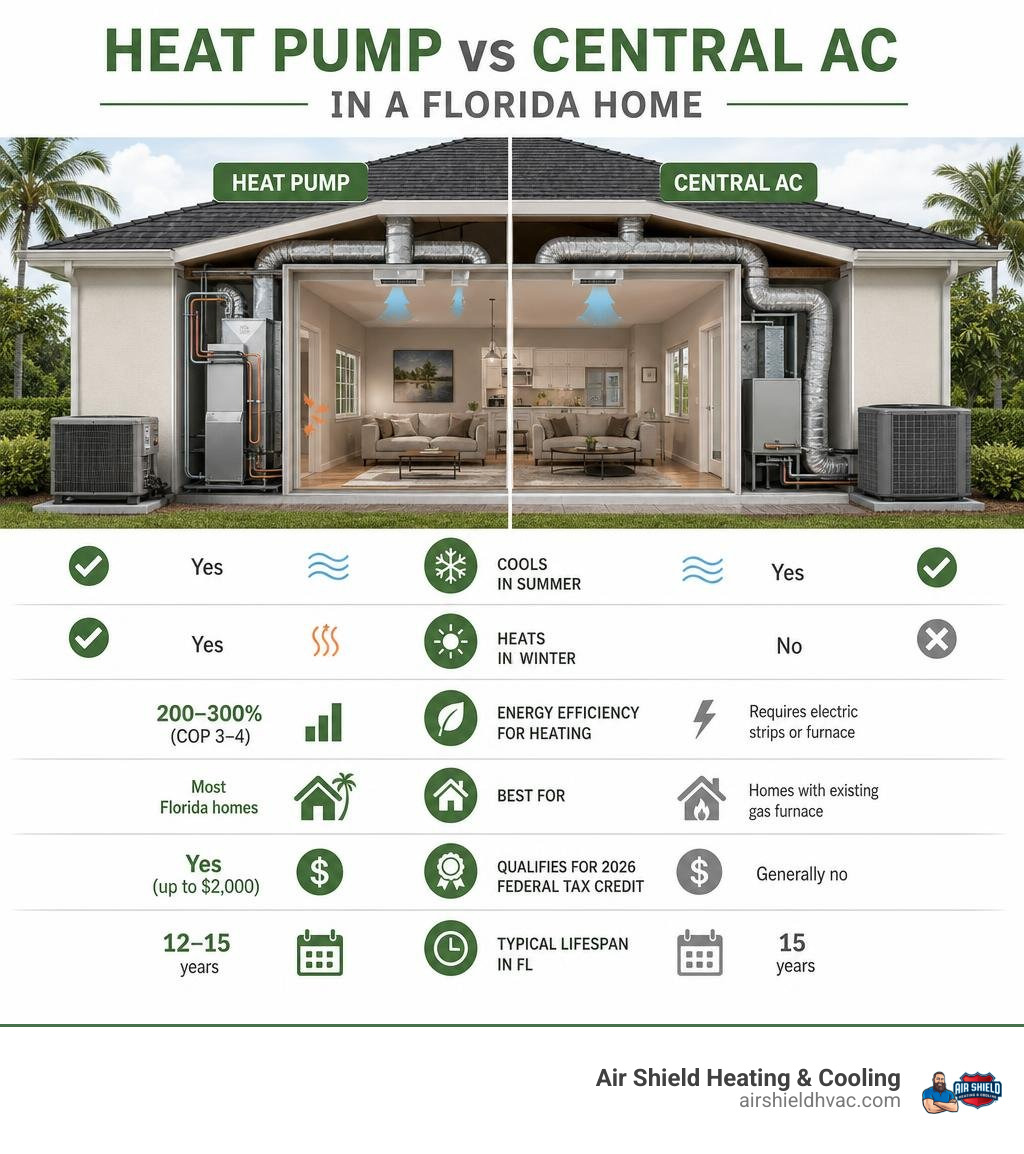
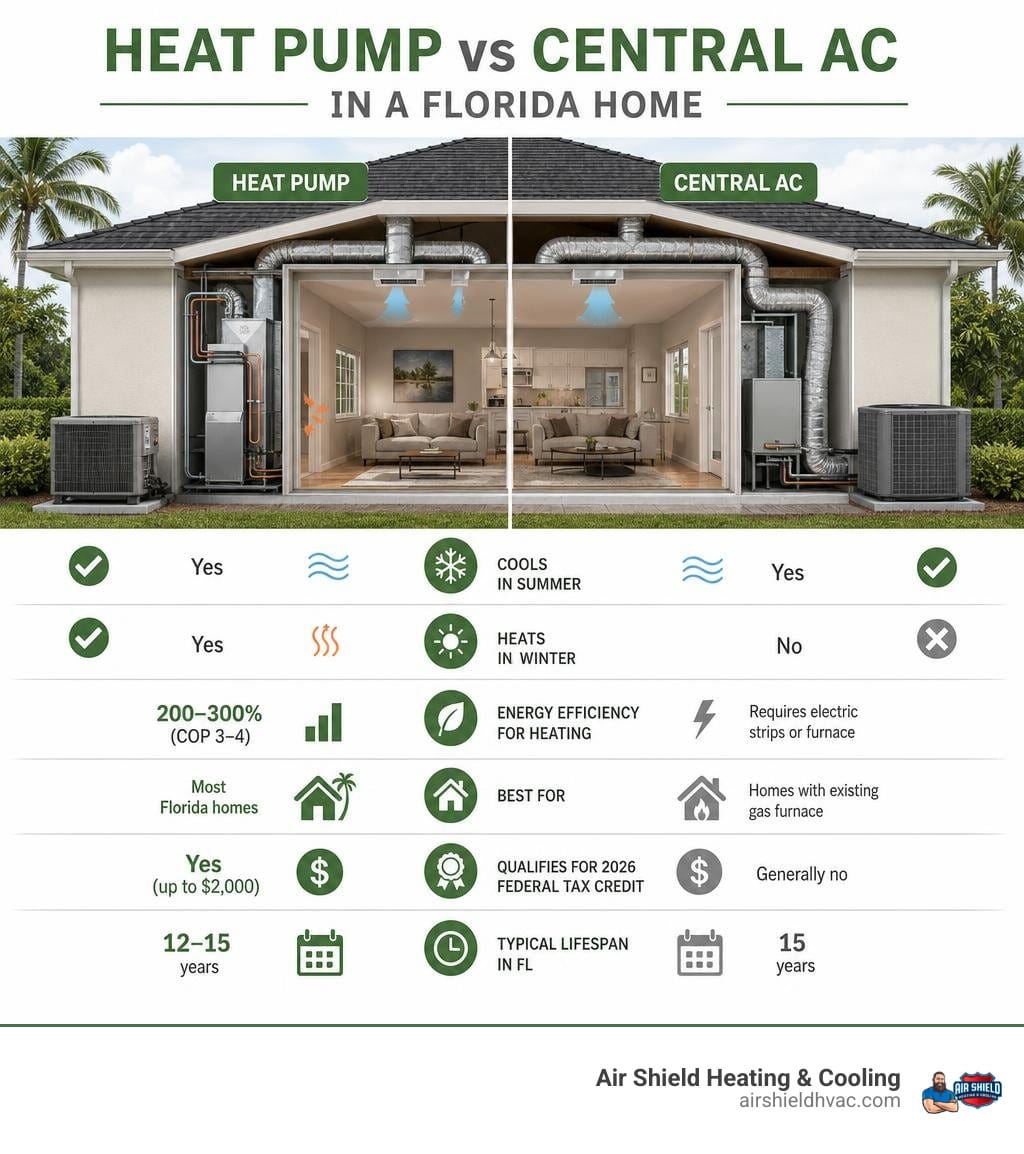
When comparing heat pump vs AC in Florida, the short answer for most homeowners is this: a heat pump is the better all-around choice. Here is a quick breakdown before we go deeper:
| Factor | Heat Pump | Central AC |
|---|---|---|
| Cools in summer | Yes | Yes |
| Heats in winter | Yes | No (requires separate system) |
| Energy efficiency for heating | 200-300% (COP 3-4) | Requires electric strips or furnace |
| Best for | Most Florida homes | Homes with existing gas furnace |
| Qualifies for 2026 federal tax credit | Yes (up to $2,000) | Generally no |
| Typical lifespan in FL | 12-15 years | 15 years |
Florida’s climate makes this decision different from most other states. Summers are long, hot, and relentlessly humid. Winters are short and mild, with temperatures occasionally dipping into the 40s and 50s but rarely lower. That combination means most homes here spend the overwhelming majority of HVAC runtime on cooling, but still need some form of heating a few weeks each year.
A traditional central AC handles the cooling side well, but it does only one job. When a cool night arrives in December or January, you are left relying on electric heat strips or a separate furnace. A heat pump handles both jobs with a single outdoor unit, and it does the heating side far more efficiently than electric resistance heat. For many Manatee County homeowners, that combination translates directly into lower monthly energy bills.
That said, the right answer depends on your specific home, your existing equipment, and how often you actually run the heat. This guide breaks down every factor that matters so you can make a confident decision.
I’m Nick Pazanski, founder of Air Shield Heating & Cooling and an HVAC professional with more than two decades of hands-on experience helping Florida homeowners navigate exactly this kind of heat pump vs AC in Florida decision. I’ve installed and serviced both systems across Manatee County and the surrounding communities, and I’ll walk you through everything you need to know.
Heat Pump vs AC Florida: Understanding the Core Differences
To understand why these systems perform differently, it helps to look at how they are built. From the outside, a heat pump and a traditional central AC look almost identical. They both have an outdoor condenser unit, an indoor air handler, and a network of ducts distributing air through your home.
The primary mechanical difference is a small but critical component called a reversing valve. In a standard straight-cool AC system, the refrigerant flows in one direction. It absorbs heat from inside your home and releases it outdoors.
A heat pump uses that same refrigeration cycle, but the reversing valve allows it to reverse the flow of refrigerant. In the summer, it extracts heat from your indoor air and dumps it outside, exactly like a standard AC. In the winter, it reverses the process, extracting heat from the outdoor air and bringing it inside to warm your home.
This process of heat transfer is incredibly efficient because the system does not actually create heat. It simply moves it from one place to another. The same basic refrigerant cycle also explains why standard HVAC systems rely on the right balance of airflow, coil performance, and duct design to keep Florida homes comfortable.
Deciding Between a Heat Pump vs AC Florida for Summer Cooling
When it comes to summer cooling in Parrish, FL, both systems perform exceptionally well. Because a heat pump in cooling mode operates exactly like a traditional AC, you will not notice a difference in how they feel.
Both systems use compressors and evaporators to lower the temperature and remove moisture from the air. Your cooling efficiency is determined by the SEER2 (Seasonal Energy Efficiency Ratio 2) rating of the specific unit you choose, not by whether the system is labeled as a heat pump or an AC. A 16 SEER2 heat pump and a 16 SEER2 air conditioner will provide the exact same cooling performance and use the same amount of electricity during the summer.
If your existing equipment is aging or struggling to keep up in the Florida heat, a properly planned AC installation can help match the right cooling capacity, efficiency rating, and system type to your home.
Winter Performance: Heat Pump vs AC Florida Heating Options
The real divergence occurs when the temperature drops. In Parrish, FL, winter is mild, but we still experience occasional chilly nights where heating is necessary.
A traditional straight-cool AC cannot produce heat on its own. To keep your home warm, it must be paired with an auxiliary heating source, which is almost always electric resistance heat strips installed inside the indoor air handler. These heat strips function like a giant hair dryer, running electricity through metal coils to generate heat. This method is highly inefficient, operating at a 1:1 Coefficient of Performance (COP), meaning every unit of electricity consumed produces only one unit of heat.
In contrast, a heat pump transfers heat from the outdoor air. Even when it feels cold outside, there is still thermal energy present in the atmosphere. A heat pump can extract this heat and deliver it indoors at a COP of 3.0 to 4.0. This means it can deliver up to three to four times more heat energy than the electrical energy it consumes.
While gas furnaces are common in northern states, they are rare in Southwest Florida due to the lack of natural gas infrastructure and our very low heating demand. When an unusual cold snap pushes a system harder than normal, homeowners may notice the same limitations that can cause a heat pump to struggle to warm the home in extreme cold.
Performance and Efficiency in the Parrish, FL Climate
Our local climate in Manatee County is classified as humid subtropical. This means we experience long, intense summers with high humidity levels and short, unpredictable winters. Choosing the right system requires balancing these unique seasonal demands.
Before making any purchase, the most important step is ensuring your system is correctly sized for your home. An oversized system will cycle on and off too quickly, failing to remove humidity, while an undersized system will run constantly and struggle to keep up. The same load-calculation principles covered in our guide to choosing the correct HVAC system size apply whether you are installing a heat pump or a straight-cool AC.
Summer Cooling and Humidity Control
In Parrish, FL, managing indoor humidity is just as important as lowering the temperature. High humidity makes the air feel warmer than it actually is and can lead to mold growth.
Both heat pumps and traditional AC units remove moisture as air passes over the cold evaporator coil. However, modern systems equipped with variable-speed compressors excel at humidity control. Instead of running at 100% capacity and shutting off, a variable-speed system can run continuously at lower speeds. This longer, gentler run cycle allows the system to extract significantly more moisture from the air, keeping your home comfortable at a slightly higher thermostat setting.
For homes with unique layouts, room additions, or spaces without existing ductwork, ductless mini-splits can be an excellent way to achieve precise, zoned temperature and humidity control.
Winter Heating and Temperature Fluctuations
Parrish, FL averages only a handful of true heating degree days each year. Most winters consist of warm days followed by sudden, brief cold snaps where overnight temperatures drop into the 40s or even 30s.
During these cold snaps, a heat pump is the ideal heating solution. It provides gentle, consistent warmth without the dry, scorched-air smell often associated with electric heat strips. Because our winter temperatures rarely drop below freezing, a heat pump will operate at peak efficiency almost every single night you need it.
If your current system fails during a sudden winter cold snap, prompt heating service matters just as much as cooling service does in summer. Our professional HVAC maintenance services help verify that reversing valves, auxiliary heat strips, electrical components, and airflow are ready before the next temperature swing.
Financial Comparison: Upfront Costs, Rebates, and Operating Expenses
When evaluating a heat pump vs AC in Florida, you must weigh the initial purchase price against your long-term monthly energy savings.
While pricing can vary depending on several factors, including the size of your home and the complexity of the installation, a heat pump generally carries a modest upfront equipment premium compared to a straight-cool AC. However, because a heat pump is significantly more efficient at heating, it can reduce your winter heating costs by 30% to 50% compared to electric heat strips. For most local homeowners, this operating cost advantage allows the system to pay for itself over time.
| Feature | Straight-Cool AC with Heat Strips | Heat Pump System |
|---|---|---|
| Relative Upfront Cost | Lower initial equipment cost | Moderate equipment premium |
| Summer Operating Cost | Standard | Standard (identical to AC) |
| Winter Operating Cost | High (inefficient electric resistance) | Very low (highly efficient heat transfer) |
| Long-Term Utility Savings | Minimal | High (saves 30-50% on heating) |
| Tax Credit Eligibility | Rare | Excellent (up to $2,000) |
Upfront Installation Costs and Equipment Premiums
The upfront cost of any HVAC installation depends on the system size, efficiency rating, and whether your existing ductwork needs modifications.
A heat pump condenser contains extra components, such as the reversing valve and electronic defrost boards, which makes the equipment slightly more expensive than a standard AC condenser. Homeowners should request a professional estimate for accurate pricing tailored to their specific property.
Heat pumps are often viewed favorably from an efficiency standpoint because they move heat rather than generate it. For homeowners comparing equipment options, that distinction is usually more important during the mild Florida heating season than during the summer cooling season.
2026 Federal Tax Credits and Florida Utility Rebates
The financial equation shifts heavily in favor of heat pumps when you factor in current financial incentives. Under the Inflation Reduction Act, qualifying heat pumps installed in 2026 are eligible for the Energy Efficient Home Improvement Credit (Section 25C). This federal tax credit covers 30% of the total installation cost, up to a maximum of $2,000. Standard straight-cool AC units rarely qualify for this credit unless they meet exceptionally high efficiency thresholds.
Additionally, local utility companies like Duke Energy and TECO offer rebate programs for homeowners who upgrade to high-efficiency heat pumps. These rebates can offset a significant portion of the initial equipment premium, making a heat pump an incredibly cost-effective long-term investment.
Lifespan, Coastal Corrosion, and Maintenance in Manatee County
Parrish, FL is located inland, but we are still close enough to the Gulf of Mexico and local rivers to experience elevated humidity and salt air. These environmental factors play a major role in the longevity of your heating and cooling equipment.
In Florida, HVAC systems often have a shorter service life than similar systems in milder or less humid regions because they run for long cooling seasons and sit in harsh outdoor conditions. Because heat pumps operate year-round for both heating and cooling, they may experience slightly more mechanical wear over time than a straight-cool AC that sits idle during the winter. However, with proper care, both systems can provide many years of reliable service.
Impact of Salt Air and Humidity on HVAC Lifespan
Salt air is highly corrosive to the aluminum fins and copper coils inside an outdoor condenser. If you live closer to the coast in places like Bradenton Beach, FL or Holmes Beach, FL, salt-air corrosion can shorten your system’s lifespan to 10 to 12 years.
For homes in Parrish, FL, which sits further inland, coastal corrosion is less severe, but high humidity still accelerates rust and oxidation. When installing a new system, I often recommend choosing units with specialized corrosion-resistant coil coatings. These protective coatings shield the delicate metal components from moisture and salt, preserving your system’s efficiency and extending its operational life.
Maintenance Requirements for Year-Round Systems
Because a heat pump works hard during both the hottest summer days and the chilly winter nights, regular preventative maintenance is absolutely essential.
While a straight-cool AC only needs a comprehensive tune-up once a year before the summer heat arrives, a heat pump benefits from semi-annual inspections. A spring visit ensures the system is ready for the brutal summer cooling season, while a fall visit verifies that the reversing valve and auxiliary heat strips are functioning correctly before the winter cold snaps arrive.
Routine HVAC maintenance is the single best way to prevent unexpected breakdowns, keep your energy bills low, and ensure your system reaches its maximum potential lifespan.
Frequently Asked Questions About Heat Pumps and ACs
What is the main difference between a heat pump and a traditional AC in Florida?
The main difference is that a heat pump can both cool and heat your home, whereas a traditional AC only cools. A heat pump uses a reversing valve to change the direction of refrigerant flow, allowing it to extract heat from the outdoor air and move it indoors during the winter. A traditional AC must rely on separate, less efficient electric heat strips to warm your home.
Does a heat pump cool as effectively as a standard AC during hot Florida summers?
Yes, absolutely. In cooling mode, a heat pump operates exactly like a standard central air conditioner. It uses the same mechanical process to extract heat and moisture from your indoor air and release it outside. If you compare a heat pump and an AC with the same SEER2 rating, they will provide identical cooling performance and efficiency.
Is a heat pump worth the extra cost if I rarely use heating in Parrish, FL?
For most homeowners, yes. The upfront cost premium for a heat pump is relatively modest, and the long-term energy savings during our winter cold snaps can quickly offset that initial difference. Additionally, because heat pumps qualify for significant 2026 federal tax credits and utility rebates, the net installation cost of a heat pump is often comparable to, or even lower than, a standard AC.
How long does a heat pump last in Florida compared to a central AC?
In Florida, both heat pumps and central AC units typically last between 12 and 15 years with proper professional maintenance. Because a heat pump runs year-round to handle both heating and cooling, it may experience slightly more wear and tear than an AC, but this difference is minimal in our mild winter climate.
Do heat pumps qualify for federal tax credits or utility rebates in Florida in 2026?
Yes. Under the federal Section 25C tax credit program, homeowners can receive a tax credit of 30% of the installation cost, up to $2,000, for qualifying energy-efficient heat pumps. Local utilities like Duke Energy and TECO also offer rebates that can help reduce your total out-of-pocket expenses.
How does a heat pump handle heating during occasional Florida cold snaps?
Modern heat pumps are highly efficient at extracting heat from outdoor air even when temperatures drop into the 30s. If a severe cold snap occurs and the outdoor temperature drops below the heat pump’s optimal operating range, the system will automatically activate its auxiliary electric heat strips to assist, ensuring your home remains warm and comfortable.
When is a traditional central AC a better choice than a heat pump for a Florida home?
A traditional central AC might be a better choice if you have an existing, fully functional gas furnace that does not need replacement, or if you are working with a very strict upfront budget and do not qualify for heat pump tax credits. However, for the vast majority of all-electric homes in Manatee County, a heat pump is the more practical long-term solution.
How does salt air and coastal corrosion affect heat pumps versus ACs in Parrish, FL?
Both systems are equally vulnerable to salt air and coastal corrosion because their outdoor condensers use similar copper coils and aluminum fins. While Parrish, FL is far enough inland to avoid the worst of the coastal salt spray, high humidity still promotes corrosion. Choosing a system with factory-applied protective coil coatings is highly recommended.
Can I replace my existing central AC with a heat pump system?
Yes, you can easily convert your home from a straight-cool AC to a heat pump system. Because both systems use the same basic ductwork and electrical connections, a professional technician can swap out your old condenser and air handler with a new, highly efficient heat pump system without major renovations.
Do heat pumps provide better humidity control than traditional AC units?
The level of humidity control depends on the compressor technology rather than whether the system is a heat pump or an AC. However, because heat pumps are often paired with modern, variable-speed air handlers, they tend to run in longer, lower-capacity cycles. These extended cycles allow the system to extract significantly more moisture from your indoor air.
Conclusion
Choosing between a heat pump and a traditional central AC is one of the most important decisions you will make for your home’s long-term comfort and energy efficiency. While both systems will keep you perfectly cool during our brutal summer months, a heat pump offers a level of winter efficiency and versatility that a standard AC simply cannot match. With the added benefit of 2026 federal tax credits and local utility rebates, upgrading to a heat pump has never been more financially practical.
At Air Shield Heating & Cooling, we have been helping our neighbors in Parrish, FL and across Manatee County stay comfortable in their homes since 2014. As a family-owned business, we pride ourselves on delivering honest advice, high-quality workmanship, and 24/7 emergency response when you need us most. Whether you are ready to replace an aging system or simply want a professional opinion on which option is right for your property, my team is here to help.
Whether you need fast AC repairs, seasonal HVAC maintenance, or a complete system replacement, the team at Air Shield Heating & Cooling is ready to help. Contact our professional HVAC technicians today.