When Is It Time for Furnace Installation in Bradenton, FL?
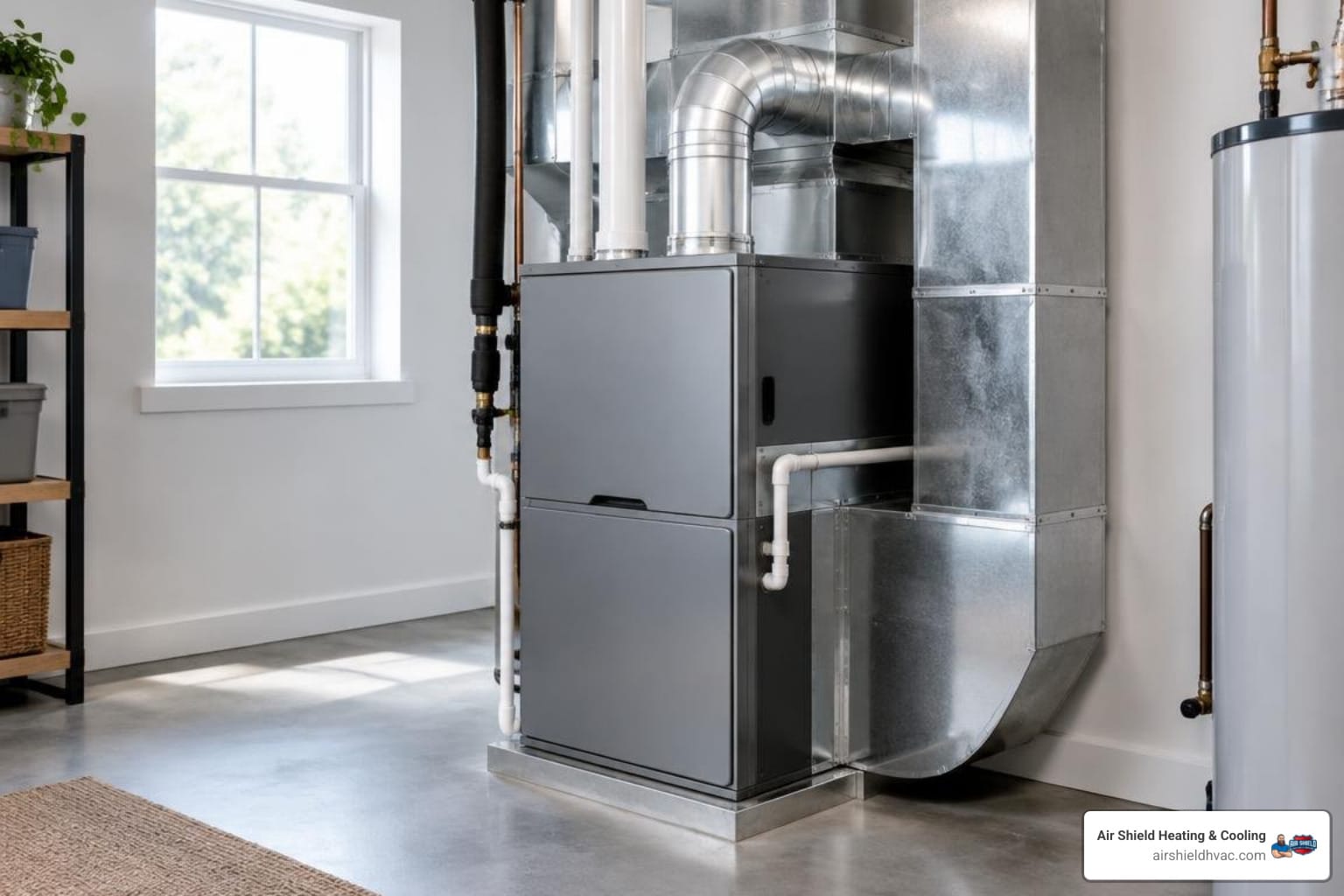
Consider replacing your furnace if it needs frequent repairs, heats unevenly, or has a safety concern such as a damaged heat exchanger. A safe furnace installation starts with a heating-load calculation and a check of the existing ductwork. The installer then removes the old unit, connects the new one, and tests its airflow, fuel connections, venting, and controls. In Bradenton, FL, where heating needs are relatively modest, the right-sized system matters more than simply buying the largest or most efficient model.
The Air Shield Heating & Cooling team helps homeowners recognize when furnace replacement makes sense and understand what to expect from professional furnace installation.
Signs It Is Time to Replace Your Furnace in Bradenton, FL
Heating equipment in coastal Florida operates under distinct conditions. While our winters along the Gulf Coast are generally mild, humid air and salt spray create unique challenges for mechanical components. Determining when to retire an aging unit helps prevent sudden heating failures during cold snaps and protects your household from hidden safety hazards.
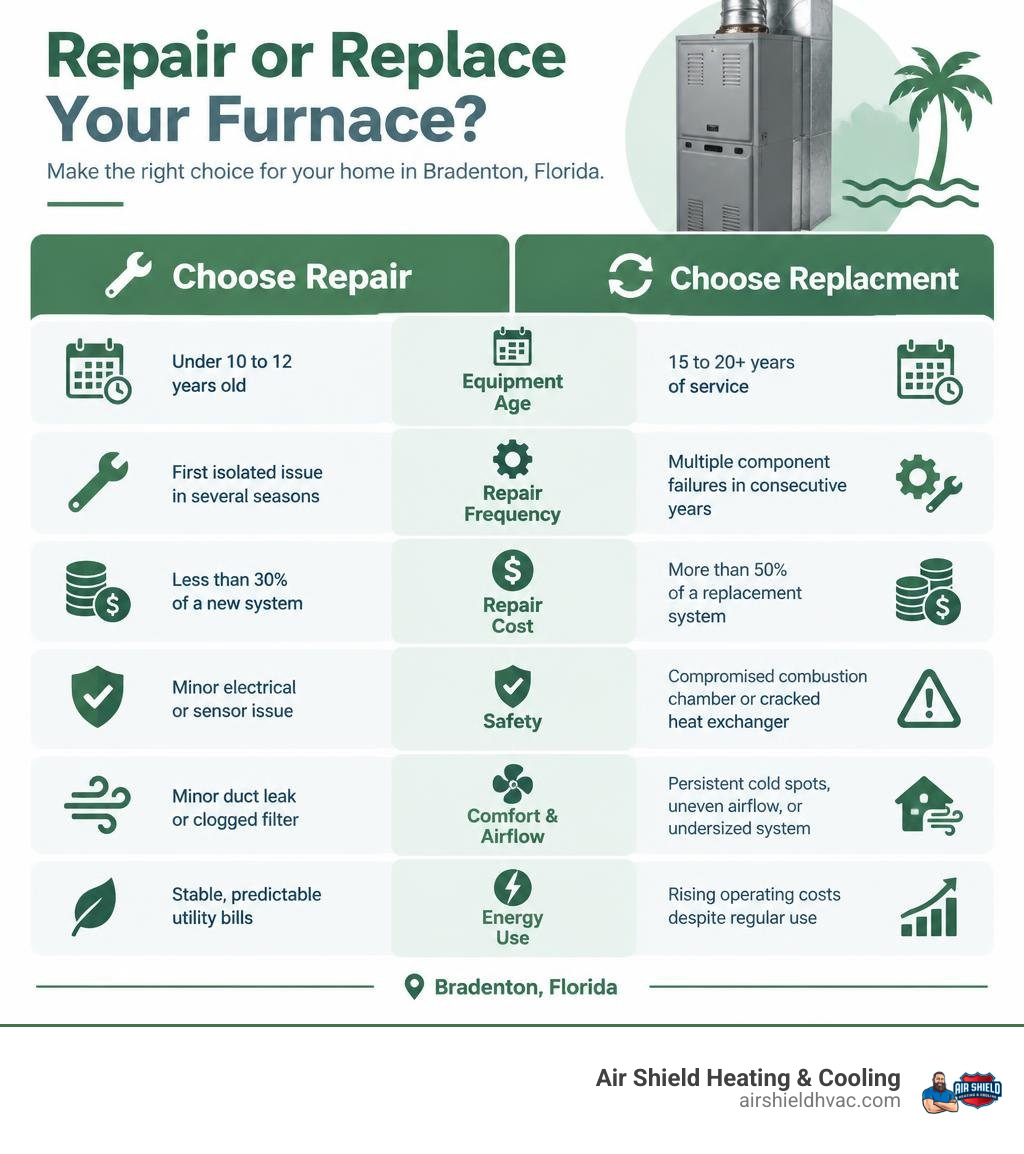
Evaluating your system involves looking at performance drops, mechanical sounds, and combustion stability. Over time, recurring mechanical breakdowns signal that key assemblies are wearing out simultaneously. When component failures multiply, keeping an old system running becomes impractical.
Homeowners often encounter common furnace issues in Bradenton homes, including erratic burner cycling, noisy blower bearings, and unexpected jumps in monthly electric or gas bills. If you notice a burner flame burning yellow instead of a crisp blue, incomplete combustion could be occurring, which demands immediate attention.
To help weigh your options, use the criteria below:
Assessing Safety and Component Integrity
Safety should always come first when inspecting gas-fired equipment. The heat exchanger acts as the critical barrier separating toxic combustion gases, including carbon monoxide, from the breathable air circulated throughout your living spaces.
Scheduling a professional furnace heat exchanger inspection is essential whenever an older unit shows visible corrosion or flame rollout. In our coastal climate, high humidity combined with seasonal non-use accelerates rust formation along the internal metal seams of the heat exchanger. Once a metal wall rusts through or cracks from thermal expansion cycles, carbon monoxide can enter your air ducts. If replacement parts for an older furnace become obsolete, replacing the entire system is the only safe, code-compliant path forward.
Evaluating Heat Pump Alternatives in Warmer Climates
Given our climate in Manatee County, FL, evaluating alternative heating designs is a smart step when your heating system nears retirement. Because local heating seasons are short, many homeowners find that switching to heat pump installation alternatives delivers significant year-round value.
Modern heat pumps provide dual-action climate control, operating as high-efficiency central air conditioners during hot summer months and reversing refrigerant flow to provide gentle, energy-efficient warmth on chilly winter mornings. For properties with natural gas hookups, dual-fuel configurations combine an electric heat pump with an auxiliary gas furnace, switching automatically to maximize energy savings during unexpected temperature drops.
Step-by-Step Furnace Installation Process and Technical Standards

A high-performing heating setup relies heavily on precise engineering calculations before the first piece of sheet metal is cut. Simply matching the input rating of an existing, decades-old furnace is a common mistake. Vintage systems were frequently oversized, leading to short cycling, uncomfortable temperature swings, accelerated mechanical wear, and wasted energy.
To ensure balanced comfort, a complete installation starts with an ACCA Manual J load calculation. This engineering method evaluates building square footage, insulation levels, window orientation, and duct design to determine the exact heating and cooling loads of your home. Determining equipment capacity through accurate HVAC sizing calculations per ACCA Manual S guarantees that the replacement unit matches your floor plan precisely.
Professional teams follow rigorous protocols, such as the DOE checklist for gas furnace replacement, to verify mechanical, thermal, and distribution performance.
Managing a furnace setup requires specialized trade equipment and safety gear:
- Digital combustion analyzer and electronic combustible gas sniffer
- Differential digital manometer for testing static pressure
- Hand seamers, sheet metal crimpers, and aviation snips
- Pipe wrenches, threading tools, and torque-limiting drivers
- Nitrogen regulator, pressure gauge assembly, and soap bubble leak detector
- Multimeter with true-RMS microamp and capacitance testing
- Personal protective equipment including cut-resistant gloves, safety goggles, and respiratory masks
Preparing Your Home and Ductwork for Furnace Installation
The replacement process begins with strict safety protocols. Technicians isolate electrical circuits at the main breaker box and close dedicated fuel shutoff valves before uncoupling mechanical lines. Once the old furnace is removed, the surrounding space is cleaned, and the duct connections are thoroughly inspected.
A new furnace rarely shares the exact cabinet dimensions of the equipment it replaces. Fabricating custom sheet metal transitions for the return air drop and supply plenum is essential for maintaining smooth airflow. Technicians secure metal joints with mechanical fasteners, apply UL 181 rated foil tape, and brush generous layers of fibrous duct mastic sealant over every seam to eliminate air leakage.
Placing vibration isolation pads beneath the furnace base cabinet isolates operational vibration from structural framing and prevents the metal base from absorbing ground moisture. This transition space is also the ideal location to follow the best practices for proper filter box installation, incorporating a sealed, gasketed filter rack that simplifies regular maintenance and protects indoor air quality.
Fuel Piping, Venting, and Electrical Connections
Connecting fuel, exhaust, and electrical lines requires strict adherence to national and local building codes. Natural gas or propane piping must utilize rigid black iron pipe or properly bonded Corrugated Stainless Steel Tubing (CSST). A dedicated sediment trap (drip leg) must be installed directly upstream of the gas valve to capture debris and moisture before it can enter the burner manifold.
Every fuel joint requires high-grade pipe thread sealant and comprehensive leak testing. Technicians apply specialized soap bubble solution to joints and use calibrated electronic gas detectors to ensure 100% gastight seals. When testing new fuel piping runs, technicians use a dedicated gas test gauge to pressurize the line with air up to 15 psi, verifying zero pressure drop over time.
High-efficiency condensing furnaces extract so much thermal energy from combustion gases that water vapor condenses into liquid inside a secondary heat exchanger. Because this flue gas condensate contains diluted acids, these systems cannot vent through traditional metal chimneys. Instead, direct-vent systems use dedicated 2-inch or 3-inch schedule 40 PVC, CPVC, or polypropylene piping to route exhaust gases safely outside while drawing in fresh outdoor combustion air.
Electrical connections require a dedicated 120-volt, 15-amp household circuit with a localized service disconnect switch. Low-voltage thermostat control wires must be carefully routed to the control board terminal strip:
- R (Red): 24-volt AC transformer power
- W (White): Heating circuit control
- G (Green): Indoor blower fan relay
- Y (Yellow): Air conditioning compressor contactor
- C (Common): Continuous 24-volt return path for smart thermostats
Condensate lines must slope continuously toward a gravity drain or feed into an automated condensate overflow pump with an integrated safety shutoff switch. If the installation involves modifying adjoining AC evaporator coils, certified technicians handle the refrigerant side in accordance with federal EPA Section 608 regulations.
Commissioning and Safety Testing After Furnace Installation
Commissioning is the vital final phase where installation quality is tested against manufacturer performance specifications. Technicians measure external static pressure across the supply and return plenums using a digital manometer to ensure the duct system provides adequate airflow without straining the blower motor.
Next, the technician calculates temperature rise by measuring the difference between the return air entering the cabinet and the heated supply air exiting the plenum. This number must fall squarely within the manufacturer design range stamped on the equipment data plate.
Blower motor speeds are calibrated to deliver balanced CFM airflow for both winter heating and summer cooling modes. The technician then verifies flame sensor microamp signals, adjusts gas manifold pressure to exact design tolerances, and cycles the thermostat through full operational sequences. Completing these commissioning checks is essential when replacing your furnace for optimal efficiency.
Permitting, Code Compliance, and Safety Protocols
Navigating mechanical codes is essential for safeguarding your home, family, and property investment. In Manatee County, FL, replacing a central heating system requires pulling a mechanical permit through local municipal building departments. Permitting ensures that an independent building inspector visits your home to verify that gas piping, electrical wiring, duct connections, and combustion venting strictly conform to current Florida Building Codes and safety regulations.
Clearance standards are equally vital. Direct-vent PVC exhaust terminals must maintain minimum clearance distances from operable windows, exterior doors, dryer vents, and grade levels to prevent combustion byproducts from re-entering your living spaces.
For reliable protection, follow standard carbon monoxide detector and HVAC safety guidelines. Install digital carbon monoxide alarms on every floor and outside all sleeping areas. Electrical safety protocols require bonding flexible CSST gas lines to the main electrical panel grounding system using a solid copper grounding conductor, protecting fuel lines from potential electrical surges and nearby lightning strikes.
If specialized tools are required or if you encounter complex electrical, gas, or structural modifications, always rely on licensed HVAC professionals who understand local safety requirements.
Cost Analysis, Warranties, and Energy Efficiency in 2026
Evaluating heating options involves weighing efficiency ratings against equipment life cycles. Furnace efficiency is measured by the Annual Fuel Utilization Efficiency (AFUE) percentage. Standard-efficiency systems operate around 80% AFUE, venting warm exhaust through metal flues. High-efficiency condensing units achieve 94% to 96% AFUE or higher, capturing almost all usable heat by extracting latent thermal energy before venting cooler exhaust outside.
In regions with milder winters like Bradenton, FL, Sarasota, FL, and Lakewood Ranch, FL, heating hours are low. An 80% AFUE furnace or a modern heat pump often provides an exceptional balance of performance and long-term operating costs.
Equipment warranties offer important protection, with top manufacturers providing 10-year to 12-year limited parts coverage. However, most equipment manufacturers require that installation be performed by a state-licensed HVAC contractor. Uncertified or unpermitted work can reduce standard warranty periods down to baseline 5-year coverage or void warranty claims entirely.
To manage home improvement costs comfortably, explore flexible HVAC financing options that align with your monthly budget. When removing your old heating equipment, sheet metal, copper lines, and motor components can be diverted from landfills through local scrap metal recycling facilities.
When you need dependable advice on your system, scheduling an assessment for furnace replacement in Bradenton, FL helps you select the right heating solution for your home.
Frequently Asked Questions about Furnace Installation
How long does a furnace installation take from start to finish?
A standard residential furnace replacement typically takes between 4 and 8 hours for a qualified two-person installation team to complete. Complex jobs that require extensive custom sheet metal transitions, new gas line piping, or direct-vent PVC flue routing through multiple floors may take up to two full working days.
Do I need a building permit to replace my furnace in Bradenton, FL?
Yes. Mechanical codes in Manatee County require a municipal building permit for replacing central heating equipment. Permitting ensures that a licensed building inspector examines the finished installation to verify that electrical circuits, fuel piping, venting clearances, and safety shutoffs fully comply with the Florida Building Code.
How do I know what size furnace my home needs?
System sizing must be determined through a formal ACCA Manual J heating load calculation. This calculation evaluates multiple architectural factors including total conditioned square footage, ceiling heights, insulation values, window types, and duct leakage rates rather than relying on rough estimates based on square footage alone.
What is the difference between an 80% AFUE and a 96% AFUE condensing furnace?
An 80% AFUE furnace converts 80% of its fuel into usable indoor heat while losing the remaining 20% through chimney exhaust. A 96% AFUE condensing furnace uses a secondary heat exchanger to capture latent heat from water vapor in the flue gas, converting 96% of the fuel into heat and venting cooler exhaust through plastic PVC pipes.
Can an improperly installed furnace void the manufacturer warranty?
Yes. Major HVAC equipment manufacturers state in their warranty terms that equipment must be installed and commissioned by a licensed, certified HVAC technician in accordance with manufacturer specifications and local building codes. Self-installed or unpermitted systems may have parts warranties reduced or claims denied.
What are the dangers of an aging or cracked heat exchanger?
A cracked or corroded heat exchanger compromises the barrier separating toxic combustion byproducts from your indoor breathing air. This flaw allows dangerous carbon monoxide, soot, and unburned fuel to circulate into living spaces, creating a severe health risk and fire hazard that requires immediate system shutdown.
Should I replace my air conditioning system when replacing my furnace?
If your air conditioner is over 10 to 12 years old, uses phased-out refrigerant, or shares an older blower assembly, replacing both systems simultaneously is often the most cost-effective approach. Matched HVAC systems ensure optimal seasonal airflow, peak electrical efficiency, and shared warranty terms across all heating and cooling components.
Why do high-efficiency condensing furnaces require dedicated PVC drain lines?
High-efficiency condensing furnaces extract heat until water vapor in the exhaust condenses into a liquid. This condensate contains small amounts of diluted carbonic and sulfuric acids from combustion byproducts. The liquid must be drained through corrosion-proof PVC lines or a dedicated condensate pump to prevent damage to floors and building foundations.
Is a heat pump more efficient than a gas furnace in Bradenton, FL?
In mild coastal climates like Bradenton, FL, heat pumps are exceptionally energy-efficient because they transfer existing heat from outdoor air rather than generating heat by burning fuel. For homes without natural gas infrastructure, heat pumps deliver effective winter heating while doubling as high-efficiency central air conditioning in summer.
What safety tests should be performed after installing a new furnace?
Post-installation testing should include electronic gas leak checks, static pressure measurements across the ductwork, temperature rise verification, flame sensor microamp testing, gas manifold pressure calibration, carbon monoxide exhaust testing, and safety limit switch shutoff verification.
Conclusion
Deciding when to replace your heating equipment comes down to balancing system age, component safety, and day-to-day reliability. Upgrading to a properly sized system delivers dependable winter comfort, quieter airflow, and reduced monthly energy consumption.
Whether you are weighing a high-efficiency gas furnace or exploring modern heat pump options in Palmetto, FL, Parrish, FL, Ellenton, FL, or surrounding communities, professional installation ensures every electrical line, gas valve, and duct connection operates safely and reliably.
For honest guidance, transparent equipment recommendations, and dependable heating solutions, turn to Air Shield Heating & Cooling. Contact our professional furnace installation technicians to schedule your free consultation today.