
Why AC Drain Line Clogs Are a Serious Problem for Parrish, FL Homeowners
An AC drain line clog is one of the most common and most overlooked reasons a Florida home loses cooling in the middle of a sweltering summer day. If your AC shuts off unexpectedly, you notice water pooling near the indoor unit, or a musty smell comes through the vents, a clogged condensate drain line may be the cause.
Here is a quick overview of what you need to know:
- What it is: The AC drain line is a PVC pipe that carries condensate water away from the evaporator coil and out of your home.
- Why it clogs: Algae, biofilm, dust, and debris build up inside the pipe, especially in humid climates like Parrish, FL.
- Key warning signs: Standing water near the air handler, musty odors from vents, ceiling water stains, or a blank thermostat screen.
- What happens if ignored: Water damage to floors and ceilings, mold growth, and a complete AC shutdown triggered by the safety float switch.
- DIY fix for many clogs: Turn off the AC, use a wet/dry shop vacuum on the exterior drain stub, then flush the line through the indoor access port with distilled white vinegar.
- When to call a professional: Persistent clogs, rusted drain pans, visible mold, or water damage to walls or ceilings.
- Prevention: Flush the drain line regularly during cooling season and schedule annual professional HVAC maintenance.
In Parrish, FL and across Manatee County, intense summer heat and near-constant humidity create favorable conditions for algae and bacterial growth inside condensate lines. During peak cooling weather, your system can produce substantial condensate, and that water must travel through a narrow PVC pipe to exit safely. When the pipe is blocked, the consequences can extend beyond a warm house to damaged ceilings, flooring repairs, and mold concerns.
The team at Air Shield Heating & Cooling has seen how a simple, preventable blockage can become expensive water damage when it is left unaddressed. In this guide, we explain how to identify, clear, and help prevent drain line clogs in your Parrish, FL home.
The Hidden Danger of an AC Drain Line Clog
When most people think of a broken AC, they imagine major mechanical failures such as a failed compressor or a leaking evaporator coil. Yet a simple blockage in a standard three-quarter-inch PVC pipe can also interrupt cooling and create a water-damage risk.
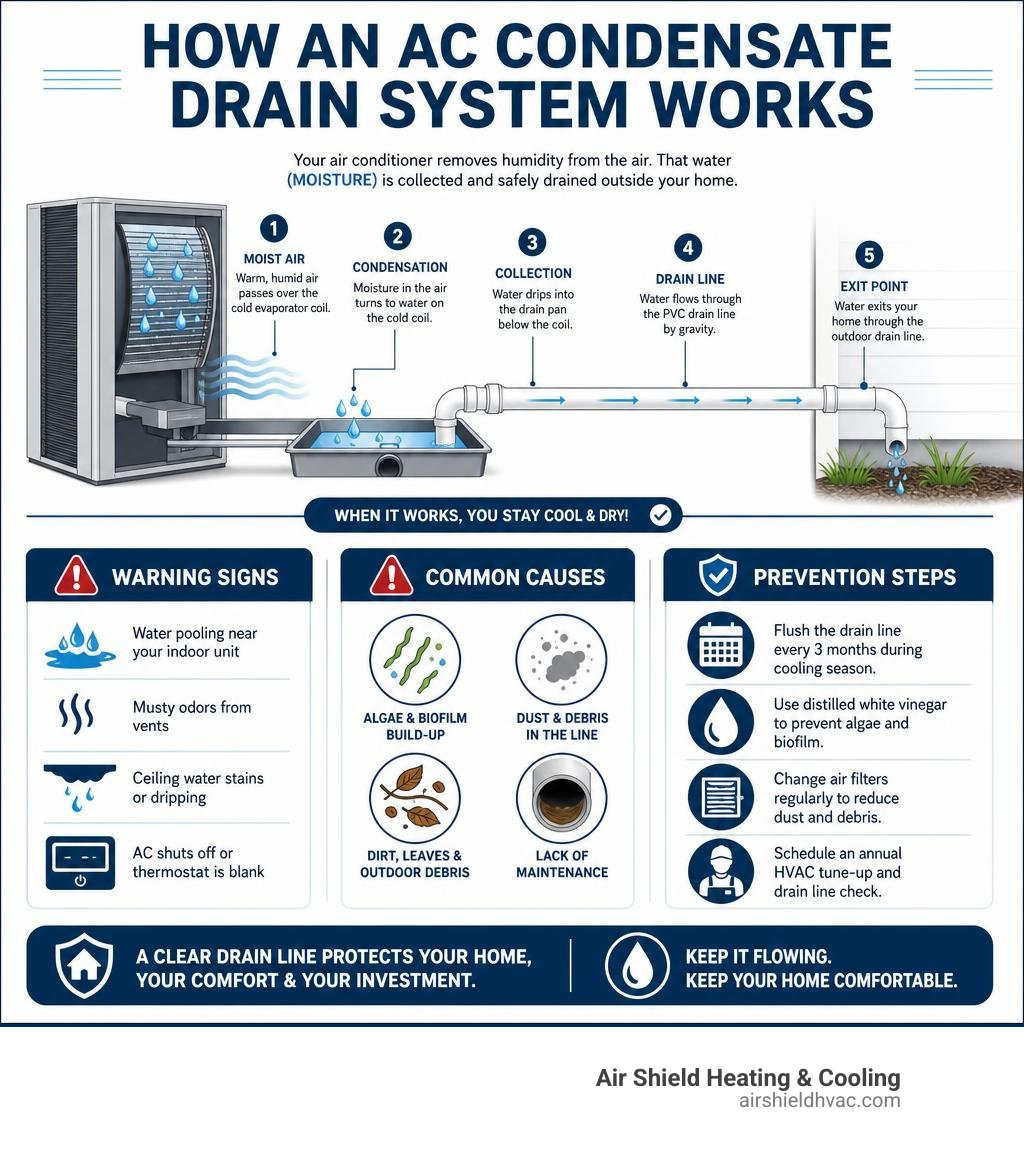
Your AC does more than cool your home. It also removes moisture from indoor air. As warm, humid air passes over the cold evaporator coil, moisture condenses and drips into a drain pan. Gravity then carries that water through the primary condensate drain line and away from your home.
If an AC drain line clog forms, the water has nowhere to go. In older HVAC systems, water may overflow the drain pan and damage an attic, ceiling, or flooring. In newer systems, a safety float switch may shut down the unit before an overflow occurs. That protection can prevent water damage, but it can also leave you without cooling on a hot Florida afternoon.
Common Warning Signs of an AC Drain Line Clog
Catching a blockage early can save you from a major headache. If you notice any of these symptoms, inspect your condensate system or arrange professional help:
- Water pooling near the indoor unit: Standing water around the air handler can mean the drain pan is overflowing.
- Musty or moldy odors: Stagnant water in a dark, warm drain pan or pipe can support mold and mildew growth.
- Water stains on ceilings or walls: For air handlers in attics or upper-floor closets, overflowing water can seep through drywall and leave brown rings.
- A blank thermostat screen: When a safety float switch is triggered by rising water, it can interrupt low-voltage power to the thermostat.
If your system has stopped running, our AC troubleshooting tips can help you recognize common warning signs before you schedule service.
Why Florida Humidity Accelerates Condensate Blockages
Parrish, FL experiences high humidity, especially during summer. That humidity makes your AC work harder to remove moisture from the air. A steady flow of condensate through a dark PVC pipe can create favorable conditions for biological growth.
Algae, mold, and bacterial biofilm can thrive in these conditions. Over time, this buildup can combine with household dust, pet dander, and carpet fibers that bypass the air filter, creating a thick plug that restricts drainage.
Our guide to AC maintenance during humid weather explains seasonal steps that can help reduce moisture-related AC problems before they disrupt your comfort.
How to Maintain Your Condensate System
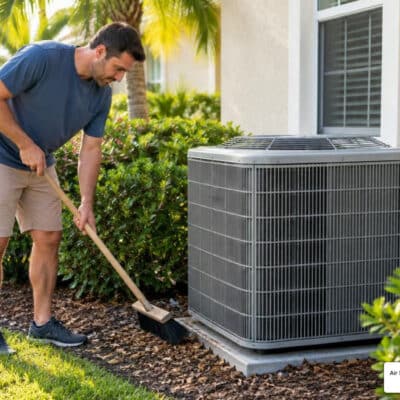
Keeping your condensate system clear does not require a degree in engineering, but it does require regular attention. By dedicating a few minutes every few months to routine maintenance, you can help keep water flowing freely and reduce the risk of an unexpected system shutdown.
Routine preventive flushing can help limit algae and bacteria before they become a solid obstruction. For a broader seasonal checklist, our AC maintenance tips before spring can help you prepare the system for heavy cooling months.
How to Safely Clear an AC Drain Line Clog Yourself
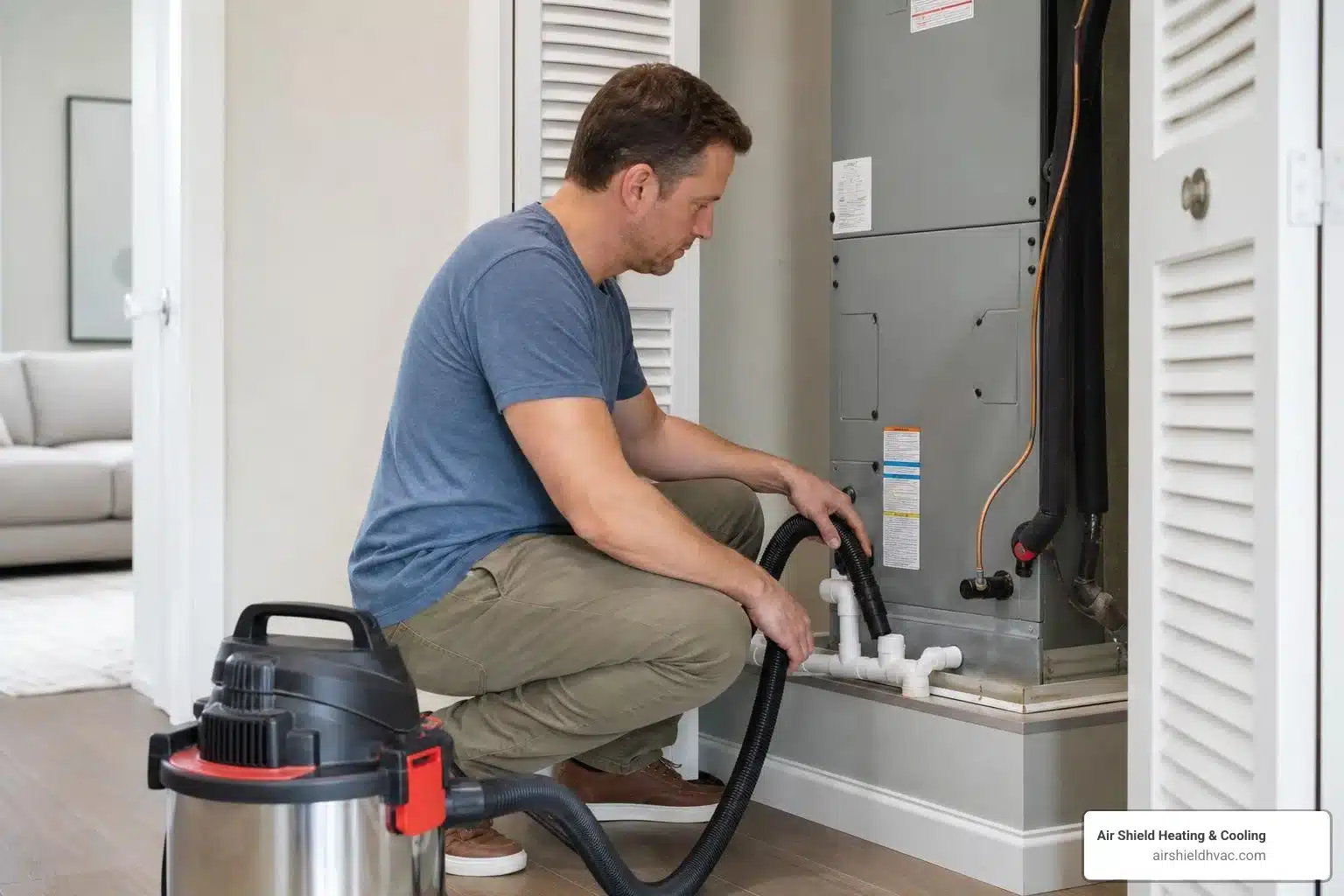
If your drain line is already blocked and your system has shut down, you may be able to clear a minor clog with a wet/dry shop vacuum and distilled white vinegar. Stop and contact a licensed HVAC professional if you are unsure how to perform any step safely, cannot access the line easily, or suspect damage to electrical components, the drain pan, or the air handler.
Here is a step-by-step approach for a minor clog:
- Turn off the power: Shut off the AC system at the thermostat and the circuit breaker before performing maintenance.
- Locate the outdoor drain stub: Find the white PVC pipe that exits your home, often near the outdoor condenser unit.
- Attach your wet/dry vacuum: Connect the vacuum hose to the end of the PVC pipe. Use a clean rag or duct tape to create a snug seal.
- Run the vacuum: Run the shop vacuum for two to three minutes to pull out debris and standing water.
- Locate the indoor access port: Find the T-fitting or capped access port near the indoor air handler and remove the cap.
- Flush with vinegar: Pour distilled white vinegar into the access port and allow it time to work through light buildup.
- Rinse with warm water: Slowly pour warm water into the line and confirm that water flows steadily from the outdoor drain stub.
- Restore power: Replace the access cap, restore power, and set the thermostat to cool.
Essential Tools for DIY Drain Line Maintenance
To perform regular maintenance on your condensate system, keep a few basic tools on hand:
- Wet/dry shop vacuum: Useful for suctioning minor clogs from the outside drain stub.
- Distilled white vinegar: A commonly used cleaner for routine drain-line flushing.
- Safety goggles: Helpful for protecting your eyes from splashes near the drain pan.
- Flexible pipe brush: A long, thin brush can help clean accessible short pipe sections.
- Condensate pan treatment tablets: Use only as directed by the product manufacturer or an HVAC professional.
When choosing a cleaning solution, avoid mixing chemicals or using products that are not approved for your HVAC system. If a clog is severe or returns quickly, professional diagnosis is the safer option.
Professional Prevention and Maintenance Strategies
DIY methods can help with minor clogs, but some situations require professional tools and training. If a clog is deep inside a wall, the system does not have an accessible cleanout port, or you are concerned about nearby electrical components, do not force the blockage. A licensed HVAC technician can assess the system safely.
A professional technician may use specialized equipment to locate and clear stubborn blockages without damaging the drain line or surrounding components. If your AC still is not cooling after the drain line has been cleared, our AC cooling troubleshooting guide can help you understand other possible causes.
For preventive care that includes condensate-system inspection, professional HVAC maintenance can help identify drain-pan, float-switch, and drainage concerns before they lead to an interruption in cooling.
When your system needs diagnosis or repair beyond routine maintenance, our HVAC services team can evaluate the issue and recommend an appropriate next step.
When to Call a Certified HVAC Technician
Stop DIY attempts and contact a licensed professional if you encounter any of the following situations:
- The clog keeps returning: Frequent clogs can point to improper pipe slope, sagging pipes, or heavy buildup in the drain pan.
- Your drain pan is rusted or cracked: A damaged pan can leak into your home even when the drain line is clear.
- The safety float switch is not working: If the system continues to run while water is backing up, the switch may need professional inspection.
- There is visible water damage: Peeling paint, sagging drywall, or mold growth on walls or ceilings calls for professional evaluation and appropriate restoration guidance.
The Long-Term Benefits of Regular HVAC Maintenance
The best way to reduce the chance of a sudden AC drain line clog is to invest in regular professional maintenance. During a precision tune-up, a technician can flush condensate lines, inspect the drain pan, test the safety float switch, and assess the evaporator coil.
Regular maintenance supports reliable performance and gives a technician an opportunity to find developing drainage issues before they become a disruptive repair.
Frequently Asked Questions About AC Drain Lines
What is an AC drain line and why does it clog so frequently?
An AC drain line is a PVC pipe that carries the moisture collected by your indoor evaporator coil safely out of your home. It clogs frequently because the dark, damp interior of the pipe is a perfect breeding ground for algae, mold, and bacterial slime. When this biological growth mixes with household dust and pet dander, it forms a thick plug that blocks water flow.
What are the most common signs of a clogged AC drain line?
The most common signs include water pooling around your indoor air handler, musty or moldy odors coming from your supply vents, brown water stains on your ceilings or walls, and your AC system suddenly shutting down with a blank thermostat screen.
Can a clogged AC drain line cause my AC to stop working?
Yes. Most modern AC systems installed after 2010 feature a safety float switch in the drain pan. When water backs up due to a clog, the float rises and cuts power to the system to prevent a household flood. This causes the entire unit to shut down and leaves your thermostat screen blank.
How often should I clean my AC drain line in Parrish, FL?
In the humid climate of Parrish, FL, you should flush your AC drain line with one cup of distilled white vinegar every three months. During the peak summer months of June through September, performing a monthly flush provides excellent insurance against sudden biological blockages.
Can I use bleach to clear my AC drain line?
While bleach is highly effective at killing algae, it is not recommended for regular maintenance. Bleach is highly corrosive and can degrade the glue at PVC pipe joints, damage rubber seals, and rust metal drain pans. It can also kill lawns and landscaping where the outdoor pipe drains. Distilled white vinegar is a much safer and highly effective alternative.
How much does professional AC drain line cleaning cost?
The cost of professional AC drain line cleaning can vary depending on several factors, including the complexity of your system, the location of the blockage, and whether the service is performed as an emergency call or as part of a regular maintenance plan. Homeowners should request a professional estimate for accurate pricing.
What happens if I ignore a clogged AC drain line?
Ignoring a clog can lead to severe water damage to your ceilings, walls, and flooring, which can cost thousands of dollars to repair. It can also cause toxic mold to grow inside your HVAC system and ductwork, ruin your air handler’s electrical components, and leave you without air conditioning during extreme heat.
Why is my thermostat blank when my AC drain is clogged?
Your thermostat goes blank because the safety float switch has been triggered by rising water in your drain pan. To protect your home from water damage, this switch cuts the 24-volt low-voltage power supply that runs from your air handler to your thermostat, shutting down the entire system.
How do I know if my AC drain pan is overflowing?
You can tell if your pan is overflowing by checking the area directly around your indoor air handler. If you see standing water, wet drywall, or dripping sounds coming from the unit, the pan has filled past its capacity. If your unit is in the attic, a brown water stain on the ceiling below is a clear sign.
What is a safety float switch and how does it protect my home?
A safety float switch is a water level sensor installed in or near your AC drain pan. If a clog causes water to rise in the pan, a floating mechanism rises and opens the electrical circuit, instantly shutting down the AC system. This simple device protects your home from catastrophic water damage and mold growth.
Conclusion
An AC drain line clog may start as a minor issue inside a small PVC pipe, but it can shut down your cooling system and cause extensive water damage. With regular drain-line care and an understanding of warning signs, you can reduce the likelihood of a blockage disrupting your comfort.
If you encounter a stubborn clog, notice standing water that you cannot clear, or have any safety concerns, contact a licensed HVAC professional. Trying to clear deep blockages without the right tools can damage the system or create additional risks.
For emergency repairs, seasonal HVAC maintenance, or system replacement, Air Shield Heating & Cooling is ready to help homeowners in Parrish, FL, Bradenton, FL, and throughout Manatee County. Contact our professional AC drain line specialists to get the right next step for your system.