
Why Florida Homeowners Can’t Afford to Skip AC Maintenance
Knowing how often AC tune up services should be scheduled is one of the most practical things a Florida homeowner can understand, and the short answer is this:
How Often to Schedule an AC Tune-Up
| Situation | Recommended Frequency |
|---|---|
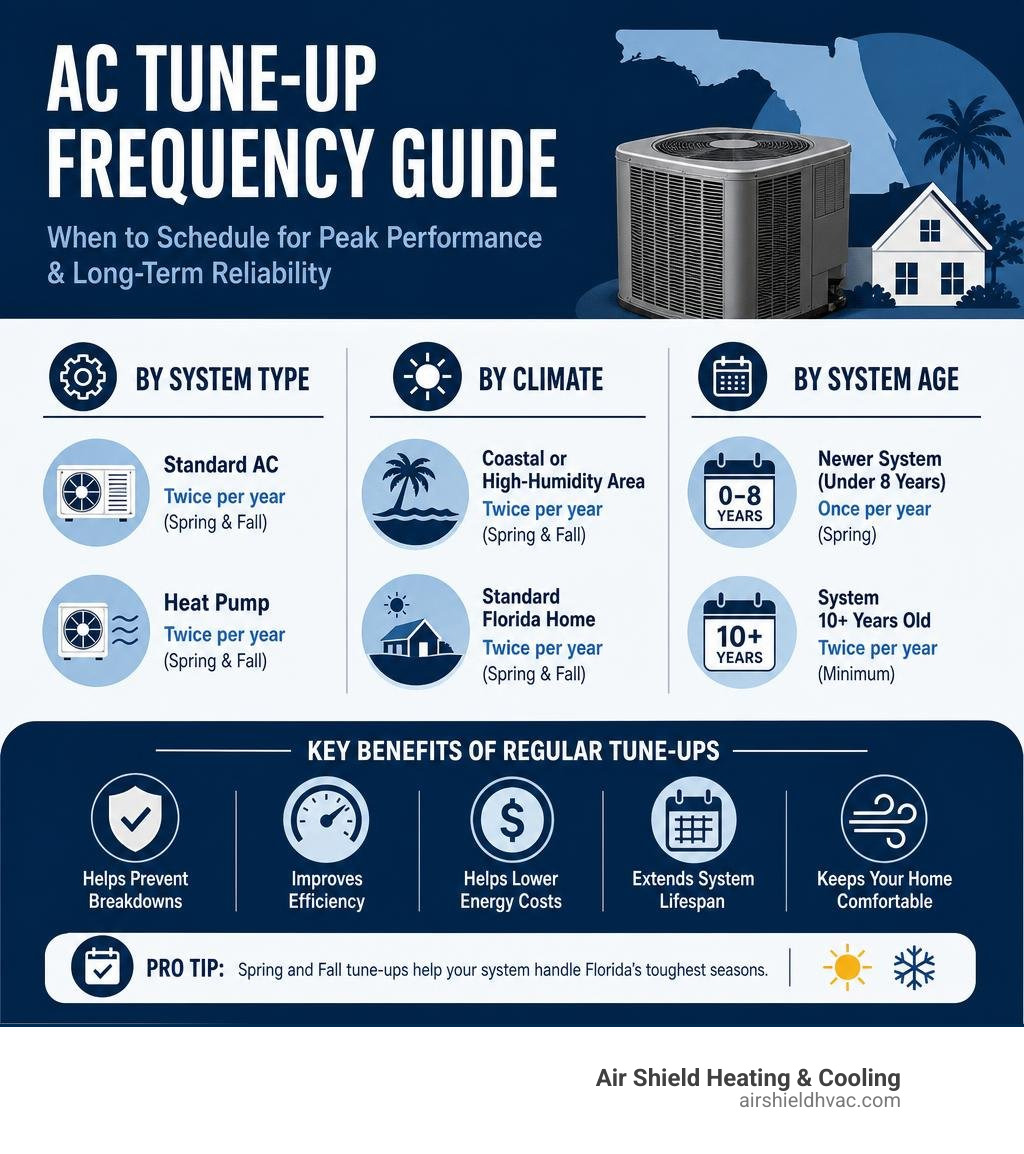
| Standard Florida home | Twice per year, spring and fall |
| Newer system under 8 years, light use | Once per year, spring |
| Heat pump | Twice per year, spring and fall |
| System 10+ years old | Twice per year minimum |
| Coastal or high-humidity area | Twice per year |
Florida’s climate is genuinely different from most of the country. In Manatee County, FL and the surrounding Gulf Coast communities, air conditioning systems don’t get a break the way they do in northern states. Summer heat regularly pushes into the upper 90s, humidity stays persistently high, and many households run their AC systems for well over 2,500 hours each year. That kind of workload puts real stress on compressors, coils, capacitors, and electrical connections. A neglected system under those conditions doesn’t just run less efficiently, it wears out faster, breaks down unexpectedly, and costs significantly more to operate month after month.
Research consistently shows that a well-maintained AC unit can last 15 to 20 years, while a neglected one often fails after just 10 to 12 years. Regular maintenance can also reduce monthly energy costs by up to 15%, and studies suggest that roughly 85% of HVAC repairs are directly tied to a lack of proper upkeep. For homeowners already dealing with high summer utility bills, those numbers matter.
At Air Shield Heating & Cooling, our experienced HVAC team serves Bradenton, FL, Manatee County, FL, and nearby Gulf Coast communities with practical maintenance guidance rooted in hands-on field experience. Questions about how often AC tune up visits are needed are among the most common our technicians hear from homeowners. In the sections below, we’ll walk you through everything you need to know to keep your system running reliably through even the most demanding Florida summers.
How Often AC Tune Up Services Are Needed in Florida
While the general national consensus is that you should schedule an air conditioning tune-up once a year, living on the Florida coast changes the math. For homeowners in communities like Sarasota, FL, Lakewood Ranch, FL, and Palmetto, FL, twice-yearly maintenance is the safest and most cost-effective approach.
Why does our local geography demand double the service? The answer lies in our extreme operating conditions. In moderate climates, an air conditioner might run for 800 to 1,200 hours per year. In Florida, our systems easily run for 2,500 hours or more. This means that after just six months of operation, a Florida AC unit has experienced as much wear and tear as a northern system does in two full years.
Additionally, the coastal air brings salt, sand, and intense humidity. Moisture on the outdoor condenser coils acts like a magnet for dust and grass clippings, forming a thick grime that blocks heat transfer. Homeowners who want local guidance can schedule professional HVAC maintenance services to keep coils, drain lines, electrical components, and system performance in check before Florida’s hardest cooling months arrive.
The ideal preventative routine is a spring visit to prepare the system for the brutal summer heat, followed by a fall visit to inspect the heating elements and ensure the system recovers from its heavy summer workload. This approach aligns with common pre-season maintenance guidance, which emphasizes inspections before peak-season demand to help avoid breakdowns.
What Does a Professional AC Tune-Up Include?
An AC tune-up is not just a quick visual inspection or a simple filter swap. It is an intensive, hands-on mechanical and electrical service designed to restore your system to its peak operating efficiency. To help you understand the difference between what you can do yourself and what requires expert care, here is a breakdown of typical maintenance tasks:
| Maintenance Category | DIY Homeowner Tasks | Professional Technician Tasks |
|---|---|---|
| Air Filters | Replace or clean every 30 to 90 days | Inspect filter fit and recommend optimal MERV ratings |
| Coils | Keep weeds and debris 2 feet away from outdoor unit | Chemically clean condenser and evaporator coils |
| Electrical | Inspect visible thermostat wires for damage | Measure capacitor microfarads and tighten all connections |
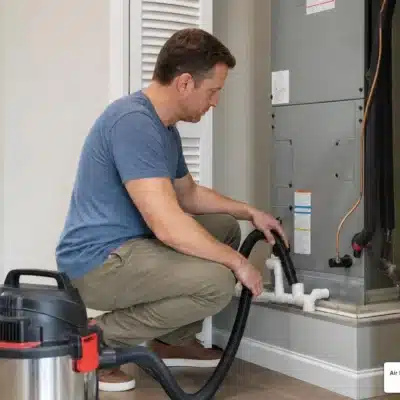
| Drainage | Pour warm water or white vinegar down the drain line | Flush and vacuum condensate line, test safety float switch |
| Refrigerant | Monitor system cooling performance | Measure exact subcooling and superheat levels, check for leaks |
| System Testing | Listen for unusual noises during startup | Calibrate blower motor, measure static pressure and delta-T |
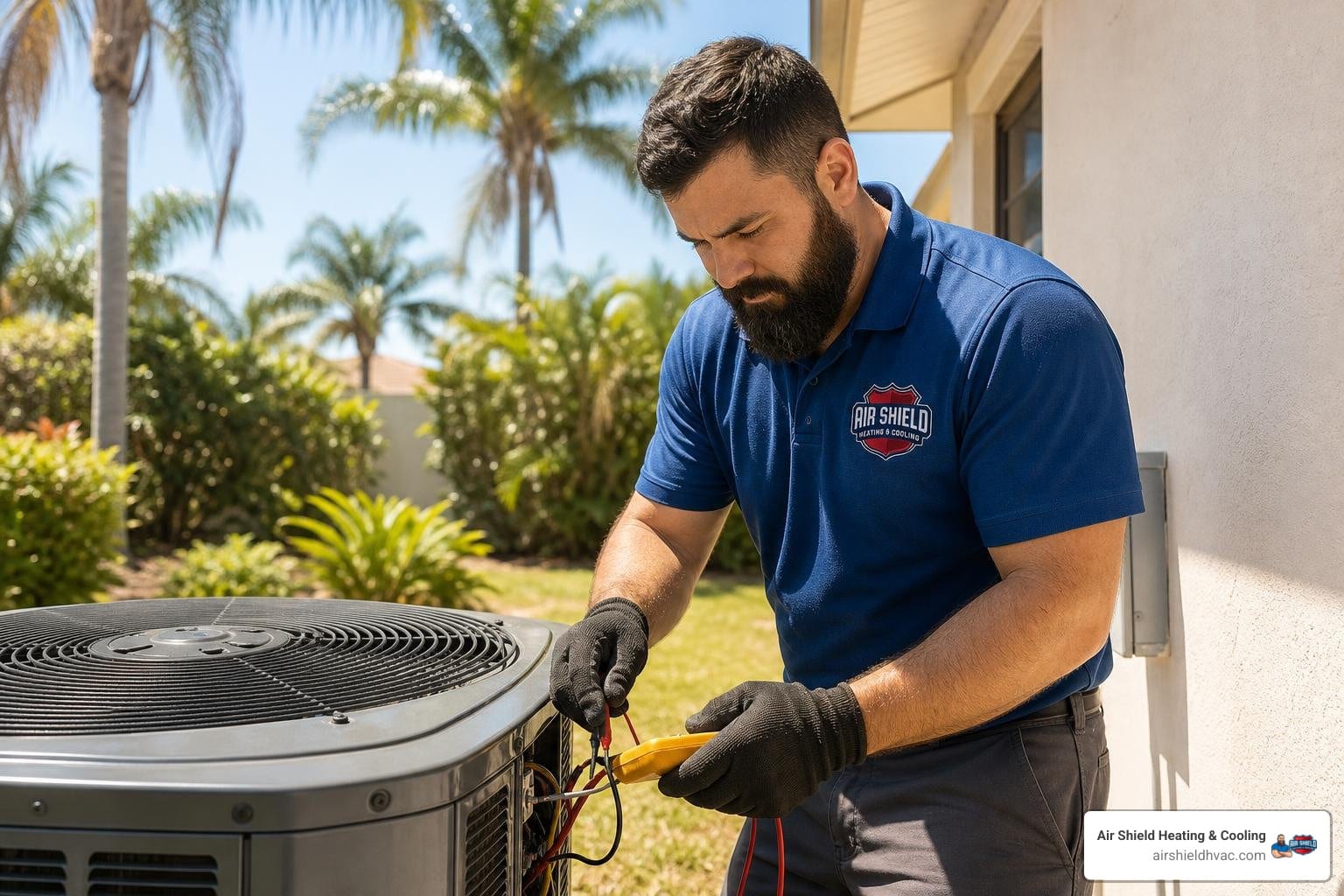
During a professional visit, technicians use specialized tools to access the internal components of both your indoor air handler and your outdoor condenser. They inspect the electrical components, clean the heat-exchange surfaces, and verify that the system is operating within the manufacturer’s exact specifications. For broader system concerns beyond routine maintenance, homeowners can also turn to trusted HVAC services in Bradenton, FL for repair, replacement, indoor comfort, and year-round support.
The Importance of a Professional AC Tune-Up Checklist
The reason a professional checklist is so critical is that many AC problems are completely invisible to the untrained eye. For example, a capacitor, which acts like a temporary battery to start your system’s motors, does not simply stop working without warning. It slowly degrades over time.
During annual HVAC checkups, a technician will measure the capacitor’s electrical storage capacity in microfarads. If the reading has drifted more than 10% below its rated value, we can replace it proactively. Catching a failing capacitor during a scheduled visit prevents the motor from overheating and failing on a humid July afternoon, which would result in a much more expensive emergency repair.
Key Benefits of Regular AC Maintenance
Investing in regular maintenance is one of the smartest financial decisions you can make as a homeowner. The benefits extend far beyond simply keeping your home cool. They directly impact your monthly household budget and the overall value of your home.
When you prioritize routine service, you will experience:
- Lower Monthly Energy Bills: A clean, well-adjusted system does not have to work as hard to cool your home, which can save you up to 15% on your monthly utility costs.
- Extended Equipment Lifespan: Regular care helps your system reach its full potential, directly extending AC lifespan to 15 or even 20 years.
- Fewer Emergency Repairs: Because 85% of HVAC repairs are linked to a lack of maintenance, routine inspections catch minor mechanical issues before they turn into complete system failures.
- Better Indoor Air Quality: Deep cleaning the coils and clearing the drain lines prevents mold, dust, and allergens from circulating through your living spaces.
How Often AC Tune Up Visits Lower Energy Bills and Extend Lifespan
Let’s look at the mechanical reality of how neglect drains your wallet. When dust and dirt accumulate on your indoor evaporator coil, they form an insulating barrier. This barrier prevents the refrigerant inside the coil from absorbing heat from your indoor air. As a result, your system has to run longer cycles to reach the temperature set on your thermostat.
According to industry data, dirty coils can reduce your cooling efficiency by up to 40%. This means your air conditioner is consuming significantly more electricity while delivering less cooling comfort. Before summer utility bills start rolling in, these AC maintenance tips before spring can help homeowners understand why clean coils, clear airflow, and early service matter so much in Florida.
Similarly, if your system is running even 10% low on refrigerant, its cooling efficiency can drop by up to 20%. Low refrigerant forces the compressor, the heart of your AC system, to work twice as hard under elevated temperatures. Over time, this extra strain causes the compressor to overheat and fail prematurely. Replacing a compressor is one of the most expensive repairs in the HVAC industry, but it is almost entirely preventable with regular maintenance checks.
Signs Your AC Needs a Tune-Up Immediately
While scheduling regular maintenance is ideal, your air conditioner will often tell you when it needs professional attention between visits. Ignoring these warning signs can quickly lead to a complete system breakdown or expensive property damage.
Be on the lookout for these common indicators:
- Weak Airflow: If you feel very little air coming out of your supply vents, it could indicate a clogged air filter, a failing blower motor, or a blockage in your ductwork.
- Warm Air: If the air blowing from your vents feels lukewarm, your system may have a refrigerant leak, a failing compressor, or a dirty outdoor coil.
- Frequent Cycling: An AC unit that turns on and off every few minutes is short-cycling, which places massive strain on the electrical components and increases energy consumption.
- High Indoor Humidity: Your air conditioner is designed to remove moisture from the air. If your home feels sticky or damp, your system is not running long enough or efficiently enough to manage moisture levels.
- Unusual Noises: Squealing, grinding, rattling, or clicking sounds are clear signs of mechanical wear, loose parts, or electrical issues.
- Spike in Energy Bills: If your utility costs have jumped significantly compared to the same month last year, your system is likely working much harder than it should be to cool your home.
Many mid-season warning signs are easier to understand when you look at how Florida weather affects AC performance. This guide to Florida HVAC maintenance frequency explains why heat, humidity, coastal air, and long cooling cycles make routine tune-ups especially important for local homeowners.
DIY vs. Professional AC Maintenance
Many homeowners ask if they can perform their own AC tune-ups to save money. The truth is that while there are several critical tasks you should handle yourself, a comprehensive tune-up requires professional expertise, specialized equipment, and legal licensing.
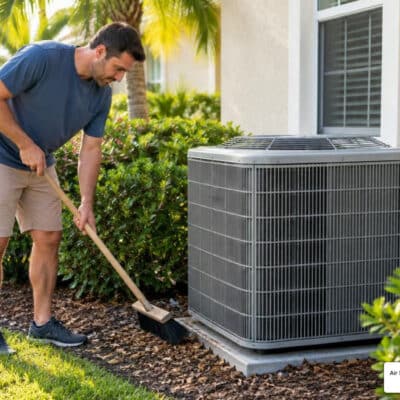
As a homeowner, your primary maintenance responsibility is to check your air filters every 30 days and replace them whenever they appear dirty. You should also walk around your outdoor condenser unit regularly to clear away weeds, leaves, and debris, ensuring there is at least two feet of open space on all sides of the unit.
However, tasks involving high-voltage electricity, pressurized chemical refrigerants, and deep internal cleaning must be left to the experts. In Florida, only EPA Section 608-certified technicians can legally handle or adjust refrigerant levels. Furthermore, attempting to perform these technical tasks yourself can easily void your manufacturer’s warranty and put your safety at risk. If you want to understand the long-term value of professional protection without making price the focus, an HVAC maintenance plan can help keep seasonal service organized and consistent.
For additional guidance on general system care, follow basic maintenance habits like changing filters regularly, keeping debris away from the outdoor unit, and contacting a licensed HVAC professional whenever safety concerns, specialized tools, complex systems, or uncertainty are involved.
DIY Safety Guidance: Homeowners must contact a licensed professional if safety concerns arise, specialized tools are required, or high-voltage electrical and pressurized refrigerant systems are involved.
Frequently Asked Questions About AC Tune-Ups
How often should you schedule an AC tune-up in Florida?
In Florida, you should schedule an AC tune-up twice a year, once in the spring and once in the fall. The intense heat, high humidity, and near-constant operation mean local systems run for over 2,500 hours annually. This heavy workload causes components to wear out much faster than they would in milder climates, making twice-yearly service essential for system reliability.
What is the best time of year to schedule an AC tune-up?
The best times of year to schedule service are early spring (March through May) and late fall (September through November). Scheduling during these shoulder seasons ensures your system is prepared before the extreme weather hits. It also allows you to secure an appointment quickly, as HVAC companies are often booked weeks in advance during the peak summer and winter months.
Does skipping AC maintenance void the manufacturer warranty?
Yes, skipping professional maintenance can void your manufacturer’s warranty. Most major HVAC manufacturers require documented annual or twice-yearly professional service to keep their 10-year parts warranty valid. If you experience a major component failure, such as a compressor or coil, the manufacturer may require proof of regular professional upkeep before they will honor a warranty claim.
How much does a professional AC tune-up cost?
The cost of a professional AC tune-up can vary depending on several factors, including the size and complexity of your system, your location, and whether you are enrolled in a maintenance membership plan. Homeowners should request a professional estimate for accurate pricing tailored to their specific equipment and home size.
How often should homeowners change their AC filters?
You should check your air filters every 30 days and replace or clean them at least every 30 to 90 days. If you have pets, live in a dusty area, or have family members with allergies or asthma, you will likely need to change your filters every 30 days to maintain healthy indoor air quality and unrestricted system airflow.
Can I perform my own AC tune-up?
While you can easily handle basic tasks like replacing air filters and clearing debris from around the outdoor unit, you cannot perform a complete professional tune-up yourself. Deep cleaning internal coils, flushing drain lines, testing capacitors, and handling chemical refrigerants require specialized diagnostic tools, professional training, and EPA certification.
What happens if I never get an AC tune-up?
If you never schedule a tune-up, your system’s efficiency will drop, causing your monthly energy bills to rise. Over time, dust buildup and mechanical wear will lead to frequent breakdowns, frozen evaporator coils, clogged drain lines that can cause severe indoor water damage, and a system lifespan that is cut nearly in half.
How long does a standard AC tune-up take?
A thorough, professional AC tune-up typically takes between 60 and 90 minutes. This gives the technician enough time to perform a complete multi-point inspection, clean the coils, flush the drain line, test all electrical connections, calibrate the motor, and verify that the system is operating safely and efficiently.
Will an AC tune-up really lower my monthly electric bill?
Yes, a professional tune-up can lower your monthly energy costs by up to 15%. By removing dirt from the coils, tightening loose electrical connections, and ensuring the correct refrigerant charge, the technician reduces the mechanical friction and workload of the system, allowing it to cool your home using significantly less electricity.
What is an AC capacitor and why does it need to be checked?
An AC capacitor is an electrical component that stores energy and provides the high-voltage boost needed to start and run your system’s fan motors and compressor. Capacitors are highly sensitive to extreme heat and are the single most common cause of AC failure in Florida. Checking them under load allows technicians to replace them proactively before they fail and cause a sudden system breakdown.
Conclusion
Whether you need seasonal HVAC maintenance, fast AC repairs, or a complete system replacement, the experienced team at Air Shield Heating & Cooling is proud to serve homeowners throughout Bradenton, FL and Manatee County, FL. Protect your comfort and contact our professional AC maintenance technicians today.