Why Florida Homeowners Need to Think Differently About AC Lifespan
If you want to extend AC lifespan in Florida, focus on consistent maintenance, clean filters, professional tune-ups twice a year, sensible thermostat settings, and ductwork that does not waste cooled air.
How to extend AC lifespan in Florida at a glance:
- Change your air filter every 30 to 60 days during peak summer months.
- Schedule professional maintenance twice a year, once before summer and once in fall.
- Set your thermostat to 78°F when you are home to reduce compressor strain.
- Keep 2 feet of clearance around the outdoor condenser unit.
- Seal duct leaks so cooled air reaches your living spaces.
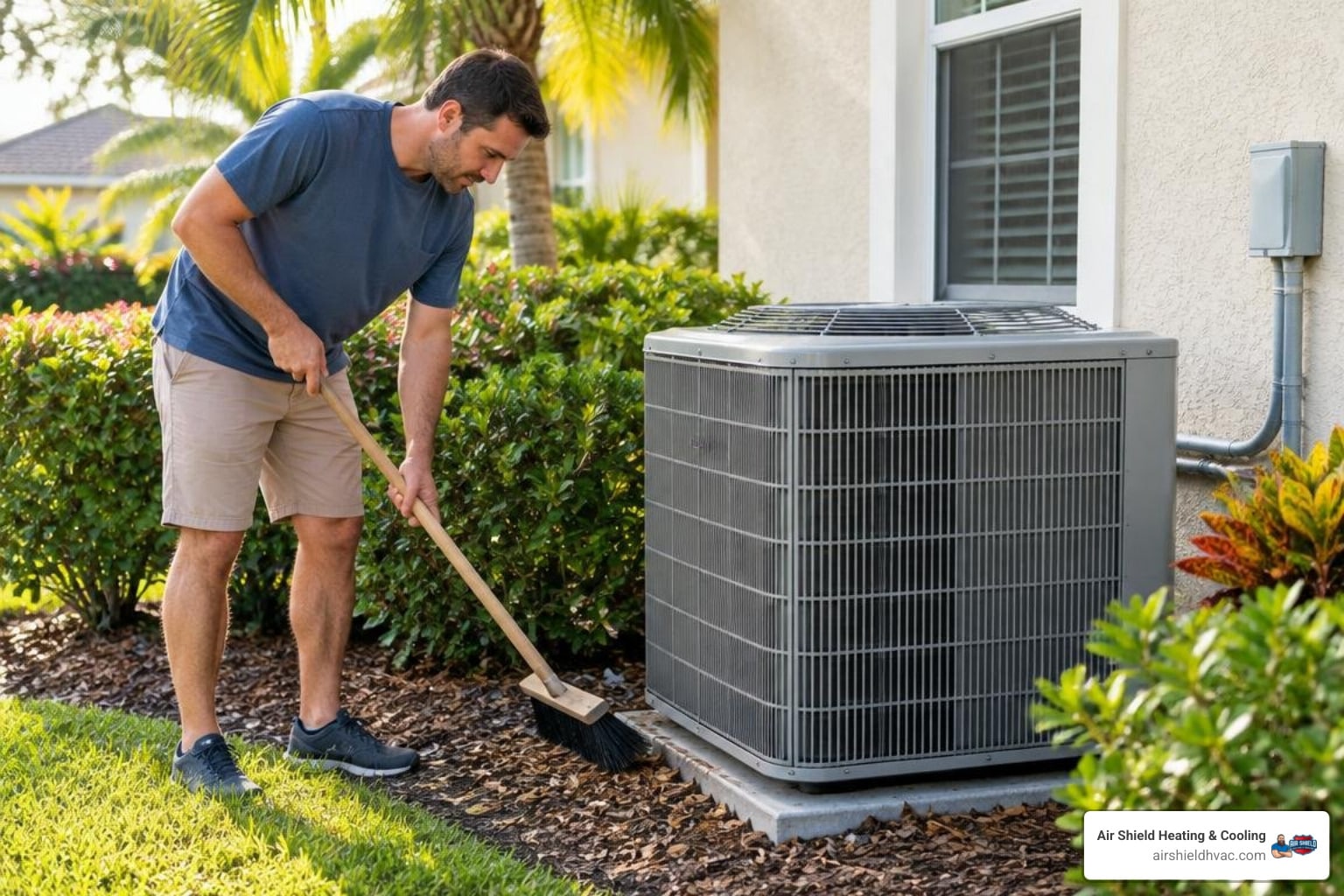
- Rinse condenser coils gently with a garden hose a few times per year.
- Address small repairs quickly before they become major system failures.
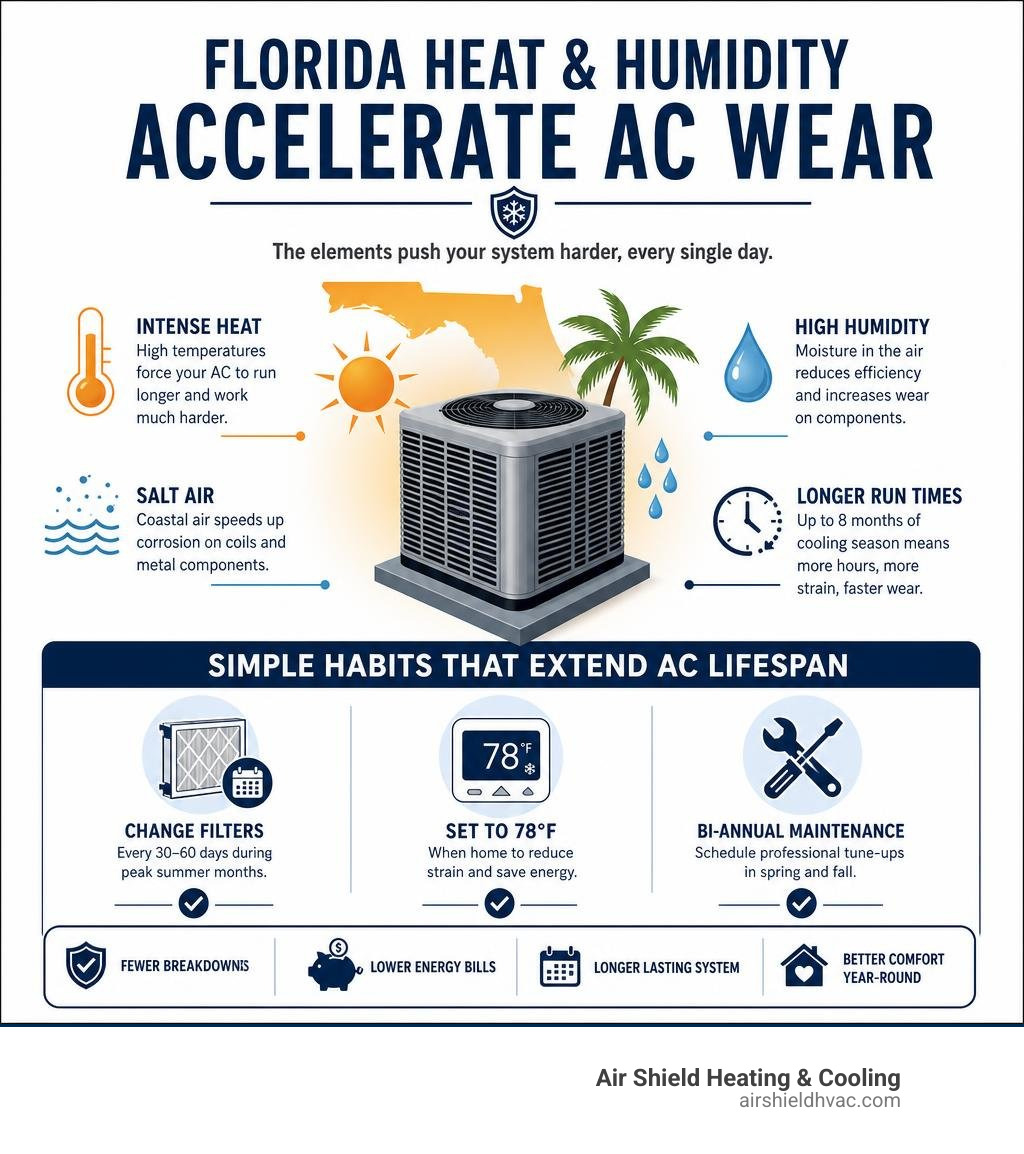
Most central AC systems are designed to last between 12 and 20 years. In Florida, and especially in Manatee County, real-world life expectancy is often closer to 10 to 12 years. Intense heat, high humidity, coastal salt air, and a cooling season that can last up to eight months put substantial strain on even well-maintained equipment. An AC system here may run for much longer each year than one in a milder climate.
That workload adds up. Components wear sooner, coils can corrode more quickly, and refrigerant lines and electrical parts face more stress. When maintenance is skipped for a season or two, a system that could have lasted 15 years may fail much earlier.
The good news is that many premature AC failures in Florida are preventable. The habits that protect your system are practical and affordable, but they need to happen consistently. This guide explains what to do, when to do it, and how to recognize warning signs before a small issue becomes a major repair.
At Air Shield Heating & Cooling, our team helps Manatee County homeowners extend AC lifespan through dependable maintenance, timely repairs, and clear service recommendations. The systems that last longest are not always the most expensive. They are the systems that receive consistent care.
Understanding the Florida AC Lifespan vs. Other Regions
National HVAC longevity estimates can be useful, but Florida has a very different operating environment. In milder northern climates, an AC system may run mainly from late June through August. Florida heat and humidity can require cooling for much of the year, creating far more operating hours and more frequent cycling.
For a closer look at the local factors that affect equipment longevity, our Florida HVAC lifespan guide explains how heat, humidity, maintenance history, and system workload influence replacement timing.
Why Coastal Environments Shorten System Longevity
Homes near the water face an additional concern: salt air corrosion. Ocean breezes can carry salt particles that settle on outdoor condenser units.
Over time, salt buildup can damage aluminum fins and copper coils. As heat transfer becomes less efficient, the compressor may run hotter and longer to cool the home. Routine cleaning and professional inspections are especially important for coastal properties.
The Reality of AC Lifespan in Bradenton, FL
In Bradenton, FL, and nearby communities such as Parrish, FL, and Palmetto, FL, summer heat and humidity place a heavy demand on AC equipment. Your system is cooling the air while also removing moisture, which adds to the workload on the blower motor, evaporator coil, drain system, and electrical controls.
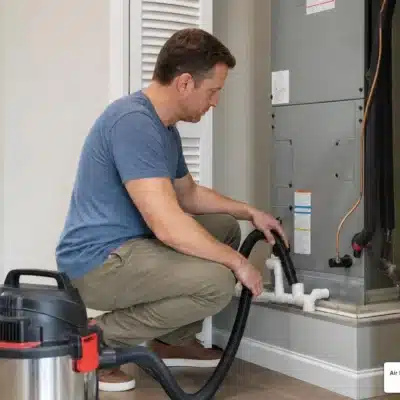
Keeping drainage, airflow, and electrical components in good condition helps prevent humidity-related wear and supports reliable cooling through the longest part of the season.
Essential Maintenance Practices to Extend AC Lifespan
The key to keeping your AC running well beyond its tenth birthday is reducing unnecessary strain. When a system has to work against restricted airflow, dirty coils, or clogged drain lines, it uses more energy and creates excess heat. That extra heat is especially hard on compressors and fan motors.
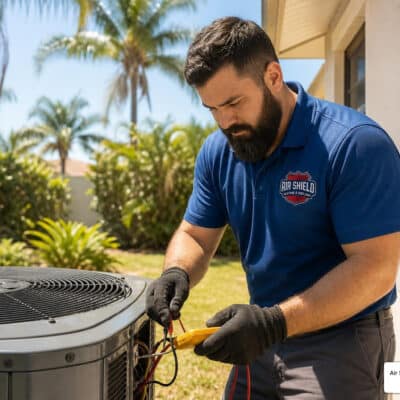
Consistent preventive care keeps the system’s heat-transfer path clear and makes it easier to catch small problems before they disrupt your comfort. Professional HVAC maintenance services can include the detailed electrical, refrigerant, drainage, and safety checks that homeowners should not attempt without the proper training and tools.
The Power of a Clean Air Filter to Extend AC Lifespan
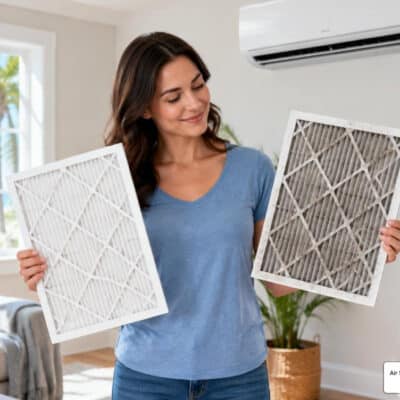
Running an AC with a dirty filter is like trying to run a marathon while breathing through a straw. The blower motor has to work harder to pull air through the restriction, which can cause overheating and premature wear. Restricted airflow can also make the evaporator coil too cold, leading to ice buildup that can damage the system.
Knowing how often to change your HVAC filter helps Florida homeowners protect airflow during the long cooling season. Check the filter every 30 days. If you have pets or live near active construction in Lakewood Ranch, FL, monthly replacement may be necessary.
For a practical balance of filtration and airflow, choose a mid-grade pleated filter with a MERV rating of 8 to 11 unless an HVAC professional recommends another option for your system. Very restrictive filters can create airflow problems similar to a dirty filter.
Outdoor Condenser Unit Hygiene and Clearance
Your outdoor condenser unit releases the heat removed from inside your home. If landscaping, weeds, or debris block the unit, that heat can become trapped in the cabinet.
To keep the outdoor unit breathing easily, follow these steps:
- Maintain a 24-inch clear space on all sides of the unit.
- Trim back fast-growing plants, vines, and shrubs.
- Clear grass clippings, leaves, and twigs from the fins.
- Gently rinse the condenser coils with a garden hose a few times a year to remove salt, pollen, and dust.
Never use a pressure washer. The high-pressure stream can bend the aluminum fins and restrict the airflow your AC needs. If the coil is heavily soiled, damaged, or difficult to access safely, contact a qualified HVAC technician.
Optimizing Thermostat Settings and Reducing System Workload
How you operate your thermostat affects the wear your system experiences each day. Setting the thermostat to 65°F will not cool the house faster. Your AC runs at the same speed regardless of the selected temperature. A lower target simply makes it run longer, which increases component wear.
Understanding how your HVAC system responds to temperature, humidity, and airflow can help you make comfortable choices that also protect the compressor.
Smart Thermostat Strategies to Extend AC Lifespan
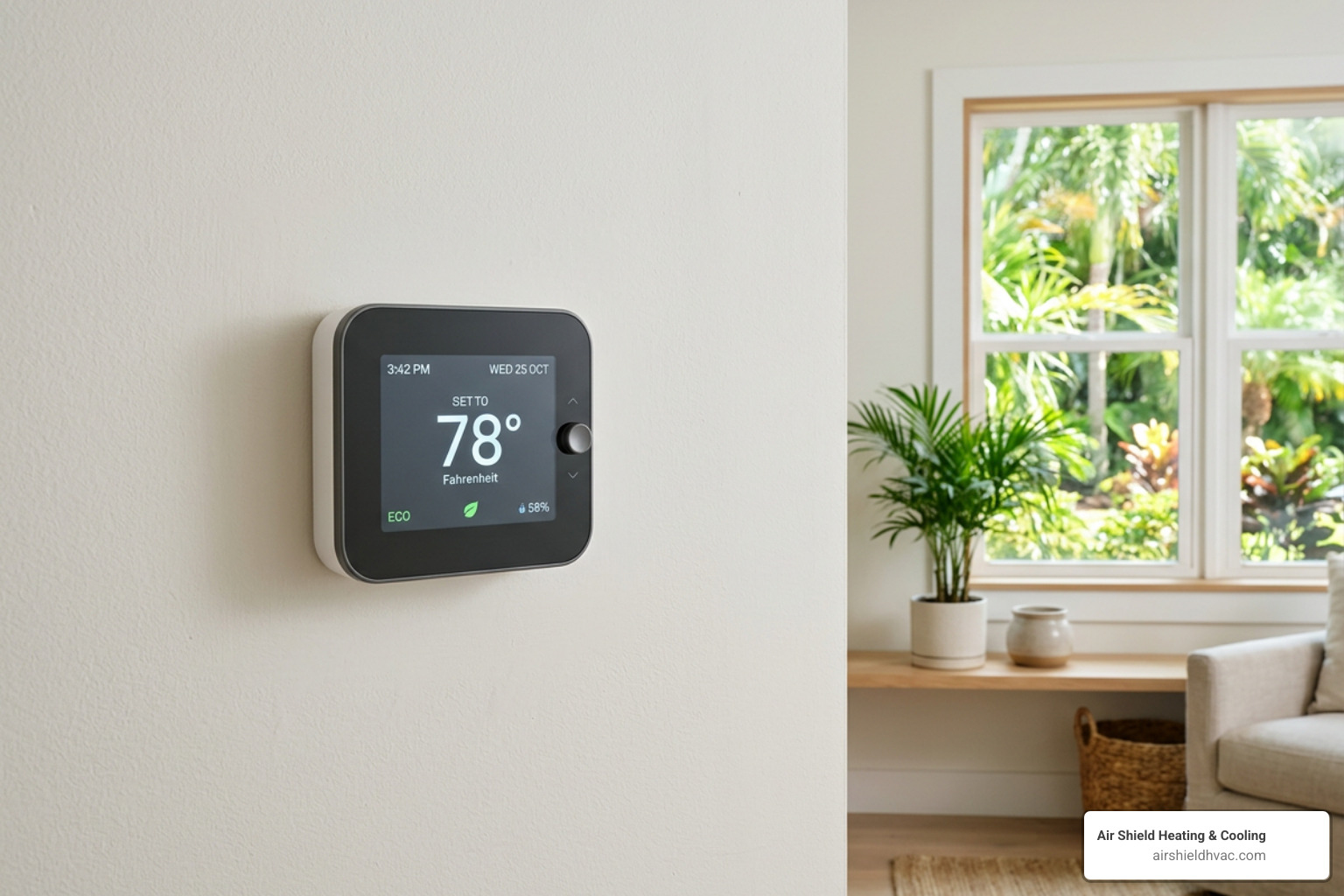
A summer setting of 78°F while you are home can reduce cooling demand without sacrificing comfort for many households. Raising the temperature slightly while you are away can also reduce daily run time.
If you use a smart thermostat, consider setting it to around 82°F while the home is empty, then returning it to a comfortable temperature before you arrive. Avoid turning the system completely off during the day. When indoor heat and humidity build up, the AC may need to run for hours to bring conditions back under control.
Set the thermostat fan to Auto rather than On. The On setting keeps the blower running continuously, which uses more electricity and can reintroduce moisture from the evaporator coil into the home.
Sealing Leaks and Improving Home Insulation
Your AC can only perform as well as your home’s envelope allows. Inadequate attic insulation and leaky windows or doors allow hot, humid outdoor air inside, forcing the system to work longer.
Ductwork is another common source of wasted energy. Leaks and loose joints can send cooled air into an attic or crawl space instead of your rooms. Sealing duct leaks and improving insulation can reduce AC run time and lower strain on the compressor and blower motor.
Before Florida’s peak cooling season, these AC maintenance tips for spring can help you prepare the system and identify when professional service is the safer choice.
If you are considering major insulation, ductwork, or equipment changes, ask an HVAC professional to evaluate the home’s cooling load and system capacity before work begins.
Recognizing the Warning Signs of AC Decline
As an AC system ages, it often shows signs of wear before a major failure occurs. Recognizing them early can help you avoid losing cooling during a July heatwave.
| Minor AC Issues (Repair Recommended) | Major System Decline (Replacement Indicator) |
|---|---|
| Clogged condensate drain line causing water backup | Compressor failing to start or hard starting |
| Worn capacitor or contactor | Repeated refrigerant leaks in the evaporator coil |
| Squealing blower belt or dirty fan blades | System short cycling every 5 to 10 minutes |
| Minor electrical wiring issues | Energy bills rising steadily with no change in usage |
If the system is turning on and off rapidly, blowing warm air, making unusual noises, or leaving persistent hot spots, have it inspected promptly. Fast diagnosis can sometimes prevent a minor repair from becoming a system-wide problem.
When to Repair vs. Replace Your Florida AC
The decision to repair or replace an older AC depends on its age, repair history, efficiency, condition, and the nature of the current problem. A single routine repair may make sense for a well-maintained unit, while repeated breakdowns, compressor issues, or major coil leaks can point toward replacement.
An HVAC professional can assess the system and explain the practical options based on your home and equipment. A modern, properly sized installation may improve comfort and reliability when replacement is the better long-term path.
The Role of Professional Tune-Ups and Proper Installation
Many maintenance tasks are homeowner-friendly, but technical work requires specialized tools and training. A professional HVAC technician can measure electrical performance, check refrigerant pressures, test safety controls, and identify developing problems before they cause a breakdown.
Proper installation matters just as much as maintenance. A system that is incorrectly sized or installed can experience chronic airflow, humidity, and cycling problems from the start. Our team provides professional AC installation to help homeowners select and install equipment that fits their home’s cooling needs.
Why Biannual Maintenance Is Crucial in Florida
In milder climates, one annual tune-up may be enough. In Florida’s demanding environment, scheduling professional maintenance twice each year is often a smarter approach: once in spring before the summer workload and once in fall after months of heavy use.
Seasonal maintenance can address dirt buildup, drain concerns, electrical wear, and humidity-related issues before they affect comfort. If you notice safety concerns, electrical problems, refrigerant issues, or anything you are not comfortable handling, call a qualified HVAC professional rather than attempting the repair yourself.
Frequently Asked Questions about Extending AC Lifespan
How long does an AC unit typically last in Florida?
Due to our extreme heat, high humidity, and coastal salt air, the average lifespan of an AC unit in Florida is 10 to 12 years. This is significantly shorter than the national average of 15 to 20 years found in northern states. However, with consistent professional maintenance and prompt repairs, some local systems can last up to 15 years.
How often should I change my AC filter during Florida summers?
You should check your air filter every 30 days during the peak cooling season. If you have pets, allergies, or live in a dusty area, you will likely need to change it monthly. At a minimum, standard pleated filters should be replaced every 60 days to prevent airflow restriction and system strain.
What is the best thermostat setting to extend AC lifespan?
The ideal setting for both energy efficiency and system longevity is 78°F when you are at home. If you are away for several hours, raising the setting to 82°F reduces your system’s workload. Avoid turning the system completely off, as this makes the AC work much harder to remove accumulated heat and humidity later.
Can a dirty outdoor condenser unit shorten my AC lifespan?
Yes, a dirty condenser unit is a leading cause of premature system failure. When dirt, leaves, or salt build up on the outdoor coils, the system cannot release heat efficiently. This causes the compressor to run hotter and work harder, which rapidly degrades its internal electrical components.
How often should I schedule professional AC maintenance in Bradenton, FL?
We recommend scheduling professional maintenance twice a year in Bradenton, FL. A spring tune-up prepares your system for the intense summer workload, while a fall checkup cleans away the dirt and addresses any wear and tear that occurred during the long cooling season.
Does duct sealing help extend AC lifespan?
Absolutely. The average home loses 20 to 30 percent of its conditioned air through leaky ductwork. By sealing these leaks, you prevent cooled air from escaping into your attic, which reduces your system’s overall run time and significantly lowers the daily strain on your compressor and blower motor.
What are the signs that my AC compressor is failing?
Common signs of a failing compressor include loud metallic noises when the system starts up, warm air blowing from your supply vents, the system frequently tripping your electrical circuit breaker, or the compressor struggling to start, which is often referred to as “hard starting.”
Is it better to repair or replace a 10-year-old Florida AC?
If your system is 10 years old and requires an expensive repair, replacement is usually the more cost-effective choice. Florida systems are nearing the end of their reliable lifespan at this age, and investing in a new, high-efficiency system will save you money on monthly utility bills while eliminating the risk of frequent breakdowns.
How does high humidity affect my AC system’s lifespan?
High humidity forces your AC to run longer cycles to remove moisture from the air. This increased operational time accelerates the wear on your blower motor, fan blades, and electrical contacts. If moisture is not drained properly, it can also lead to rust, corrosion, and biological growth inside your system.
Does professional AC installation really impact how long a system lasts?
Yes, proper installation is critical. If an AC is improperly sized or has an incorrect refrigerant charge from day one, it will experience chronic operational issues. A professional installation ensures the system is perfectly matched to your home’s cooling load, which prevents short cycling and premature component failure.
Conclusion
Caring for your AC in Florida’s harsh climate takes a proactive approach, but the payoff is a system that keeps your home comfortable for years. By changing filters, keeping the outdoor unit clear, and scheduling seasonal tune-ups, you can reduce unnecessary wear and support a longer system life.
For dependable maintenance, timely repairs, or guidance on extending your system’s life, Air Shield Heating & Cooling is ready to help. Contact our professional AC maintenance technicians to protect your investment and keep your home comfortable year-round.