Why Your Whole Home Air Filter Is the First Line of Defense Against Indoor Pollution
If you have been searching for the right whole home air filter, here is a quick breakdown of what you need to know before diving into the full guide:
Best Whole Home Air Filters at a Glance
| Filter Type | Best For | MERV Rating | Key Benefit |
|---|---|---|---|
| High-efficiency media filter | Allergens, dust, pet dander | MERV 13-16 | Low pressure drop, easy maintenance |
| Electronic air cleaner | Ultrafine particles, bacteria | MERV 16+ | High CADR, captures sub-micron particles |
| HEPA bypass system | Whole-home particle removal | HEPA grade | Captures 99.97% of 0.3 micron particles |
| Activated carbon filter | Odors, VOCs, chemicals | N/A | Chemical and gas adsorption |
| UV/UVGI system | Mold, bacteria, viruses | N/A | Biological inactivation on coil and in duct |
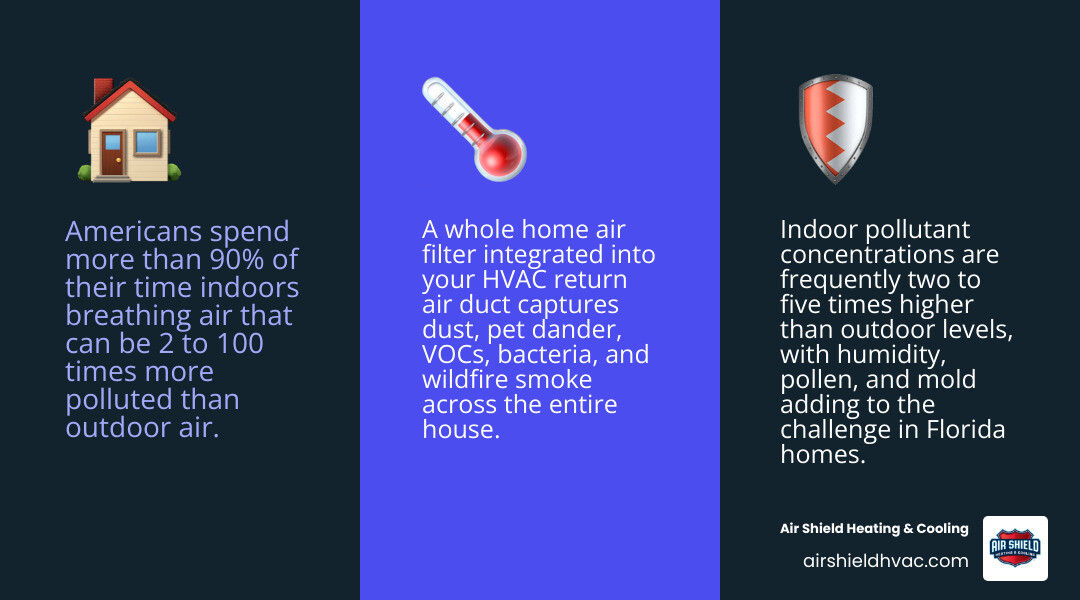
Here is a fact that surprises most homeowners: the air inside your home is often far more polluted than the air outside. According to the U.S. Environmental Protection Agency, indoor pollutant concentrations are frequently two to five times higher than outdoor levels, and in some cases can be up to 100 times worse. Yet Americans spend more than 90% of their time indoors, breathing that air every single day.
For families in Manatee County and throughout Florida, this is not just a statistic. High humidity, seasonal pollen, mold spores, and the constant cycling of a hard-working HVAC system all combine to create indoor air quality challenges that are genuinely difficult to manage with basic filtration alone. Dust, pet dander, volatile organic compounds, bacteria, and even wildfire smoke particles can accumulate inside your home without any visible warning signs, quietly affecting your respiratory health, sleep quality, and overall comfort.
The good news is that upgrading to a properly matched whole home air filtration system can make a meaningful difference, and this guide walks you through everything you need to evaluate, select, and maintain one.
I am Nick Pazanski, founder of Air Shield Heating & Cooling, LLC, with over two decades of hands-on HVAC experience helping Florida homeowners solve real indoor air quality problems, including selecting and installing the right whole home air filter for their specific home size, ductwork, and health needs. In the sections ahead, I will break down the technologies, sizing considerations, and maintenance requirements so you can make a confident, informed decision.
Understanding the Whole Home Air Filter and HVAC Integration
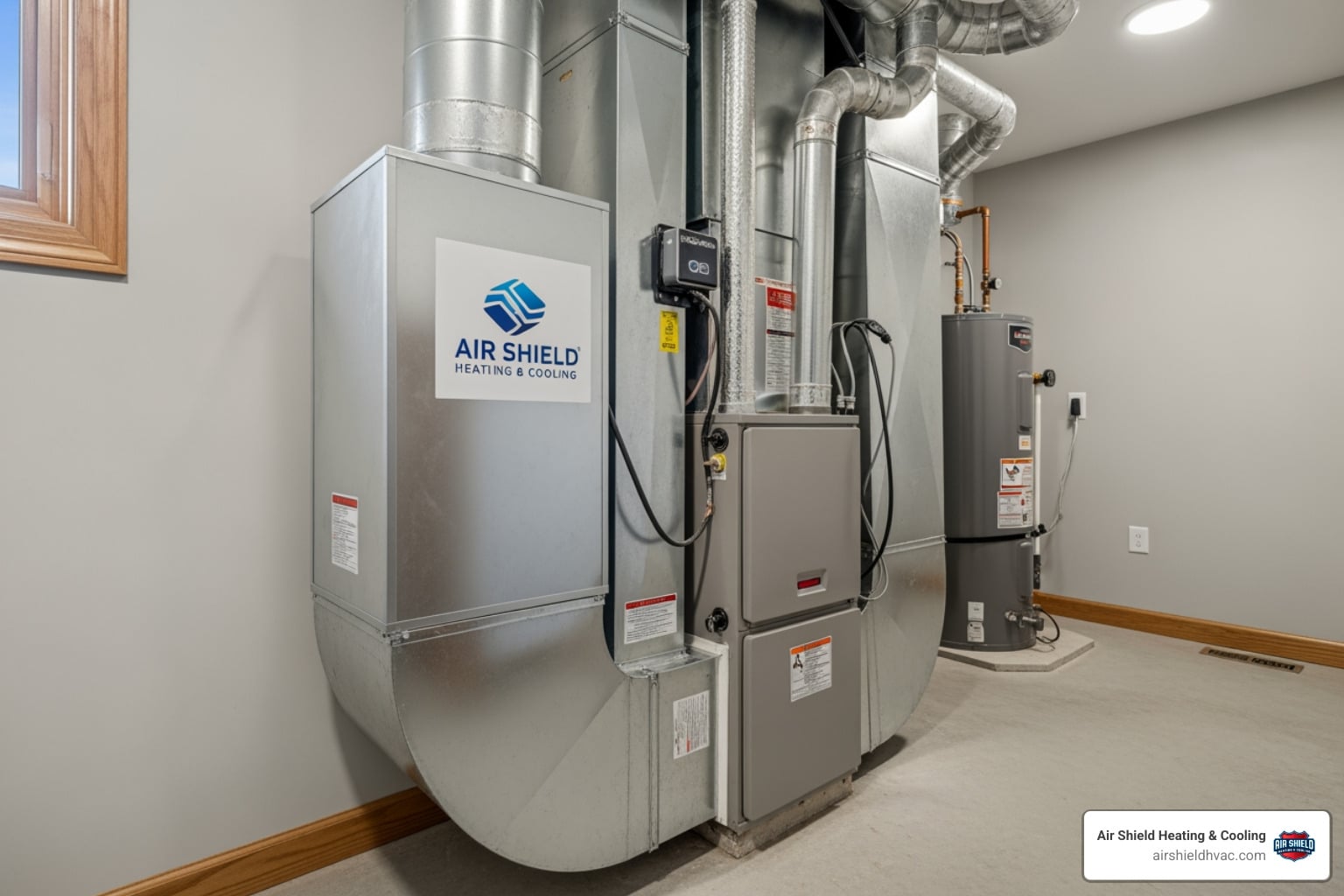
When I talk to homeowners in Bradenton, FL, about a whole home air filter, the first question is usually: “How does this actually work with my AC?” Unlike a portable unit that sits in the corner of a room, a whole-home system is integrated directly into your existing HVAC equipment.
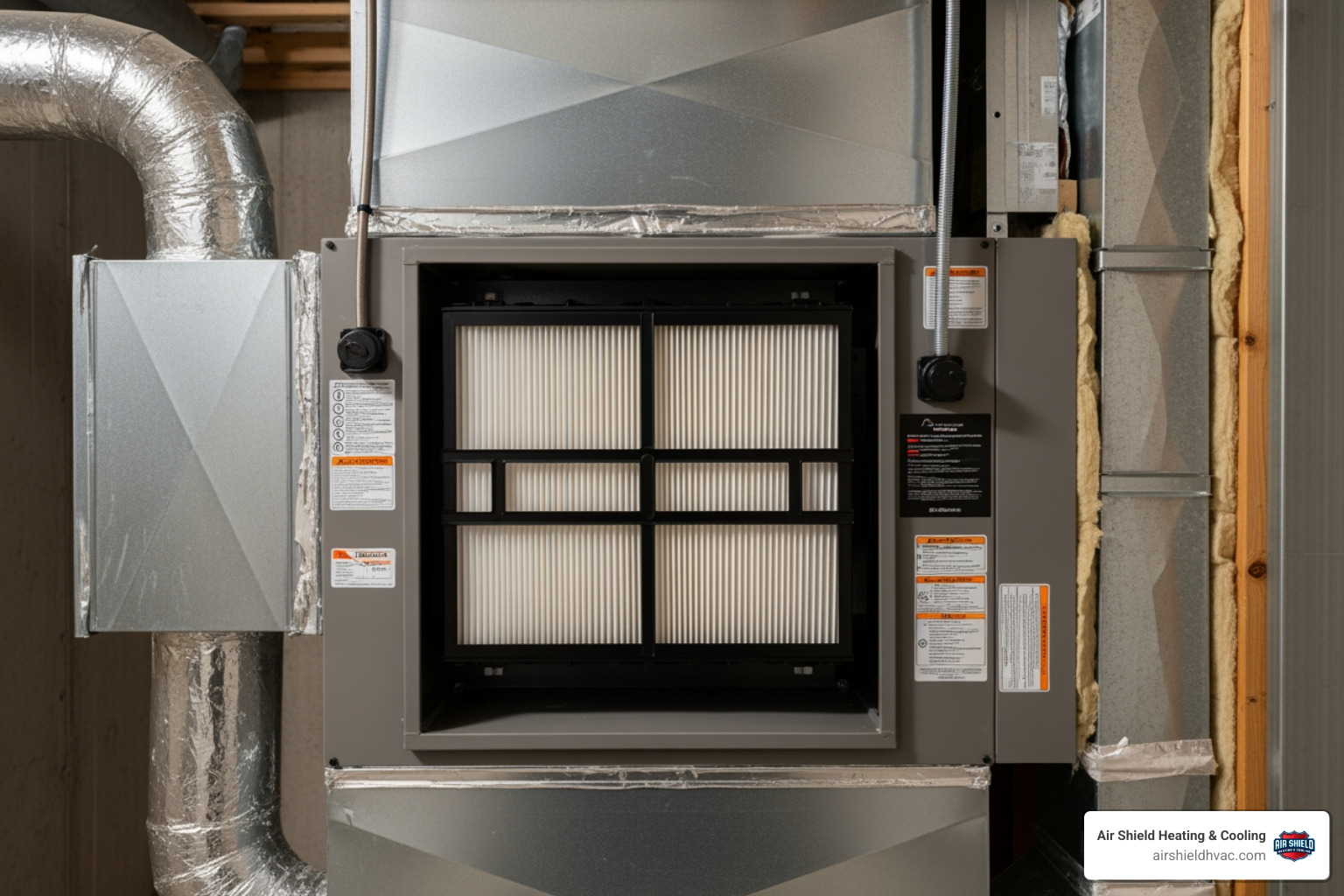
Most often, these systems are installed in the return air duct. This is the part of your system that pulls air from your house back into the air handler to be cooled or heated. By placing a high-efficiency filter here, we ensure that every cubic foot of air circulating through your home passes through the filtration media. This centralized approach is why Indoor Air Quality Services are so effective; they treat the entire house as one ecosystem rather than trying to clean one room at a time.
One of the technical metrics we look at is the Clean Air Delivery Rate (CADR). To give you an idea of the power difference, a standard 1-inch disposable filter might have a CADR of around 10. In contrast, a high-performance whole-home cleaner can have a CADR of 1200 or more. This means the system can filter all the air in a home up to 125 times per day.
However, we have to balance filtration power with airflow resistance, often called static pressure. If a filter is too restrictive, it acts like a wall, forcing your blower motor to work harder, which can lead to equipment failure. My job is to find that “sweet spot” where we capture sub-micron particles without strangling your HVAC system. There are significant Whole Home Air Purifier Benefits when the system is balanced correctly, including better airflow and cleaner coils.
Advanced Technologies and Pollutant Removal
Not all filters are created equal. In air purification, we deal with three main categories of “bad guys”: particles, biologicals, and gases.
HEPA and Media Filtration
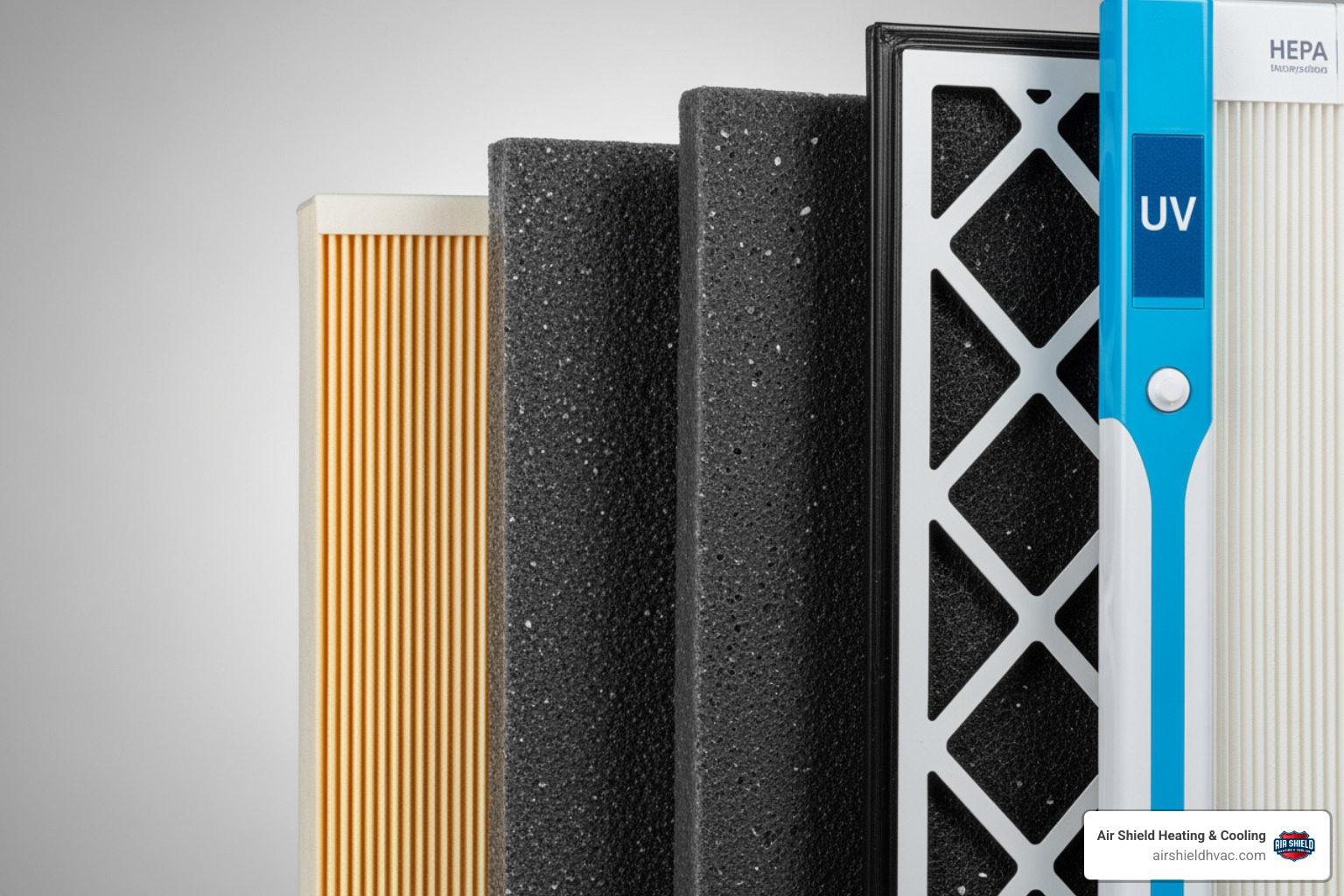
High-Efficiency Particulate Air (HEPA) filters are the gold standard for particles. A true HEPA filter captures 99.97% of particles as small as 0.3 microns. To put that in perspective, the human eye can only see particles down to about 25 microns. When we install a 10,000 Whole Home HEPA Air Filtration System, we are targeting the tiny triggers that cause real misery: mold spores, pet dander, and fine dust. This is why Home Air Purifiers Cut Down Dust so effectively; they catch the stuff that usually just settles on your coffee table.
Activated Carbon and VOCs
If you have ever smelled “new carpet” or strong cleaning chemicals, you are smelling Volatile Organic Compounds (VOCs). Standard filters can’t touch these. For that, we use activated carbon. Carbon filters use adsorption to trap gases and odors in millions of tiny pores. This is essential for homes near busy roads or for families sensitive to chemical smells.
UVGI and PCO Technology
Ultraviolet Germicidal Irradiation (UVGI) uses UV-C light to scramble the DNA of bacteria and viruses, rendering them harmless. Some advanced systems use Photo-Catalytic Oxidation (PCO) to actually break down pollutants at a molecular level. A major concern for many of my clients in Sarasota, FL, is ozone safety. I always recommend systems that are CARB certified to produce zero ozone, as ozone can be a major respiratory irritant.
Comparing Whole-House Systems vs. Portable Units
I often see homeowners try to solve their air quality issues by buying four or five portable air purifiers. While portables have their place, they are essentially the “space heaters” of the air world. They work well in a small radius but struggle to provide uniform air quality across a 2,500-square-foot home.
| Feature | Whole Home Air Filter | Portable Air Purifier |
|---|---|---|
| Coverage | Entire home (every room with a vent) | Single room or small area |
| Noise | Near silent (housed in attic/closet) | Noticeable fan noise in the room |
| Maintenance | Once or twice a year | Every 3-6 months per unit |
| Aesthetics | Invisible (integrated into ducts) | Takes up floor/table space |
| Energy Efficiency | High (uses existing blower) | Low (multiple motors running) |
Whole-home systems offer a superior long-term value because they integrate with your HVAC blower, which is already designed to move large volumes of air. This allows for more Air Changes per Hour (ACH) without the clutter. Furthermore, a Whole Home Air Purifier Helps With Humidity by ensuring that air moves efficiently through your cooling coils, where moisture is removed. For a deeper dive into these options, check out The Ultimate Guide to Better Indoor Air Quality Solutions.
Installation, Selection, and Maintenance Criteria
Installing a whole home air filter is not a typical DIY project. In our humid Bradenton, FL, climate, the installation must be precise to prevent air bypass. If air can leak around the edges of the filter, the system is useless.
During a professional installation, I evaluate your ductwork compatibility. If your ducts are leaky or dirty, the filter will clog prematurely. This is why there are significant Air Duct Cleaning Benefits to consider before or during an upgrade. Clean ducts ensure the purified air actually stays clean until it reaches your living space.
We also look at products like the EverFilter® Starter Kit, which uses a reusable frame to reduce waste while maintaining high airflow. The goal is to improve system longevity. A cleaner system runs more efficiently and lasts years longer than one choked with Florida dust and pet hair.
Choosing the Right Whole Home Air Filter for Your Property
Sizing is the most critical step. We match the filter capacity to your HVAC tonnage. A 3-ton unit moves about 1,200 CFM (cubic feet per minute) of air, and your filter must be able to handle that volume without creating a massive pressure drop.
We also consider your specific goals. Are you trying to manage severe asthma? We might look at a HEPA bypass. Are you mostly worried about the oak pollen in Palmetto, FL? A MERV 13 media filter might be plenty. To truly Improve Indoor Air – Clean Ducts and choose the right capacity, we perform a static pressure test on your existing system to see how much “room” we have for more filtration.
Maintenance and Costs of a Whole Home Air Filter
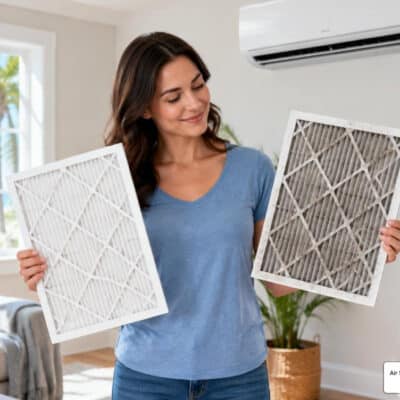
One of the biggest advantages of a whole-home system is the maintenance schedule. Instead of changing a 1-inch filter every month, many high-capacity media filters only need replacement every 6 to 12 months.
Annual operating costs are generally low, mostly consisting of the replacement media. Some electronic systems require an annual cleaning of the charging wires or plates. By sticking to a professional schedule through Indoor Air Quality Services, you ensure your warranty protection remains intact. Many manufacturers require proof of professional maintenance to honor equipment warranties, which can save you thousands if a major component ever fails.
Frequently Asked Questions about Whole Home Air Filters
How does a whole home air filter integrate with my existing HVAC system? It is typically installed in the return air plenum or ductwork just before the air handler. This allows the HVAC blower to pull all the home’s air through the filter before it is conditioned and redistributed.
What are the primary benefits of a whole home air filter over portable units? Whole-home systems provide uniform air cleaning in every room, operate silently, require less frequent maintenance, and do not take up any floor space in your living area.
Which pollutants can a whole home air filter effectively remove from my air? Depending on the model, they can remove dust, pollen, mold spores, pet dander, bacteria, viruses, smoke particles, and Volatile Organic Compounds (VOCs).
What is the difference between HEPA and standard pleated filters? HEPA filters are significantly more efficient, capturing 99.97% of particles down to 0.3 microns. Standard pleated filters (usually MERV 8-11) capture larger dust and pollen but miss many microscopic triggers.
How do I determine the correct size for a whole home air filter? Sizing is based on your HVAC system’s tonnage and the CFM (cubic feet per minute) of air it moves. A professional must ensure the filter’s surface area is large enough to prevent airflow restriction.
Are there any health or safety concerns regarding ozone emissions? Some older electronic cleaners produced ozone, but modern systems are often CARB-certified to produce zero ozone. Always look for “zero ozone” or “UL 867” certification for safety.
What are the typical maintenance requirements for these systems? Maintenance usually involves replacing a deep-pleated media filter once or twice a year. Electronic models may require annual cleaning of the internal components.
How often should I replace the media in my whole home air filter? Most high-efficiency media filters last between 6 and 12 months, depending on the air quality in your home and how often you run your HVAC system.
Can a whole home air filter help reduce my monthly energy bills? By keeping the internal coils of your AC system clean, a whole-home filter maintains optimal heat transfer, which allows the system to run more efficiently and potentially lower energy costs.
Is professional installation required for a whole home air filter in Bradenton, FL? Yes. Professional installation ensures the unit is airtight, correctly sized for your blower motor, and compliant with local Florida building codes.
Conclusion
Improving your indoor air quality is one of the most impactful investments you can make for your family’s health and comfort. In a place like Manatee County, where the outdoor environment is often filled with humidity and allergens, your home should be a true sanctuary. A properly installed whole home air filter provides that peace of mind by working silently in the background to scrub every breath you take.
From capturing microscopic mold spores to neutralizing stubborn odors, these systems offer a level of protection that single-room units simply cannot match. Whether you are in Apollo Beach, FL, or Sarasota, FL, the key is choosing a system that fits your specific HVAC setup and health priorities.
Whether you need fast AC repairs, seasonal HVAC maintenance, or a complete Home Air Purifier installation, the team at Air Shield Heating & Cooling is ready to help. Schedule your professional HVAC service today.