
Understanding Duct Dampers and Why Lakewood Ranch, FL Homes Need Zoning
A duct damper is a movable plate or valve installed inside an air distribution trunk or branch line. Its primary role is to regulate, balance, and redirect airflow through specific segments of your duct system. Without dampers, your central AC unit sends conditioned air along the path of least resistance. This usually leads to excess cooling near the air handler and inadequate cooling in far-flung rooms.
When evaluating a home, HVAC technicians determine whether the layout requires airflow control, seasonal balancing, or active multi-stage zoning. Achieving true comfort requires addressing the severe heat and moisture loads characteristic of our local climate. In our region, high attic temperatures put constant thermal pressure on ductwork. When you need targeted distribution, investing in professional ductwork repair and installation sets the foundation for a reliable, balanced system.
Manual Dampers vs. Motorized Zone Dampers
Understanding the distinction between damper types helps you decide on the right upgrade for your property.
- Manual Balancing Dampers: These mechanical plates feature an external lever on the sheet metal ductwork. Once set during an airflow balance, they remain fixed in position. They work best for permanent static balancing or minor seasonal adjustments.
- Motorized Zone Dampers: These dynamic units feature 24-volt electric actuators wired directly to a central zone control board. When a dedicated smart thermostat signals a temperature change, the motor rotates the internal blade to open or restrict airflow automatically.
- Barometric Bypass Dampers: These specialized weighted or motorized dampers sit between the supply and return air plenums. They relieve excess air pressure when some motorized dampers close, protecting duct seams and blower motors from elevated static pressure.
| Damper Type | Operation Mechanism | Primary Purpose | Ideal Use Case |
|---|---|---|---|
| Manual Balancing Damper | Hand-operated lever and wing nut | Fixed airflow proportioning | Equalizing branch lines in single-story floor plans |
| Motorized Zone Damper | 24-volt electric motor actuator | Dynamic on-demand zoning | Multi-story homes, bonus rooms, guest suites |
| Barometric Bypass Damper | Weighted arm or pressure sensor | Static pressure relief | Multi-zone systems with single-speed blower units |
Climate Challenges in Lakewood Ranch, FL
Operating an AC system in Manatee County, FL presents distinct operational challenges. Central Florida air conditioners run for eight to ten months out of every single year. The extreme outdoor humidity creates an ongoing risk of condensation inside unconditioned attic spaces.
When rooms suffer from poor airflow, indoor relative humidity climbs, leaving living spaces feeling sticky. In multi-level homes, second-floor heat gain forces the air handler to work continuously just to satisfy an upstairs thermostat, overcooling the ground floor in the process. Understanding why ductwork repairs improve airflow is critical before installing damper components, because sealing air leaks is necessary for precise pressure management.
Why Dampers Duct Installation Lakewood Ranch, FL Is Essential for Whole-Home Comfort
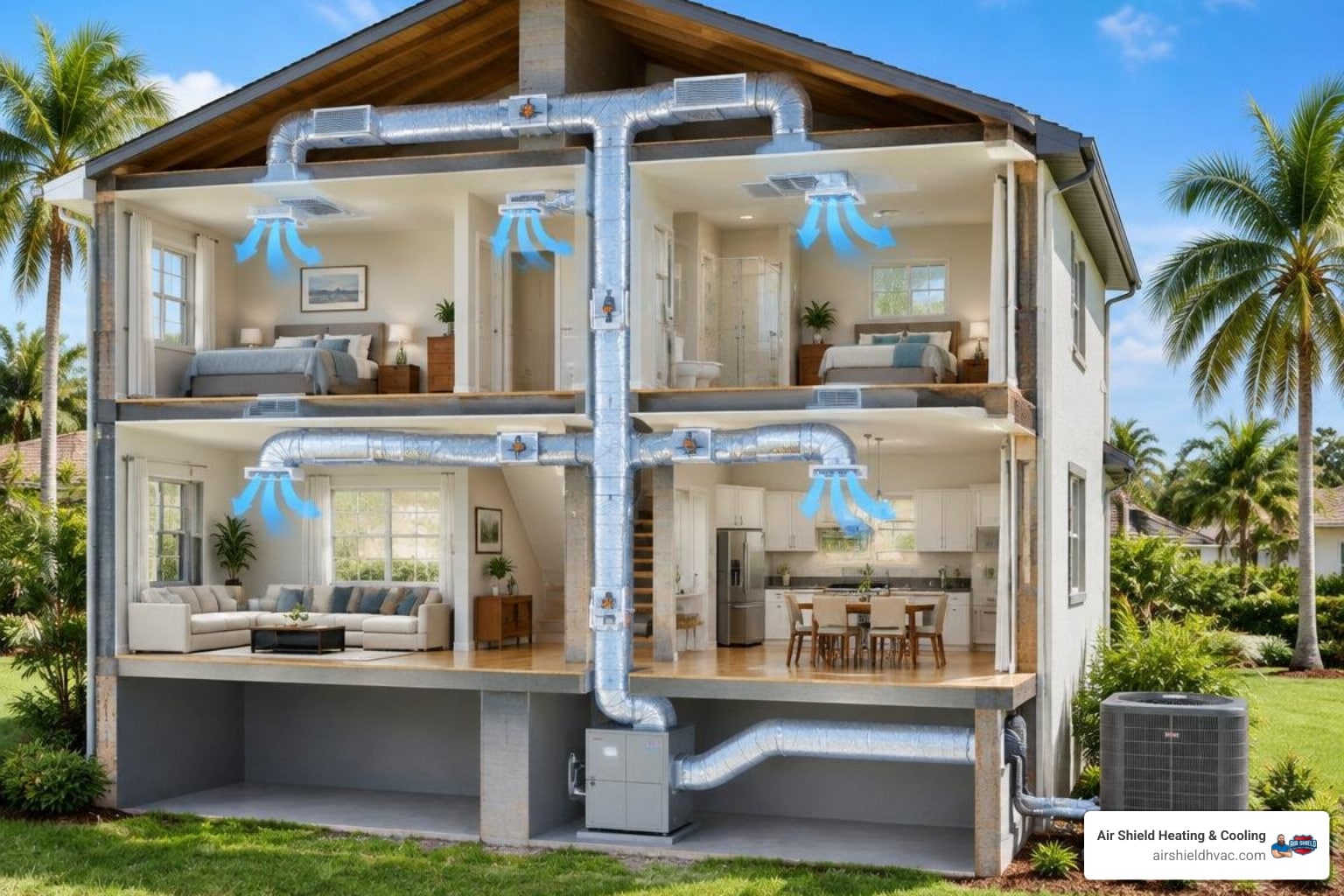
Installing dampers is about taking control of how conditioned air is delivered across distinct architectural spaces. Many modern homes in Lakewood Ranch, FL feature architectural traits like split floor plans, tall cathedral ceilings, large glass sliders, and dedicated home offices. These diverse spaces rarely need the same amount of cooling at the same time of day.
By splitting a residence into custom zones, you eliminate hot spots and avoid chilling rooms that sit empty for most of the week. Delivering balanced cooling to every room is a signature part of our Lakewood Ranch, FL HVAC solutions, protecting equipment and enhancing family comfort.
How Dampers Duct Installation Lakewood Ranch, FL Addresses Multi-Story Heat Gain
Solar radiation strikes roofs throughout the day, creating attic temperatures that frequently exceed 130 degrees Fahrenheit. The upper floors absorb this heat through ceilings and exterior walls. Without zone dampers, the warm air upstairs naturally rises, while chilled air sinks downstairs.
Motorized dampers solve this disparity by actively shifting cooling capacity toward upper levels throughout peak afternoon hours. As evening approaches, the system modulates to balance airflow across master suites and main living areas, keeping temperatures uniform.
Enhancing Energy Efficiency and Reducing Wear on AC Equipment
An unbalanced duct layout forces HVAC compressors to run longer, more frequent cycles. Homeowners often lower their thermostats past reasonable levels to force cooling into an uncomfortable bedroom, placing needless strain on the condenser.
Addressing leaking or unbalanced ductwork costs by optimizing duct runs and adding dampers keeps modern high-efficiency systems running smoothly. According to industry guidance from the U.S. Department of Energy, eliminating duct distribution inefficiencies directly cuts cooling expenses while extending equipment lifespans.
For many property owners, scheduling dampers duct installation in Lakewood Ranch also reduces short-cycling episodes that accelerate wear on expensive compressor components. A balanced zoning array lets your AC system deliver exact airflow volumes to only the rooms that need it. That precision keeps your blower motor, evaporator coil, and outdoor condenser operating inside their designed performance envelope for more years of dependable service.
How to Plan and Execute Damper Retrofits or New Builds
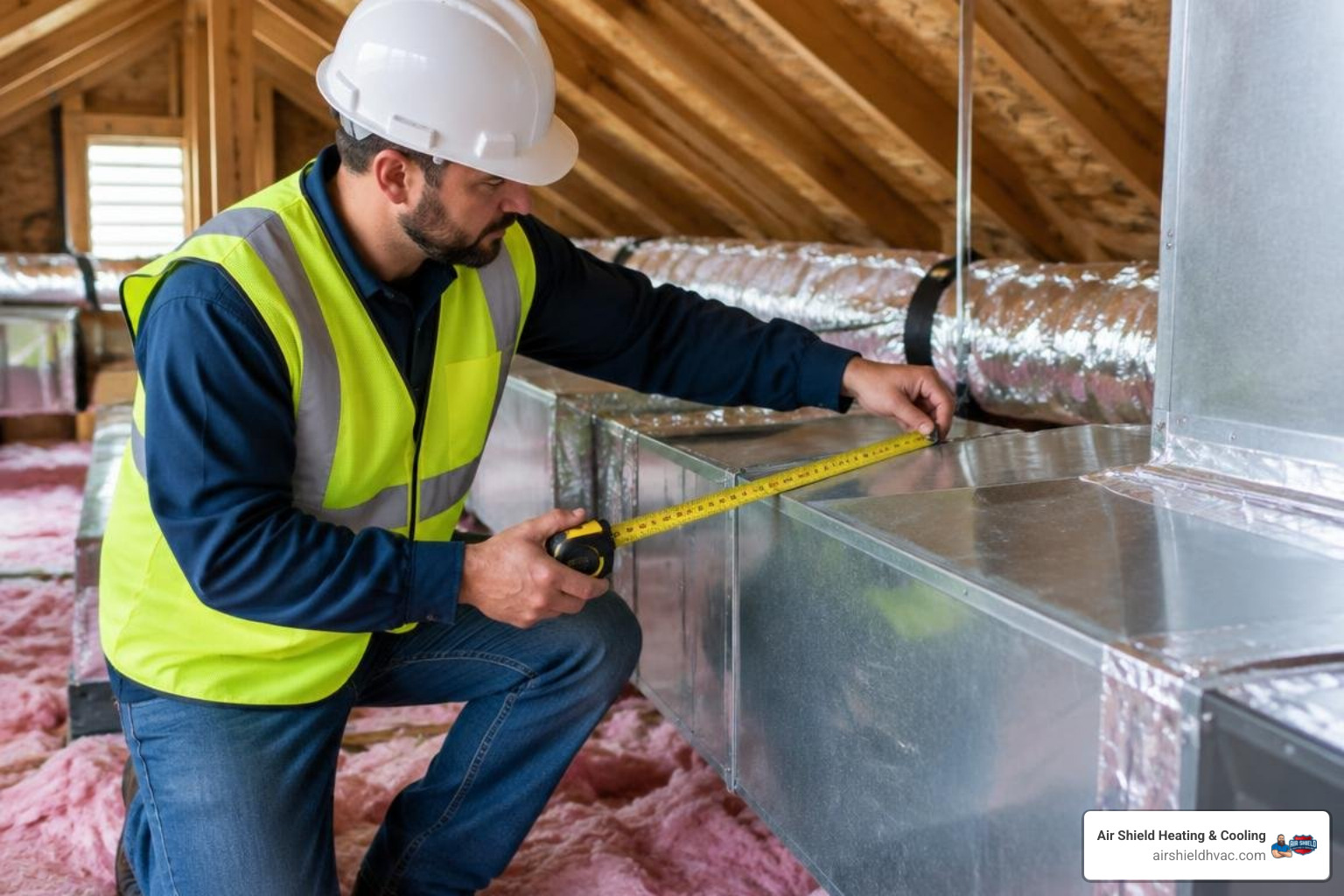
A successful damper installation demands precision engineering. You cannot simply drop a metal damper into a run of flex duct and expect balanced comfort. If dampers close without proper pressure relief, the increased backpressure can damage blower motors, cause indoor coils to freeze, or pop loose duct seams.
Zoning requires conducting room-by-room load calculations and inspecting attic layout designs. Following a detailed guide to ductwork installation steps ensures trunk lines, transitions, and take-offs handle shifted airflow cleanly. Because duct modifications involve high-voltage connections, low-voltage control circuits, attic physical hazards, and specialized sheet metal tools, homeowners should always contact a licensed HVAC professional whenever safety concerns arise, specialized diagnostic tools are needed, or complex electrical and mechanical systems are involved.
Step-by-Step Dampers Duct Installation Lakewood Ranch, FL Process
- Duct and Airflow Evaluation: We measure the existing static pressure across the air handler and calculate airflow demands for every room.
- Trunk Line Modification: Rigid sheet metal sleeves or dedicated zoning take-offs are cut directly into the primary supply trunk lines.
- Damper Placement and Mounting: We mount heavy-duty motorized zone dampers or manual balancing dampers firmly within the duct collars.
- Wiring the Zone Control Board: For automated setups, we run low-voltage wiring from the damper actuators to a master zone control board and connect dedicated smart thermostats.
- Airtight Mastic Sealing: Every joint, seam, and damper housing collar is sealed using fiberglass mesh tape and UL-listed mastic paste to stop attic air infiltration.
- Static Pressure Testing and Air Balancing: We fire up the system, activate individual zones, and measure total external static pressure with a manometer, adjusting damper limits to prevent equipment strain.
Managing Static Pressure and Bypass Ductwork
When a two-zone system shuts down airflow to Zone 1, all supply air rushes into Zone 2. If Zone 2 cannot handle that high volume, air velocity climbs, causing loud whooshing sounds at the registers and elevating static pressure.
To prevent this issue, technicians install barometric bypass dampers that vent surplus supply air back into the return air plenum, or configure multi-stage variable-speed ECM blower motors to ramp down when zones close. This balance prevents frozen evaporator coils and protects your compressor.
Signs Your Lakewood Ranch, FL Ductwork Needs Damper Adjustments or Replacement
Recognizing the warning signs of improper airflow balancing helps you address problems before they lead to compressor failures or persistent comfort issues.
- Noticeable Room Temperature Variances: A temperature swing greater than 3 to 4 degrees between bedrooms and main living spaces points to airflow distribution problems.
- Whistling or Rushing Register Noise: High-pitched air noises usually indicate restricted duct branches or excessive static pressure from improperly calibrated dampers.
- Elevated Humidity Levels: Rooms that receive insufficient airflow will not experience adequate dehumidification, leading to muggy conditions and musty smells.
- Skyrocketing Electric Bills: If your AC compressor runs constantly because one warm room cannot satisfy its thermostat, power bills will spike.
If your system suffers from persistent airflow issues or accumulated attic debris around registers, scheduling professional air duct cleaning clears the way for accurate damper calibrations.
Integrating Damper Systems with Comprehensive HVAC Maintenance
Motorized damper actuators contain gears and electrical motors that work in warm attic conditions. Over time, dust accumulation or physical wear can cause damper blades to stick or drift out of calibration.
Enrolling in regular HVAC maintenance plans ensures technicians check actuator linkages, verify thermostat communication, test static pressure, and inspect duct seals before summer heat peaks across Manatee County, FL.
Local Building Codes, Permitting, and Professional Installation Standards
All HVAC work in Lakewood Ranch, FL must strictly follow the Florida Building Code (Mechanical and Energy Conservation volumes) as well as Manatee County requirements. These regulations demand that all attic duct modifications maintain a minimum insulation value of R-8 to stop condensation from forming on exterior sheet metal surfaces.
Air leakage must be mitigated using code-compliant materials such as UL-181 mastic and foil-faced tapes. Flexible duct connections must use heavy-duty tensioning straps, and retrofits must never compromise overall system airflow or indoor air quality. Hiring a licensed contractor for comprehensive HVAC services guarantees your installation meets all local safety codes, passes mechanical inspections, and performs reliably for years.
Beyond code minimums, smart zoning designs also account for accessible service clearances. Manatee County inspectors frequently verify that damper actuators remain reachable for future maintenance, calibration, or replacement without requiring the removal of insulation or structural components. A well-planned layout leaves room for safe wiring connections, blade inspection, and manual override levers on motorized units.
Moisture control remains a core concern for any damper retrofit. Because attic humidity in our region stays elevated for much of the year, exposed metal damper housings must be wrapped and sealed with the same care used for traditional duct joints. Unsealed damper collars can allow humid outside air to infiltrate the supply stream, introducing condensation risks that lead to water staining, mold development, and reduced indoor air quality.
At Air Shield Heating & Cooling, our technicians document every modification and verify final static pressure readings against manufacturer specifications. Scheduling a professional evaluation before tackling major ductwork changes ensures your zoning investment remains safe, code-compliant, and truly effective.
Frequently Asked Questions About Duct Dampers and HVAC Zoning in Lakewood Ranch, FL
What is the primary purpose of a duct damper in an HVAC system?
A duct damper regulates and directs the flow of conditioned air through specific branches of your duct system. It allows you to balance room temperatures, direct cooling where it is needed most, and prevent overcooling unused spaces.
How do motorized zoning dampers work with smart thermostats?
Motorized dampers use low-voltage electric actuators wired to a central zone control board. When an individual zone thermostat calls for cooling, the control board powers the corresponding damper open while closing dampers leading to satisfied zones.
Can duct dampers be retrofitted into existing ductwork in Lakewood Ranch, FL?
Yes. Technicians can retrofit dampers into existing attic ductwork by installing rigid sheet metal sleeves into main supply trunk lines and branch take-offs, provided there is adequate physical access to the duct layout.
What is the difference between balancing dampers and zoning dampers?
Balancing dampers are manual plates adjusted during system setup to maintain fixed airflow proportions across rooms. Zoning dampers are motorized and automatically open or close in real time based on commands from separate thermostats.
How do duct dampers help reduce electric bills in Manatee County, FL?
Dampers allow you to direct cooling only to occupied rooms instead of chilling the entire house all day. This targeted delivery shortens cooling runtimes, lowers power demand, and helps your AC run at peak efficiency.
Will installing dampers cause excessive static pressure in my ductwork?
If installed without proper airflow calculations, closed dampers can elevate static pressure. A professional HVAC contractor prevents this by installing bypass ductwork, setting minimum damper blade stops, or integrating variable-speed blower controls.
How long does a damper duct installation take in a Lakewood Ranch, FL home?
A standard residential damper installation or zoning retrofit typically takes between 1 and 2 days. This includes duct modification, actuator wiring, control panel installation, sealing, and static pressure balancing.
What are the signs of a stuck or failing motorized duct damper?
Common symptoms include one zone staying constantly hot or freezing cold, a complete lack of airflow from supply registers, a faint humming noise from the attic actuator motor, or error lights on the central zone panel.
Do duct dampers require regular maintenance or calibration?
Yes. Technicians should inspect damper mechanisms during annual HVAC checkups. Routine maintenance includes verifying actuator movement, checking blade seals, clearing dust, and testing thermostat communication.
How much does professional damper duct installation cost in Lakewood Ranch, FL?
Pricing depends on the number of zones required, the accessibility of attic ductwork, whether manual or motorized dampers are used, and whether the system requires extra bypass ductwork or control boards. An on-site assessment provides an accurate quote.
Conclusion
Mastering indoor comfort in our humid, subtropical climate requires complete control over your home’s airflow distribution. Whether you need to fix a hot second-floor bedroom or want to establish custom temperature zones across a sprawling layout, properly installed dampers deliver targeted comfort and genuine efficiency. At Air Shield Heating & Cooling, our team has served homeowners across Manatee County, FL since 2014 with honest advice and high-quality craftsmanship. To balance your airflow and eliminate persistent hot spots, contact our professional ductwork installation technicians today.