
Is Your AC Compressor Not Working? Here’s What It Could Mean
If your AC compressor is not working, the most likely causes are a failed capacitor, tripped circuit breaker, low refrigerant triggering a safety shutdown, a faulty contactor, or a compressor motor that has worn out over time.
Quick Answer: Most Common Reasons an AC Compressor Stops Working
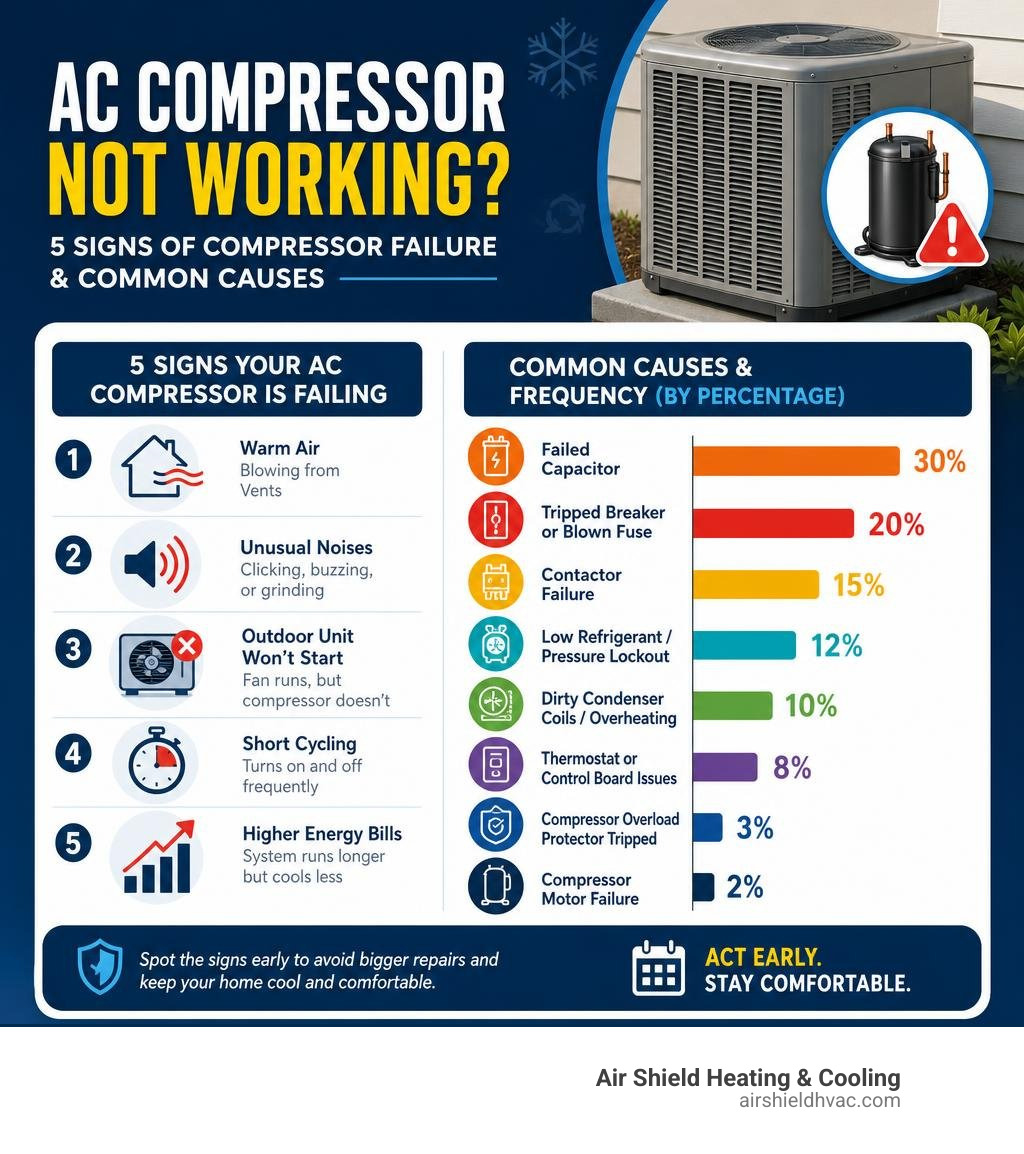
| Cause | How Common | What You Might Notice |
|---|---|---|
| Failed capacitor | ~30% of cases | Humming sound, fan runs but no cooling |
| Tripped breaker or blown fuse | ~20% of cases | Outdoor unit completely dead |
| Contactor failure | ~15% of cases | No response when thermostat calls for cooling |
| Low refrigerant / pressure lockout | ~12% of cases | Warm air, system shuts off quickly |
| Dirty condenser coils / overheating | ~10% of cases | System short cycles, outdoor unit hot to touch |
| Thermostat or control board issues | ~8% of cases | Inconsistent cooling, no signal to outdoor unit |
| Compressor overload protector tripped | ~3% of cases | System attempts to start then shuts down |
| Compressor motor failure | ~2% of cases | No movement, grinding or no sound at all |
There are few things more frustrating than setting your thermostat, hearing your indoor unit kick on, and waiting for cool air that never arrives. In Florida’s relentless summer heat, a non-working AC compressor is not just an inconvenience. It can make your home genuinely uncomfortable within hours. The compressor is often called the heart of your cooling system, and for good reason: without it, refrigerant cannot circulate, heat cannot be transferred out of your home, and the entire cooling cycle comes to a standstill.
What makes compressor problems especially tricky is that they rarely announce themselves all at once. Sometimes the system blows lukewarm air for weeks before anything else seems wrong. Other times, the outdoor unit simply stops engaging while the indoor fan keeps running, leaving homeowners puzzled about what went wrong. Understanding the warning signs early can be the difference between a straightforward repair and a much more costly replacement.
At Air Shield Heating & Cooling, our experienced HVAC team has spent more than two decades diagnosing and resolving AC compressor not working issues across Manatee County, FL, and the surrounding communities. In this guide, our team walks you through the five most telling signs that your compressor is failing and what you should do about each one.
What Is an AC Compressor and How Does It Work?
To understand why your cooling system is struggling, it helps to understand what the compressor actually does. Many homeowners assume the AC generates cold air out of nothing, but the process is actually about heat extraction. Your air conditioner takes the heat from inside your home and dumps it outdoors.
The compressor is the mechanical pump located in your outdoor condenser unit that drives this entire process. It is responsible for circulating refrigerant between the indoor evaporator coils and the outdoor condenser coils.
Here is how the cycle works:
- Low pressure, cool refrigerant gas leaves your indoor coils after absorbing heat from your home’s air.
- The compressor receives this low pressure gas and compresses it. By squeezing the gas molecules together, it raises both the pressure and the temperature of the refrigerant significantly.
- This hot, high pressure gas is pumped into the outdoor condenser coils. Because the refrigerant is now much hotter than the outdoor air, the heat naturally dissipates into the environment, aided by the outdoor condenser fan.
- As the heat escapes, the refrigerant cools down and condenses into a liquid, which then travels back indoors to absorb more heat and repeat the cycle.
Without a properly functioning compressor, refrigerant cannot change states or pressures, meaning no heat exchange can occur. This is why compressor issues can affect the entire cooling cycle, from indoor heat absorption to outdoor heat release.
5 Signs Your AC Compressor Is Failing
When a compressor begins to struggle, it leaves a trail of breadcrumbs. Catching these early warning signs can save you from a complete system breakdown in the middle of a sweltering July afternoon in Bradenton, FL.
If you notice any of the following diagnostic indicators, it is time to pay close attention. Our team always recommends checking out these tips when your AC isn’t cooling properly to rule out simple air distribution issues before assuming the worst about your compressor.
1. Warm Air Blowing From the Vents
The most obvious sign of a compressor issue is when your system is running, but the air coming out of your supply registers is warm or lukewarm. When the compressor fails to pump refrigerant efficiently, the indoor evaporator coil cannot get cold enough to lower the temperature of the air passing over it.
Before jumping to conclusions, you should always double check your thermostat settings to ensure it was not accidentally switched to “Fan Only” or “Heat” mode. However, if the thermostat is set to “Cool” and the indoor blower is pushing warm air, it means the heat exchange process has failed. This is often caused by restricted refrigerant flow or a compressor that is mechanically unable to build the high pressures required to run the refrigeration cycle.
2. Loud or Unusual Noises During Operation
While outdoor units are never completely silent, they should produce a steady, predictable hum. If your outdoor condenser starts making loud, jarring noises, it is a clear indicator that something is wrong internally.
Common noises associated with a failing compressor include:
- Screeching or Squealing: This often points to high pressure buildup within the compressor or a failing internal bearing.
- Metallic Clanging or Rattling: This suggests that internal components, such as valves or pistons, have broken loose and are bouncing around inside the hermetically sealed casing.
- Loud Electrical Humming: A loud hum, often followed by a click and then silence, indicates that the compressor motor is trying to start but cannot pull enough electrical current.
If you are trying to identify a strange sound coming from your system, take a look at our guide on why your AC is making strange noises to help pin down the exact culprit before calling in a technician.
3. The AC Compressor Not Working or Engaging
Sometimes, the outdoor fan will spin merrily, but the home remains warm because the compressor itself is silent. This is a classic case of the AC compressor not working while the rest of the system appears operational.
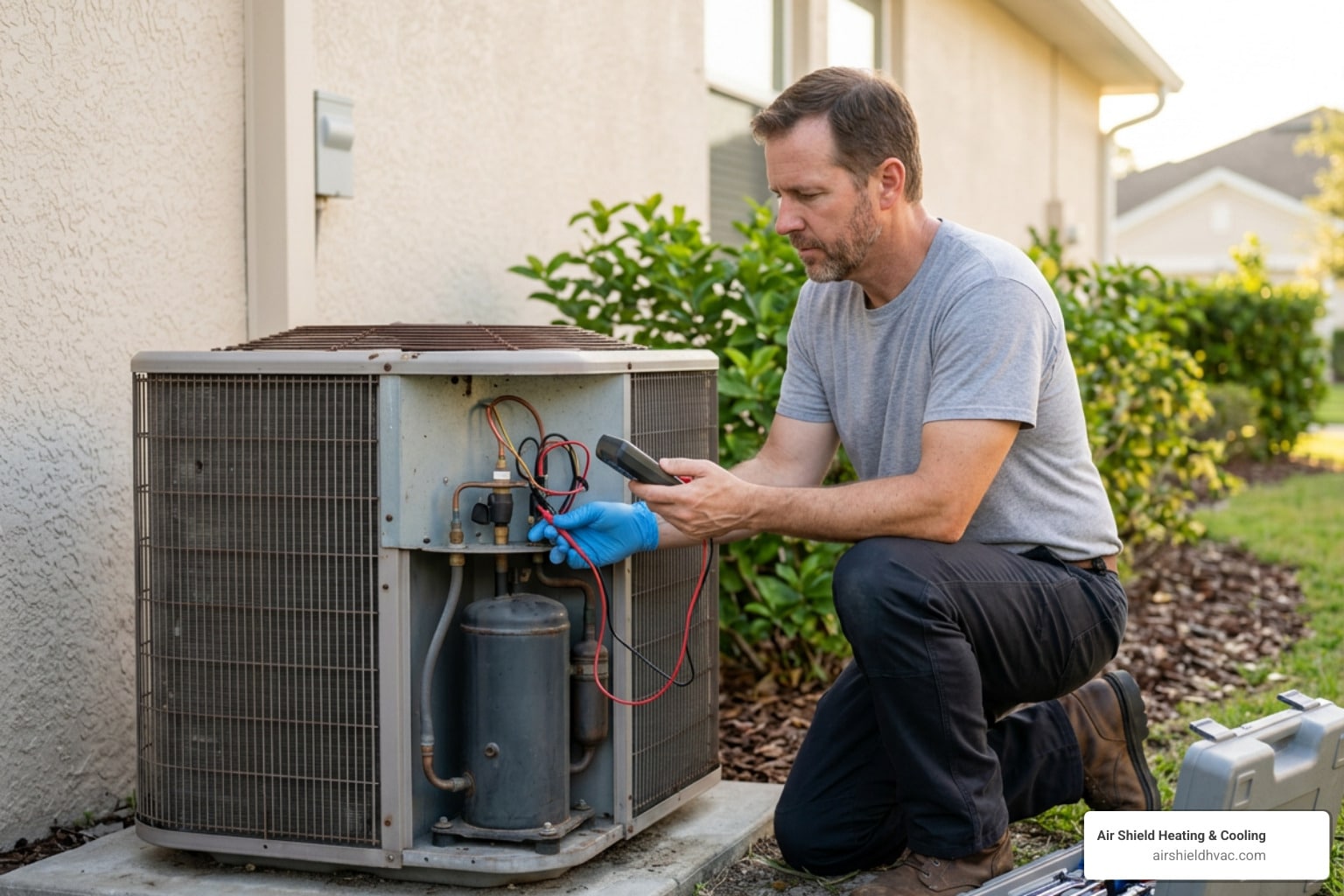
Because the condenser fan and the compressor run on separate electrical circuits within the outdoor unit, one can run without the other. If you stand near the outdoor unit and hear the fan blowing air but do not hear the deeper, heavier vibration of the compressor running, the compressor has failed to engage. This often points to a failed starting component, a tripped safety switch, or a seized motor rotor.
4. Frequent Circuit Breaker Tripping
Your home’s circuit breakers are designed to protect your electrical system from drawing too much current. If your AC unit is constantly tripping the breaker at the main electrical panel, you should never simply flip it back on and ignore the issue.
As a compressor motor ages or suffers internal electrical damage, its windings can lose their resistance, causing the motor to draw an excessive amount of current upon startup. This is known as a high current overload. Because a failing compressor draws far more power than the circuit is rated to handle, the breaker trips to prevent an electrical fire. Attempting to repeatedly reset the breaker can permanently damage the compressor or create a serious safety hazard in your home.
5. Short Cycling and Reduced Airflow
Short cycling occurs when your air conditioner turns on and off rapidly, running for only a few minutes at a time without actually cooling your home. This rapid cycling puts immense mechanical stress on the compressor motor, which experiences the most wear and tear during its startup phase.
Compressors are equipped with internal thermal overload switches and high/low pressure switches. If the compressor overheats or if the refrigerant pressure drops below a safe threshold, these safety controls will abruptly shut the compressor down to prevent total mechanical seizure. If your system is turning on and off every few minutes, it is likely running into one of these safety lockouts.
Common Causes of an AC Compressor Not Working
Now that we have covered the symptoms, let’s look at the underlying root causes. Compressors do not operate in a vacuum; they rely on a complex network of electrical and mechanical systems to keep running smoothly.
Electrical Failures and Bad Capacitors
Electrical issues account for roughly 85% of all HVAC service calls, and the compressor is highly vulnerable to these faults. The most common culprit behind a compressor that refuses to start is a failed dual run capacitor.
The capacitor acts like a temporary battery, providing the electrical boost necessary to start and run both the compressor and the condenser fan motor. Over time, exposure to intense Florida heat causes capacitors to lose their capacitance, swell, or leak oil.
When a capacitor fails, the compressor motor will hum loudly as it attempts to start without that extra electrical boost, eventually shutting down via its internal overload protector. If left unaddressed, this constant strain can burn out the motor windings entirely.
Low Refrigerant Levels and Pressure Lockouts
A very common misconception is that air conditioners naturally “consume” refrigerant over time. In reality, your AC is a closed system. If your refrigerant levels are low, it means you have a leak.
When refrigerant leaks out, the compressor must work twice as hard to pump what little gas remains, leading to extreme operating temperatures. To prevent the compressor from running dry and seizing up, a low pressure safety switch will trigger a lockout, preventing the compressor from engaging.
Dirty Condenser Coils and Overheating
The outdoor condenser coils need constant, unobstructed airflow to release the heat extracted from your home. If these coils are caked in dirt, dust, lawn clippings, or surrounded by overgrown landscaping, the heat cannot escape.
This causes the system’s operating pressure and temperature to skyrocket. The compressor will quickly overheat, causing the thermal overload switch to trip. Regular maintenance is essential to prevent this, and understanding how to adapt your system to seasonal changes, such as AC maintenance for humid season changes, can keep your coils clean and your compressor cool.
How to Troubleshoot a Non-Engaging AC Compressor
If you walk outside and suspect your compressor has stopped working, there are a few basic troubleshooting steps you can perform before calling in the pros. However, because air conditioners run on high voltage electricity and use pressurized chemicals, safety must always be your top priority. If you are uncomfortable with any of these steps, it is always best to schedule a professional repair visit before the issue causes more damage.
Step-by-Step DIY Checks for Homeowners
Before calling for emergency service, run through this quick checklist to rule out simple external issues:
- Verify Thermostat Settings: Ensure your thermostat is set to “Cool,” the fan is set to “Auto,” and the temperature setting is at least three to five degrees below the current indoor room temperature.
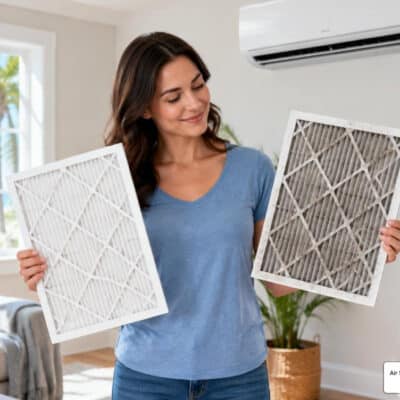
- Check the Air Filter: A severely clogged air filter restricts airflow across the indoor evaporator coil, causing it to freeze over. This ice can block refrigerant flow, triggering a safety pressure lockout that shuts down your compressor. If the filter is dirty, replace it and let the system thaw for a few hours.
- Inspect the Breaker Panel: Locate your home’s main electrical panel and check if the breaker labeled “AC” or “Condenser” has tripped. If it has, reset it once. If it immediately trips again, do not attempt to reset it a second time.
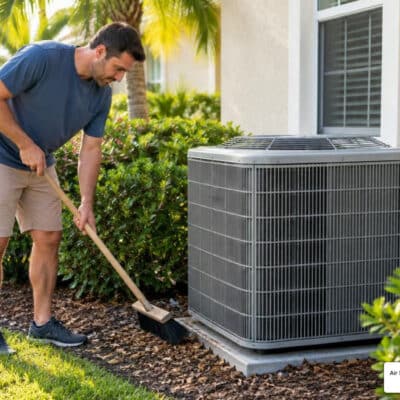
- Clear Outdoor Debris: Walk outside and ensure there are at least two feet of clear space around your outdoor condenser unit. Remove any leaves, weeds, or debris blocking the metal grilles.
When to Call a Professional for an AC Compressor Not Working
If you have completed the basic checks above and your compressor still refuses to start, it is time to call a licensed technician. For fast help with a non-working compressor, schedule professional air conditioning repair with the Air Shield Heating & Cooling team.
You should never attempt to service the internal electrical components, test live high voltage circuits, or handle refrigerant yourself. Handling refrigerant legally requires specialized EPA certification, and attempting to hot wire electrical switches can result in severe electrical shock, system damage, or a total compressor burnout.
Repair vs. Replacement: Costs and Lifespan Considerations
When faced with a failed AC compressor, every homeowner asks the same question: Should I repair it or replace the entire system?
Because the compressor is the most expensive single component in your air conditioner, this decision requires careful consideration of the system’s age, warranty status, and overall health.
| Factor | Repair (Compressor Replacement Only) | Full System Replacement |
|---|---|---|
| Average Component Lifespan | 10 to 15 years (for the new compressor) | 12 to 15 years (for the entire system) |
| Warranty Coverage | Often covered if the system is under 10 years old | Brand new manufacturer warranty (typically 10 years) |
| Energy Efficiency | Remains at the original system’s rating | Up to 20% to 30% reduction in monthly energy bills |
| Overall System Health | Older indoor components may fail soon after | All new components working in perfect harmony |
If your system is under 8 to 10 years old and the compressor is still covered under the manufacturer’s parts warranty, replacing just the compressor is often a highly cost-effective choice. However, if your system is over 10 to 12 years old, investing in a new compressor is often throwing good money after bad. Older systems still use outdated, expensive refrigerants, and their indoor components are likely nearing the end of their operational lifespans as well.
If you are trying to decide which route makes the most sense for your home, review our guide on the signs your AC is ready for replacement to make an informed decision.
Frequently Asked Questions About AC Compressor Failure
FAQ 1: Why is my AC fan running but the compressor is not?
This usually means the outdoor unit is receiving electrical power, but a specific issue is preventing the compressor from starting. The most common cause is a failed run capacitor, which cannot provide the electrical boost needed to start the compressor motor. Other causes include a tripped low pressure safety switch due to a refrigerant leak, or a faulty contactor that isn’t closing the compressor’s electrical circuit.
FAQ 2: Can I run my AC if the compressor is not working?
You can run the system’s fan to circulate air through your home, but you will not get any actual cooling. Running the fan alone will not cause additional damage to your compressor, but it will not lower the temperature or humidity inside your home.
FAQ 3: How long do AC compressors typically last?
With regular professional maintenance, a residential AC compressor typically lasts between 10 and 15 years. However, in coastal Florida regions, exposure to salty air and high humidity can accelerate wear on outdoor electrical components, which can shorten this lifespan if the system is not washed and serviced regularly.
FAQ 4: What does a failing AC compressor sound like?
A failing compressor often makes a loud electrical humming or buzzing sound when it attempts to start but fails. You might also hear a sharp clicking noise from the electrical contactor, a loud metallic rattling or clanging if internal parts have broken loose, or a high pitched screeching sound indicating high pressure buildup or bearing wear.
FAQ 5: How much does it cost to replace an AC compressor?
The cost to replace an AC compressor can vary significantly depending on several factors, including the size of your cooling system, the type of refrigerant it uses, and the complexity of the installation. Because compressor replacement is a highly labor intensive process that requires reclaiming and recharging refrigerant, homeowners should request a professional estimate for accurate pricing.
FAQ 6: Can a bad capacitor cause the compressor to fail?
Yes, absolutely. When a capacitor weakens or fails, the compressor motor will repeatedly attempt to start without the proper electrical torque. This causes the motor to draw excessive current, overheat, and trip its internal thermal overload switch. Over time, this constant electrical strain will permanently damage the motor windings, leading to a total compressor failure.
FAQ 7: Why does my AC compressor turn on briefly and then shut off?
This behavior is known as short cycling. It is typically caused by a safety control switch shutting the system down. Common culprits include a low pressure switch detecting a refrigerant leak, a high pressure switch detecting restricted airflow due to dirty coils, or a clogged air filter causing the indoor coil to freeze up.
FAQ 8: How can I prevent my AC compressor from failing?
The best way to protect your compressor is through regular preventive maintenance. This includes changing your air filters every 30 to 90 days, keeping the outdoor condenser coils clean and free of debris, maintaining proper refrigerant levels, and scheduling professional HVAC tune-ups once or twice a year to catch electrical weaknesses before they cause mechanical damage.
FAQ 9: What is a hard start kit and can it help my compressor?
A hard start kit is an auxiliary capacitor and relay designed to provide a massive boost of electrical torque to the compressor motor during its startup phase. While it cannot fix a mechanically seized or shorted compressor, it can help older compressors start up more quickly and smoothly, reducing wear and tear on the motor windings.
FAQ 10: Is it worth replacing just the compressor on an older unit?
As a general rule of thumb, if your air conditioner is over 10 to 12 years old and the compressor is out of warranty, it is usually wiser to invest in a complete system replacement. Replacing just the compressor on an aging system leaves you with older indoor components that are highly susceptible to failing next, whereas a new system offers improved energy efficiency and a fresh manufacturer warranty.
Conclusion
A failing AC compressor can quickly turn your comfortable home into an unbearable hot box, but you do not have to navigate these complex repairs alone. Whether you are dealing with a simple capacitor failure, a tricky electrical issue, or need an honest assessment on whether to repair or replace your aging system, having a trusted local expert makes all the difference.
At Air Shield Heating & Cooling, we have been proudly serving Bradenton, FL, and families throughout Manatee County since 2014. As a family-owned business, we are committed to providing honest diagnostics, transparent options, and quality craftsmanship. We stand behind our work with a 24/7 emergency response to keep you comfortable when you need us most, along with free estimates on system replacements, convenient club memberships, and dedicated veteran discounts.
If you suspect your air conditioner is struggling or your compressor has stopped working entirely, do not wait for the Florida heat to take over. Contact our professional AC compressor repair technicians today, and let us restore your peace of mind and home comfort.