
What to Do When Your AC Is Freezing Up
AC freezing up is one of the most common and frustrating problems Florida homeowners face, especially in the middle of a Manatee County summer when you need your system working perfectly. If you’ve walked up to your unit and found ice where cold air should be, you’re not alone, and the good news is that most freeze-ups have a straightforward cause and fix.
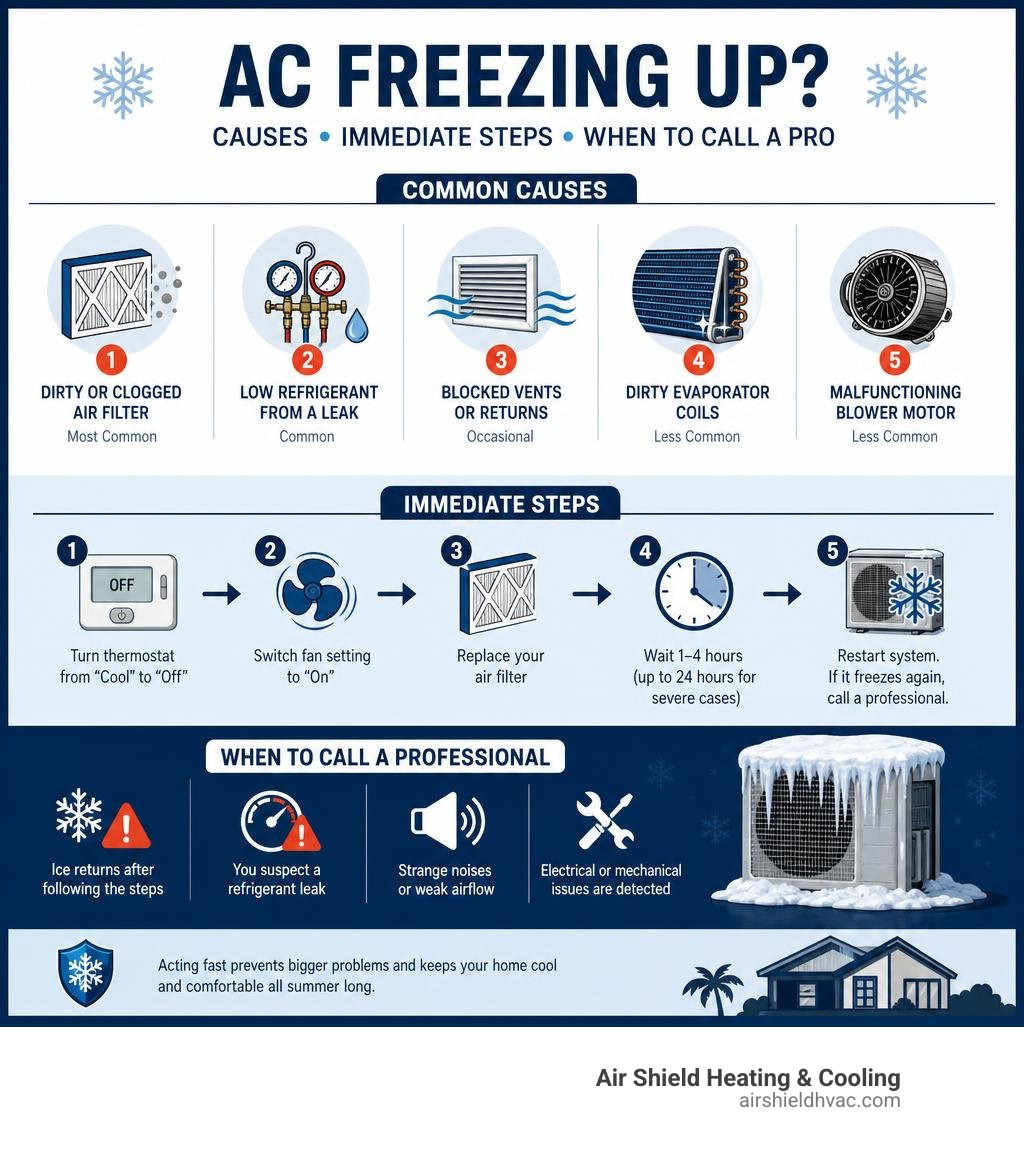
Quick answer: Why is your AC freezing up?
| Cause | How Common | What to Do |
|---|---|---|
| Dirty or clogged air filter | ~70% of cases | Replace the filter immediately |
| Low refrigerant from a leak | ~15% of cases | Call a licensed HVAC technician |
| Blocked vents or returns | ~10% of cases | Open all supply and return vents |
| Dirty evaporator coils | Less common | Schedule professional coil cleaning |
| Malfunctioning blower motor | Less common | Call a professional for diagnosis |
If your AC is frozen right now, here’s what to do first:
- Turn the thermostat from “Cool” to “Off”
- Switch the fan setting to “On” to circulate warm air over the coil
- Replace your air filter while the system thaws
- Wait at least 1 to 4 hours (up to 24 hours for severe cases) before restarting
- If the system freezes again after thawing, call a licensed HVAC technician
Here’s something that surprises a lot of homeowners: your air conditioner can freeze solid in the middle of a Florida summer, not because it’s working too hard, but because something is stopping it from doing its job properly. Whether it’s a clogged filter starving the system of airflow, a refrigerant leak dropping coil pressure, or a blower motor that’s starting to fail, the result is the same: ice builds up on the evaporator coil, airflow collapses, and your home stops cooling. Running the system in this condition can turn a minor fix into a compressor replacement, which is one of the most expensive repairs on any AC system.
At Air Shield Heating & Cooling, LLC, our experienced HVAC team has diagnosed and resolved hundreds of AC freezing up situations across Manatee County and surrounding Florida communities. In the sections below, we’ll walk you through exactly why this happens, what you should do about it, and how to make sure it doesn’t keep coming back.
The Science and Common Causes of an AC Freezing Up
To understand why your air conditioner is turning into an ice machine, we have to look at how the refrigeration cycle works. Many people believe that air conditioners create cold air. In reality, your AC is a heat transfer machine. It takes the heat out of your indoor air and dumps it outside.
The heart of this process is the indoor evaporator coil. Cold, liquid refrigerant flows through this copper coil. As your indoor fan blows warm, humid air from your home across the coil, the refrigerant absorbs the heat from that air. Because the coil is cold, moisture from our humid Florida air condenses on the outside of the coil, much like water droplets forming on a cold glass of sweet tea on a hot day in Bayshore Gardens, FL. This moisture is supposed to drip down into a drain pan and flow out of your home.

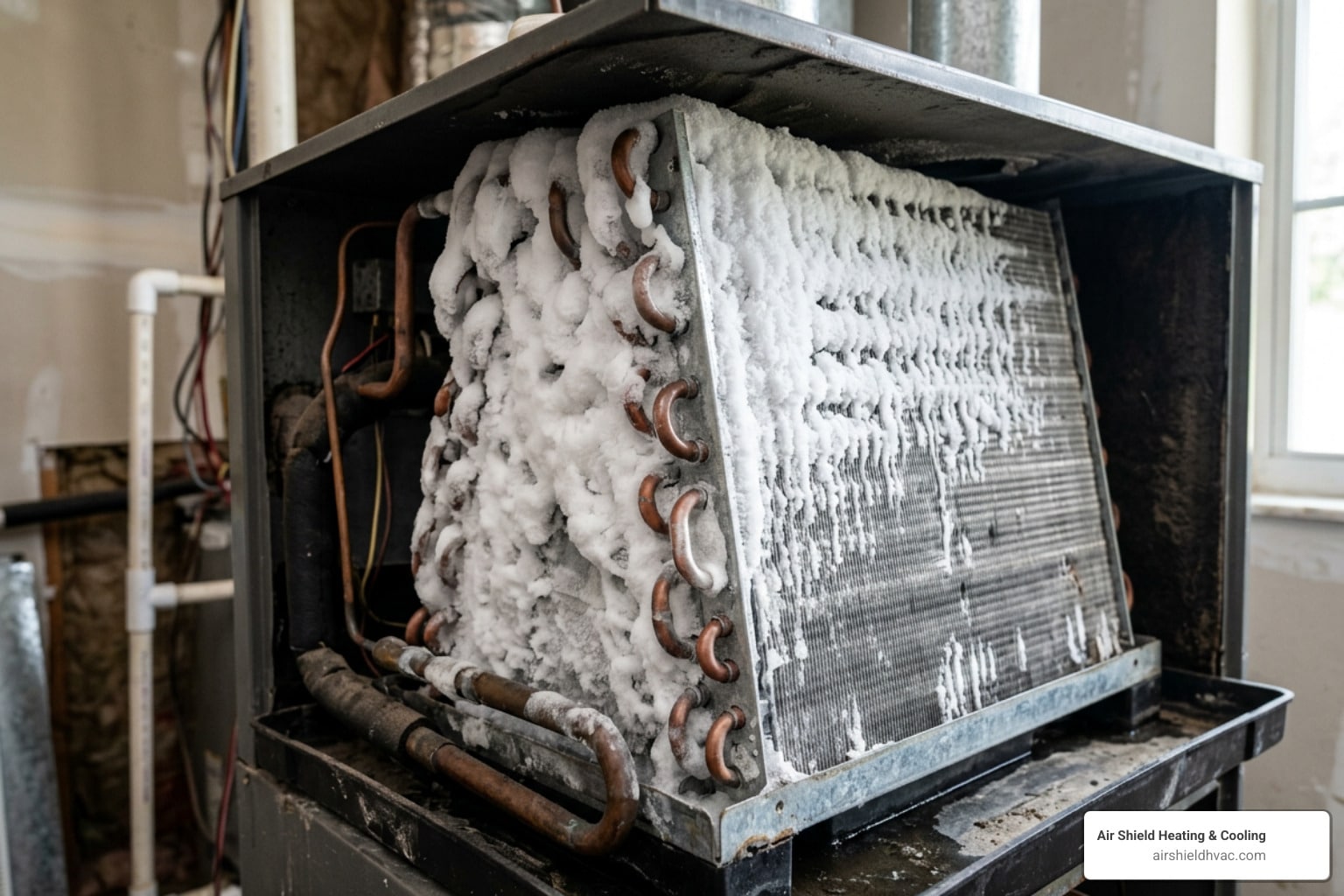
Under normal operating conditions, the temperature of this evaporator coil stays just above freezing. However, if the heat exchange process is disrupted, the temperature of the coil can quickly plummet below 32 degrees Fahrenheit. When this happens, the condensation forming on the coil freezes instantly. As more warm air blows over the newly formed ice, more moisture condenses and freezes, creating a snowball effect that eventually encases the entire coil in a solid block of ice.
This freezing process is closely tied to the Joule-Thomson effect, which explains how a fluid’s temperature changes when it is allowed to expand through a valve. If the pressure inside the system drops, the refrigerant expands too rapidly and becomes super-chilled, driving the coil temperature well below freezing. When this happens, you will quickly notice the common signs your AC isn’t cooling properly, such as warm air coming from your supply registers, weak airflow, and a rapidly rising indoor temperature.
How Restricted Airflow Triggers Your AC Freezing Up
Restricted airflow is the absolute number-one reason an AC freezing up occurs. In fact, clean and unobstructed airflow is the lifeblood of your entire HVAC system. If there is not enough warm air passing over the evaporator coil, there is not enough heat for the refrigerant to absorb. Without that heat, the refrigerant remains extremely cold, and the moisture on the coil freezes.
The most common culprit behind restricted airflow is a dirty air filter. When a filter becomes loaded with dust, pet dander, and pollen, it acts like a wall, severely limiting the volume of air that can reach the coil. This increases static pressure within your ductwork, forcing your blower motor to work harder while moving less air.
Other common airflow restrictors include:
- Closed or blocked supply vents: Closing registers in unused rooms to save energy is a major mistake. It disrupts the system’s balanced airflow, increases pressure, and can easily cause the coil to freeze.
- Blocked return grilles: If furniture, drapes, or toys are blocking the large return vents in your home, your system cannot pull in enough air to keep the coil warm.
- Dirty evaporator coils: Over time, fine dust particles bypass your filter and settle on the wet surface of the evaporator coil, forming a barrier that prevents efficient heat transfer.
- A failing blower motor: If the fan motor is spinning too slowly or has stopped working entirely, warm air will not circulate across the coil, leading to an immediate freeze-up.
Understanding these airflow dynamics highlights the importance of regular AC maintenance before the heavy cooling season begins in places like Ellenton, FL and Palmetto, FL.
Why Low Refrigerant Levels Cause Your AC Freezing Up
The second most common cause of a frozen system is low refrigerant. This often sounds counterintuitive to homeowners. If refrigerant is what makes the system cold, wouldn’t less refrigerant make the system warmer?
The answer lies in the relationship between pressure and temperature. Your air conditioner operates as a closed-loop system. It does not consume refrigerant like a car consumes gasoline. If your system is low on refrigerant, it means you have a refrigerant leak.
When the volume of refrigerant in the system drops, the pressure inside the evaporator coil drops along with it. According to the laws of physics, a drop in pressure causes a corresponding drop in temperature. The remaining refrigerant expands much more than it is designed to, causing the temperature of the evaporator coil to fall far below 32 degrees Fahrenheit. Any moisture in the air freezes on contact, quickly covering the coil in ice.
Identifying and repairing a refrigerant leak requires specialized tools, manifold gauges, and strict adherence to EPA guidelines regarding the handling of chemical refrigerants. This is why addressing low refrigerant is always a job for professional AC repair technicians who can locate the leak, repair the copper lines, evacuate the moisture from the system, and recharge it to the exact manufacturer specifications.
What to Do Immediately When You Spot Ice
If you look at your indoor air handler or the copper lines leading to your outdoor unit and see frost or a solid block of ice, you must act immediately. Continuing to run your system while it is frozen can cause permanent, catastrophic damage to your compressor.

Follow these step-by-step instructions to safely defrost your system:
- Turn off the cooling immediately: Go to your thermostat and switch the system from “Cool” to “Off”. This stops the flow of refrigerant and prevents the ice from growing thicker.
- Turn the fan to “On”: Switch your fan setting from “Auto” to “On”. This forces your indoor blower fan to run continuously, pulling warm indoor air across the frozen coil to speed up the melting process.
- Do not use external heat sources: Never use a hair dryer, heat gun, or open flame to melt the ice, and do not try to chip or scrape the ice off the coils with tools. The aluminum fins on your evaporator coil are incredibly delicate and can easily puncture, leading to a costly refrigerant leak.
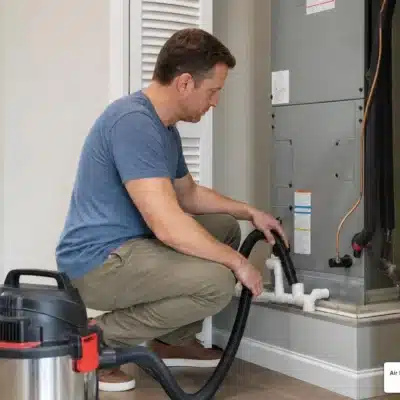
- Monitor the water runoff: As the ice melts, it will produce a significant amount of water. Ensure your condensate drain line is clear and check your drain pan to make sure water is not overflowing and causing water damage to your drywall or ceilings. Place towels around the base of your indoor unit if necessary.
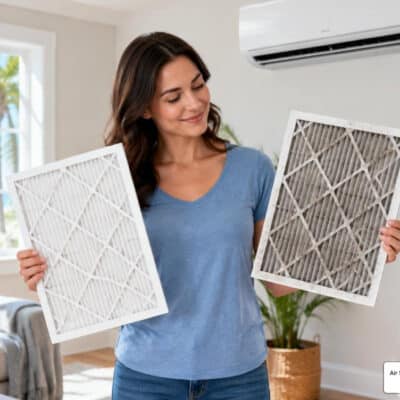
- Check your air filter: While the system is thawing, slide out your air filter. If you cannot see light through it when holding it up to a light source, it needs to be replaced immediately.
Taking these immediate steps is the first line of defense when handling AC emergencies in Florida homes during our hottest months.
How to Prevent Future Freeze-Ups and Protect Your Compressor
Once your system has completely thawed and dried out, your primary goal should be preventing the issue from happening again. Running a frozen air conditioner is highly dangerous for your compressor, which is the heart of your outdoor unit.
When the evaporator coil is covered in ice, the refrigerant flowing through it cannot absorb heat and boil off into a vapor. Instead, it remains a cold liquid. Your compressor is designed to pump gas, not liquid. If liquid refrigerant floods back into the compressor, a process known as liquid slugging occurs. Because liquids cannot be compressed, this can instantly destroy the internal valves and pistons of your compressor, resulting in a highly expensive repair or requiring a complete system replacement.
To protect your equipment and ensure a long, efficient operating life, keep these preventative strategies in mind:
- Change your filters regularly: In humid Florida locations like Bradenton, FL and Sarasota, FL, your AC runs almost continuously. Change your standard pleated filters every 30 to 60 days, or even monthly if you have shedding pets.
- Keep all vents open: Ensure at least 80% of your indoor supply registers and all return grilles are completely open and unobstructed by furniture or curtains.
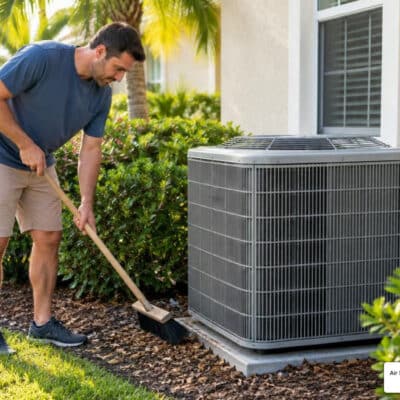
- Schedule annual professional tune-ups: A licensed technician can clean your evaporator and condenser coils, check your blower motor’s performance, measure refrigerant pressures, and identify tiny leaks before they cause a system freeze.
- Control indoor humidity: High indoor humidity levels place an extra moisture load on your evaporator coil. Investing in a smart thermostat or a dedicated dehumidifier can help keep indoor humidity in the ideal 45% to 55% range, reducing the risk of ice formation.
By investing in preventative care, you are actively extending your AC’s lifespan while keeping your utility bills lower and your home more comfortable. In Florida’s coastal climate, consistent airflow, clean coils, and proper humidity control all work together to reduce ice buildup and help your system handle long cooling cycles more reliably.
If your system keeps icing over after the filter has been replaced and the unit has fully thawed, schedule professional AC repair before the problem damages the compressor or leaves your home without cooling.
Frequently Asked Questions About Frozen Air Conditioners
How long does it take for a frozen AC to thaw completely?
The thawing process typically takes anywhere from 1 to 4 hours, but severe freeze-ups with thick ice buildup can take up to 24 hours. The exact time depends on the ambient temperature in your home and whether you run the indoor fan to circulate warm air over the coil. Always ensure the ice has melted completely before attempting to run the cooling mode again.
Can I run my AC on fan-only mode while it is frozen?
Yes, running your AC on fan-only mode is highly recommended while defrosting. Switching your thermostat’s fan setting to “On” keeps the indoor blower running without running the outdoor compressor. This circulates warm indoor air across the ice, speeding up the melting process while keeping your compressor safe from liquid refrigerant damage.
Will a dirty air filter really cause my AC to freeze?
Absolutely. A dirty air filter is the single most common cause of a frozen air conditioner, accounting for approximately 70% of all freeze-up cases. When dust and debris block airflow, the cold refrigerant inside the evaporator coil cannot absorb heat from your home, causing the coil temperature to drop below freezing and turn condensation into ice.
How do I know if my AC is frozen if I cannot see ice?
If your evaporator coil is located deep inside an enclosed air handler, you might not see the ice directly. However, you can spot a freeze-up by watching for key warning signs: weak airflow from your vents, warm air blowing when the system is set to cool, a constantly running outdoor unit, hissing or bubbling sounds, and water pooling around the base of your indoor unit.
Is a frozen AC a sign that I need a system replacement?
Not necessarily. Most freeze-ups are caused by simple, repairable issues like dirty filters, blocked vents, or minor refrigerant leaks. However, if your system is over 10 to 12 years old, uses outdated R-22 refrigerant, and experiences repeated freeze-ups due to major leaks or a failing compressor, it may be more practical to consider a modern, energy-efficient replacement.
Why does my AC freeze up only at night or in cool weather?
Residential air conditioners are designed to operate when outdoor temperatures are above 60 degrees Fahrenheit. If you run your AC during cool nights, the pressure inside the system naturally drops. This pressure drop can cause the evaporator coil to fall below freezing, especially if your thermostat is set very low.
Can a clogged condensate drain line cause my AC to freeze?
While a clogged drain line is rarely the sole cause of a freeze-up, it can certainly contribute to the problem. If water backs up into the drain pan, it increases the humidity and standing water directly beneath the cold evaporator coil. This excess moisture can freeze quickly if airflow is restricted or if refrigerant levels are slightly low.
What are the differences in freeze-up causes for window AC units?
Window AC units freeze for the same basic reasons as central systems: restricted airflow and low refrigerant. However, window units are also highly sensitive to installation angles. If a window unit is not tilted slightly backward, water cannot drain out of the back plug, causing water to pool in the front and freeze onto the coil.
How much does it cost to fix a frozen AC in Bradenton, FL?
The cost to resolve a freeze-up varies significantly depending on the root cause. A simple dirty filter replacement is a low-cost DIY fix. Professional services like evaporator coil cleaning, blower motor replacement, or refrigerant leak detection and repair will vary based on the complexity of your system and the severity of the issue. Homeowners should request a professional estimate for accurate pricing.
Can low refrigerant cause freezing without a visible leak?
Yes. Because refrigerant operates in a closed loop, any drop in refrigerant level indicates a leak, but many leaks are incredibly small. These micro-leaks can occur through tiny punctures in the copper coils or loose joints and may not be visible to the naked eye. Licensed technicians use electronic leak detectors or UV dyes to locate these hidden leaks.
Conclusion
A frozen air conditioner is a clear cry for help from your HVAC system. Whether the culprit is a simple dirty filter or a complex refrigerant leak, ignoring the ice can quickly lead to costly compressor damage and leave your family stranded in the Florida heat.
If your air conditioner continues to freeze up after you have replaced the air filter and allowed the system to thaw, it is time to call in the professionals. At Air Shield Heating & Cooling, we have been providing reliable, family-owned HVAC services across Bradenton, FL and the surrounding Manatee County areas since 2014. We are proud to offer 24/7 response, free estimates, exclusive club memberships, and dedicated veteran discounts to keep your home comfortable all year long.
Do not let a frozen system ruin your comfort. Contact our professional AC repair technicians at Air Shield Heating & Cooling today, and let us get your home back to a cool, comfortable temperature quickly and safely.