
Why Your AC Making a Loud Noise Deserves Immediate Attention
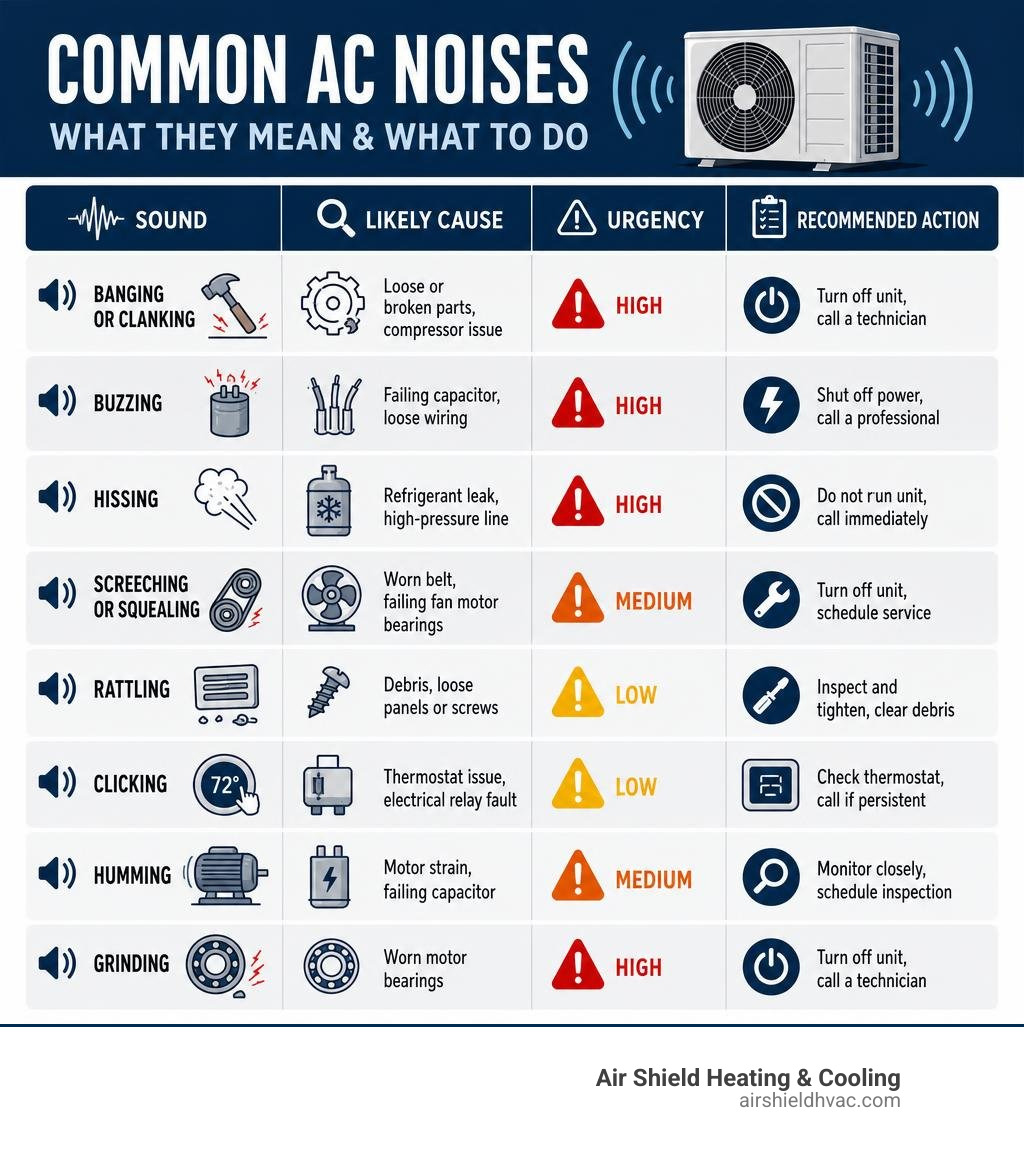
If your AC is making a loud noise, here is a quick breakdown of what the most common sounds typically mean:
| Sound | Likely Cause | What to Do |
|---|---|---|
| Banging or clanking | Loose or broken parts, compressor issue | Turn off unit, call an HVAC technician |
| Buzzing | Failing capacitor, loose wiring | Shut off power, call a professional |
| Hissing | Refrigerant leak, high-pressure line | Do not run unit, call immediately |
| Screeching or squealing | Worn belt, failing fan motor bearings | Turn off unit, schedule service |
| Rattling | Debris, loose panels or screws | Inspect and tighten, clear debris |
| Clicking | Thermostat issue, electrical relay fault | Check thermostat, call if persistent |
| Humming | Motor strain, failing capacitor | Monitor closely, schedule inspection |
| Grinding | Worn motor bearings | Turn off unit, call an HVAC technician |
Your air conditioner is supposed to be the quiet hero of your Florida summer, not the loudest thing in the room. Most AC units produce a gentle hum and the soft whoosh of air moving through your vents. Those sounds are normal. But when that hum turns into a bang, a screech, or a persistent buzz, something has changed inside the system and your AC is trying to tell you something.
In Manatee County, FL, where summers push temperatures deep into the 90s and your air conditioner runs almost year-round, unusual noises are not just an annoyance. They can be early warning signs of mechanical wear, electrical faults, or refrigerant issues that get more expensive to fix the longer they go unaddressed. According to industry data, ignoring sounds like banging or grinding can lead to compressor failure, one of the most costly repairs a homeowner can face. And a struggling system does not just make noise, it can also drive up your energy bills by as much as 30% due to inefficient operation.
The good news is that many AC noises follow a predictable pattern. Once you know what a particular sound typically means, you can make a faster, smarter decision about whether to grab a screwdriver or pick up the phone.
At Air Shield Heating & Cooling, our HVAC team has over two decades of hands-on experience diagnosing and resolving AC making loud noise problems for homeowners throughout Manatee County and the surrounding Florida communities. We have seen how catching a strange sound early can mean the difference between a simple fix and a full system replacement.
Normal vs. Abnormal: Is Your AC Making Loud Noise?
To accurately diagnose your air conditioner, you first need to establish a baseline of what is normal. Every AC unit makes some noise when it runs. When the system kicks on, you will usually hear a single loud click as the thermostat signals the relays, followed by a steady, low-pitched hum from the outdoor compressor and the indoor blower motor. As air circulates, you should hear a gentle whooshing sound through your supply vents.
Modern inverter AC units are designed to run almost silently. In fact, some high-tech systems operate at sound levels as low as 19 decibels, which is quieter than a soft whisper. Even standard, older systems usually operate in the 50 to 60 decibel range, which is roughly equal to a normal conversation or a quiet office environment.
When your system is struggling, however, those decibels can spike dramatically. If you have to raise your voice to speak over your air handler, or if your outdoor unit is vibrating so violently that it shakes your windows, you are dealing with an abnormal noise.
To better understand these sound profiles, it helps to separate harmless operating noises from warning signs. Minor popping can happen as plastic parts or duct materials expand and contract with temperature changes. But if your system is producing harsh, metallic, rhythmic, or persistent sounds, it is time to start troubleshooting your system to pinpoint the root cause.
The following table provides a clear comparison to help you distinguish between standard operational sounds and abnormal noises that require professional attention:
| Normal Operational Sounds | Abnormal Problematic Noises |
|---|---|
| A soft click when the cooling cycle begins | Continuous, rapid clicking during operation |
| Gentle air whooshing through clean vents | Loud whistling, screaming, or wind-howling sounds |
| A steady, low-pitched motor hum | Harsh metallic grinding, scraping, or squealing |
| Minor plastic popping as ductwork temperature changes | Heavy clanking, banging, or rhythmic thumping |
| Brief gurgling as refrigerant cycles | Intense, continuous hissing or bubbling noises |
Decoding Specific Air Conditioner Noises
When your AC starts acting up, matching the sound to a specific component is the fastest way to understand the severity of the problem. A sound-specific diagnosis allows you to assess whether you are facing a minor adjustment or a major mechanical failure. Ignoring these warning signs usually accelerates mechanical wear, turning a simple fix into catastrophic system damage.
Banging and Clanking: Compressor and Blower Issues
If you hear heavy banging or metallic clanking, you should shut down your system immediately. These sounds indicate that a physical component has either broken or come loose and is actively colliding with other parts inside the unit.
In the outdoor unit, a loud banging sound often points directly to a failing compressor. The compressor contains internal pistons, valves, and connecting rods that pump refrigerant. Over time, these parts can snap or wear out, causing them to thrash around inside the sealed compressor shell. Because the compressor is a sealed component, individual internal parts cannot be repaired. A banging compressor almost always requires a full compressor replacement or, depending on the age of the system, a complete system upgrade.
In the indoor air handler, a clanking sound is usually caused by a loose or unbalanced blower wheel. If the set screw holding the blower wheel to the motor shaft loosens, the wheel will wobble and strike the surrounding metal housing. If left running, the blower wheel can completely destroy the motor shaft, the housing, and the delicate evaporator coil nearby. If you notice these severe symptoms, it is highly recommended to review the signs your system needs replacement to determine if a repair is a wise financial investment.
Buzzing and Clicking: Electrical Malfunctions and the AC Making Loud Noise
A persistent buzzing or rapid clicking sound is almost always electrical in nature. While a single click at startup is normal, continuous clicking indicates that an electrical component is trying to engage but failing to do so.
- Failing Capacitor: The capacitor acts like a heavy-duty battery that gives your compressor and fan motors the high-voltage boost they need to start running. When a capacitor begins to bulge and fail, it cannot deliver enough power. The motor will sit idle and emit a loud, strained buzzing hum as it overheats.
- Faulty Contactor Relay: The contactor is an electrical switch that closes to send power to the compressor and outdoor fan. If the contactor contacts become pitted, dirty, or worn, they will chatter rapidly, creating a loud buzzing or clicking noise.
- Loose Wiring: Electrical currents passing through loose terminal connections can cause electrical arcing, which produces a distinct sizzling or buzzing sound. This is a significant fire hazard that requires immediate professional intervention.
- Thermostat Issues: A malfunctioning thermostat or a damaged control board can send erratic signals to your system, causing the relays to click rapidly without starting the unit.
If you suspect an electrical fault, do not attempt to open the electrical cabinet yourself. High-voltage capacitors can hold a lethal electrical charge even when the main breaker is turned off. Instead, contact a professional to schedule emergency AC repair services to safely resolve the issue.
Hissing and Screeching: Refrigerant Leaks and Motor Strain
Hissing and screeching are two high-pitched noises that should never be ignored, as they represent entirely different but equally severe system threats.
A persistent hissing or bubbling sound is a classic indicator of a refrigerant leak. Your AC relies on a closed loop of pressurized refrigerant to transfer heat out of your home. If a tiny crack develops in the copper coils or joint connections, the pressurized gas will escape, creating a hissing sound. Refrigerant leaks do not just ruin your system’s cooling efficiency, they also pose environmental hazards and can cause health issues like headaches or respiratory irritation if they occur indoors.
Screeching or squealing, on the other hand, is usually a mechanical cry for help from your fan motors. In older belt-driven systems, a worn, dry, or misaligned blower belt will squeal loudly when the system starts up. In modern direct-drive systems, screeching indicates that the internal bearings inside the condenser fan motor or the indoor blower motor have completely worn out. When the lubricating grease inside these sealed bearings dries up, metal-on-metal friction creates a piercing screech. If the bearings seize completely, the motor will burn out, potentially leading to a much larger repair bill. If you are trying to make sense of these high-pitched sounds, reading more about understanding strange AC noises can help you identify exactly where the sound is originating.
Indoor vs. Outdoor Unit Noise Sources
Because a split-system air conditioner is divided into two distinct halves, the location of the noise tells you a lot about which components are failing. The indoor air handler and the outdoor condenser unit operate in completely different environments and are subject to different types of wear and tear.
Indoor Air Handler Noise and the AC Making Loud Noise
Your indoor unit is housed inside a closet, garage, or attic, making its sounds highly noticeable throughout your living space. When the indoor unit starts making noise, it is often related to restricted airflow or thermal expansion.
A whistling or howling sound from your return vents is usually a sign of a clogged air filter or closed register vents. When the blower motor tries to pull air through a dirty, blocked filter, it creates a high-pressure vacuum. Air is forced through tiny gaps around the filter frame, resulting in a loud whistling noise. Over time, this airflow restriction starves the evaporator coil of warm air, causing the coil to freeze solid and putting immense strain on the blower motor.
Additionally, dirty evaporator coils can cause the system to run longer and hotter, leading to unusual ticking or popping noises as the metal ductwork and plastic drain pan expand and contract rapidly. If you are trying to manage your repair budget, understanding what repairs to prioritize first can help you address airflow issues before they cause permanent motor damage.
Outdoor Condenser Unit Noise
The outdoor unit contains the compressor and the main condenser fan, both of which are exposed to the harsh Florida elements. In places like Bradenton, FL, and Palmetto, FL, wind, heavy rain, and blowing sand can easily find their way inside the fan cabinet.
A loud rattling or chattering sound from the outdoor unit is often caused by twigs, leaves, or pine needles getting trapped inside the fan cage. As the fan blades spin at high speeds, they strike the debris, creating a rapid, rhythmic clacking.
Vibration is another common source of outdoor noise. If your condenser unit is not sitting on a perfectly level concrete or composite pad, the constant spinning of the compressor will cause the entire metal cabinet to rattle against its mounting bolts. Over time, this constant vibration can loosen the electrical terminals and cause copper refrigerant lines to rub together, leading to premature leaks. Scheduling a professional air conditioning repair technician to level the unit and install rubber isolation pads can instantly quiet a vibrating outdoor system.
DIY Fixes vs. When to Call a Professional
Many minor AC noises can be safely resolved by handy homeowners. However, knowing your limits is critical to preventing personal injury or accidental damage to your system.
What You Can Safely Do Yourself:
- Tighten Loose Panels: If you hear a persistent rattle, turn off the power at the outdoor disconnect switch and use a nut driver to tighten any loose screws on the outer metal casing of your condenser unit.
- Clear Outdoor Debris: Turn off the power and inspect the top of the fan cage. Use a pair of gloves to remove leaves, twigs, or toys that may have fallen through the grate.
- Change the Air Filter: If your system is whistling or howling, replace your dirty air filter with a fresh, high-quality pleated filter. This instantly restores proper airflow and relieves strain on your blower motor.
- Clear the Condensate Line: If you hear a gurgling or bubbling sound from your indoor unit, use a wet/dry vacuum to clear any algae or debris buildup from the outdoor condensate drain line.
When You Must Call a Professional:
If your DIY efforts do not resolve the sound, or if you hear hissing, screeching, or heavy clanking, it is time to step back. Handling refrigerant requires specialized training and EPA Section 608 certification. It is illegal and highly dangerous for unlicensed individuals to handle, discharge, or recharge refrigerant.
Similarly, electrical diagnostics and motor replacements involve high-voltage circuits that can cause severe shock or electrical fires if handled incorrectly. If your system is old and constantly breaking down, a professional can help you explore your options for a quieter, more efficient replacement. If repairs are no longer the best long-term choice, Air Shield Heating & Cooling can also walk you through air conditioning installation services for a modern system that fits your home and cooling needs.
Frequently Asked Questions about AC Noises
Why is my AC making a loud noise all of a sudden?
A sudden, loud noise usually indicates that a component has broken or come loose. Common causes include a broken fan blade, a loose blower wheel, or a compressor failure. Turn off your system immediately to prevent further damage.
Is it safe to run my AC if it is making a loud noise?
Generally, no. Running a noisy AC can turn a minor, inexpensive issue into a catastrophic system failure. If you hear loud banging, screeching, or hissing, shut down the system immediately and call an HVAC technician.
What causes a buzzing sound in an AC unit?
Buzzing is typically caused by electrical issues, such as a failing capacitor, a faulty contactor relay, or loose wiring. It can also occur if a metal panel is loose and vibrating against the frame of the outdoor unit.
Why does my air conditioner make noise after it shuts off?
It is normal to hear a soft hissing or gurgling sound for a minute or two after your AC shuts off as the refrigerant pressures equalize. However, persistent clicking or loud banging after shutdown indicates an electrical relay fault or a failing damper.
Can a dirty air filter cause my AC to make strange sounds?
Yes. A heavily clogged air filter restricts airflow, which can cause a loud whistling or howling sound as air is forced through tiny gaps. It can also cause the evaporator coil to freeze, leading to thumping or clicking noises.
How do I stop my outdoor AC unit from vibrating so loudly?
Ensure the condenser unit is sitting on a level surface. You can install heavy-duty rubber vibration isolation pads under the corners of the unit and tighten any loose cabinet screws to dampen the sound.
What does a screeching or squealing AC noise mean?
Screeching or squealing typically points to worn-out bearings inside the condenser fan motor or the indoor blower motor. In older systems, it could also indicate a loose or worn blower fan belt.
How often should I schedule AC maintenance to prevent loud noises?
You should schedule professional AC maintenance at least once a year, ideally in the spring before the intense summer heat sets in. This allows an HVAC technician to lubricate moving parts, tighten electrical connections, and catch minor wear before it turns into a noisy breakdown.
Why is my AC making a clicking sound but not turning on?
This is a classic sign of an electrical issue. The clicking is likely the contactor relay or thermostat trying to engage, but a dead capacitor, a blown fuse, or a tripped circuit breaker is preventing power from reaching the motor.
How much does it cost to fix a noisy AC compressor in Bradenton, FL?
The cost to resolve a noisy compressor varies depending on the cause. If the noise is caused by a failing capacitor or a loose mounting bolt, the repair is relatively minor. However, if the compressor has suffered internal mechanical failure, a full compressor replacement or a complete system upgrade is usually required.
Conclusion
A noisy air conditioner is more than just a distraction, it is your system’s way of asking for help. Whether you are dealing with a minor rattle from a loose screw or a severe mechanical banging from a failing compressor, addressing these sounds early is the key to protecting your comfort, your equipment, and your wallet. Regular maintenance, timely filter changes, and professional inspections can reduce AC noise issues by up to 80% while extending the lifespan of your system by several years.
If your air conditioner is shaking the walls or keeping you awake at night, do not wait for a complete system breakdown during the peak of the Florida summer. The experienced team at Air Shield Heating & Cooling is ready to restore quiet, efficient comfort to your home. We proudly serve homeowners throughout Bradenton, FL, and the surrounding Manatee County communities with reliable diagnostics, honest recommendations, and professional repairs. Contact our professional AC repair technicians to get back to enjoying a cool, quiet home.