Is AC Repair an Emergency? Here’s How to Know Fast
Is AC repair an emergency in your home right now? The honest answer depends on a few key factors: what is failing, how hot it is outside, and who is in the house. Here is a quick breakdown to help you decide:
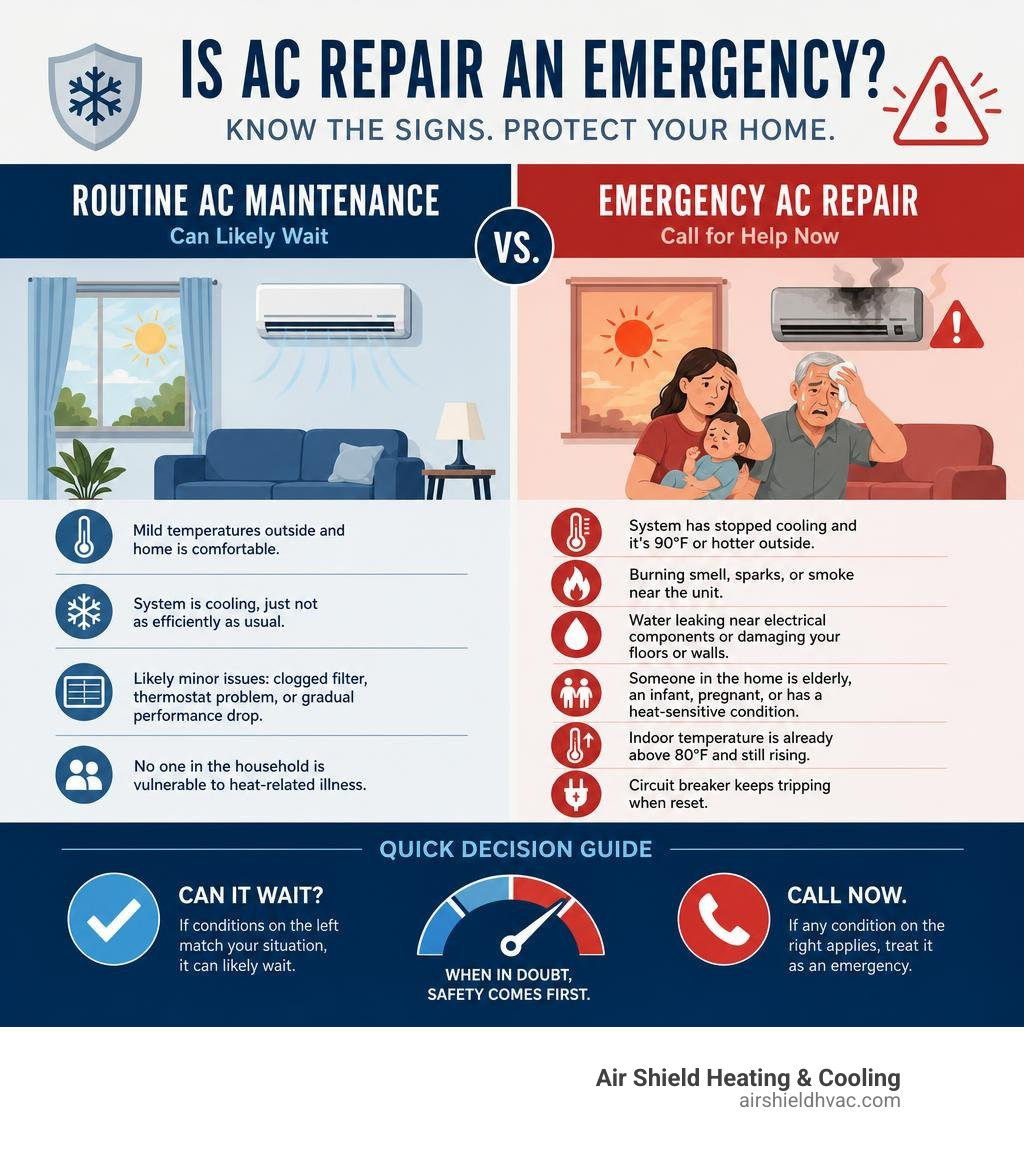
AC repair is likely an emergency if:
- Your system has completely stopped cooling and outdoor temperatures are at or above 90°F
- You smell burning or notice sparks near your indoor or outdoor unit
- Water is leaking near electrical components or actively damaging your floors or walls
- You or someone in your home is elderly, an infant, pregnant, or has a heat-sensitive medical condition
- Indoor temperatures have already climbed above 80°F and continue to rise
- Your circuit breaker keeps tripping when you reset it
AC repair can likely wait until regular business hours if:
- Temperatures outside are mild and your home is staying reasonably comfortable
- Your system is still cooling, just not as efficiently as usual
- The issue appears to be a clogged filter, minor thermostat problem, or gradual performance drop
- No one in the household is vulnerable to heat-related illness
It’s the kind of moment nobody is ready for. The air in your Florida home goes thick and still. Your AC has stopped, it’s the middle of summer, and you are not sure whether to call someone right now or wait until morning. In Florida’s Manatee County, where summer temperatures routinely push past 90°F and humidity makes every degree feel worse, that decision is not just about comfort. It can be a genuine health and safety question. The difference between a minor inconvenience and a true emergency often comes down to a few specific warning signs, and knowing which is which can save you from both unnecessary panic and dangerous delays.
At Air Shield Heating & Cooling, our emergency AC repair team has helped hundreds of Manatee County homeowners decide whether their cooling problem needs immediate attention or can safely wait for a scheduled visit. In the sections below, our team will walk you through exactly how to assess your situation, what signs demand an immediate call, and what steps you can take right now to protect your home and your family.
Defining the Threshold: Is AC Repair an Emergency?
To answer whether your current situation constitutes a true crisis, we have to look beyond simple physical comfort. In our beautiful but hot region, an air conditioner is not a luxury item. It is a vital piece of safety equipment. When outdoor temperatures cross the 90-degree threshold, the physical environment inside a closed home can change with alarming speed. Within just a few hours of a total system shutdown, indoor temperatures can climb past 80°F, and soon after, they will match or even exceed the outdoor heat index.
When you are trying to decide if you need to make that urgent call, you must evaluate the immediate risks to health, safety, and property. A broken AC unit during a mild autumn evening in Bradenton, FL, is a minor nuisance. That exact same broken unit during a scorching July afternoon in Sarasota, FL, can quickly escalate into a medical emergency. Understanding why emergency AC repair services matter can help you protect your household when the local climate turns hostile.
Extreme Heat and Health Vulnerabilities
High outdoor temperatures are physically demanding on the human body, but the real danger in Florida is the relentless humidity. When the air is saturated with moisture, your body cannot evaporate sweat efficiently. This natural cooling mechanism fails, causing your core body temperature to rise. For healthy adults, this is incredibly uncomfortable. For vulnerable populations, it can be life-threatening.
Infants and young children cannot regulate their body temperatures as effectively as adults. On the other end of the spectrum, elderly residents often have pre-existing cardiovascular or respiratory conditions that are severely aggravated by extreme heat. If you have family members living with asthma, chronic obstructive pulmonary disease, or heart conditions, a hot and stagnant indoor environment can trigger severe medical events. Heat stroke and heat exhaustion can develop rapidly under these conditions, making immediate access to functional cooling a necessity rather than a convenience.
How to Determine If Your Situation Is AC Repair an Emergency
If your cooling system is acting up, we recommend taking a systematic approach to evaluate the situation before you begin to worry. Ask yourself these three simple questions:
- Are there immediate safety hazards present? This includes visible sparks, a strong burning smell coming from your vents, or water pooling near electrical panels or structural elements of your home.
- Is the system completely non-functional during extreme weather? If the outdoor temperature is soaring and your system is blowing hot air or will not turn on at all, the heat index inside will rise to unsafe levels very quickly.
- Are there vulnerable individuals in the home? If you are caring for infants, seniors, pregnant women, or individuals with chronic illnesses, you should treat any significant loss of cooling as an immediate priority.
If you answered yes to any of these questions, you are dealing with a situation where is AC repair an emergency is answered with a definitive yes. If you answered no, you can likely perform a few basic diagnostic checks and schedule a standard service visit during normal business hours.
Critical Signs You Need Emergency AC Repair Right Away
When an AC system is on the verge of a catastrophic breakdown, it rarely goes quietly. It will usually give you clear, physical warning signs that something is seriously wrong. Ignoring these red flags can lead to permanent compressor damage, electrical fires, or severe water damage to your ceilings and walls. The most important emergency AC repair warning signs include electrical odors, repeat breaker trips, frozen coils, indoor leaks, and total cooling failure during extreme heat.
Total System Failure in Extreme Weather
A complete breakdown in the middle of a Florida summer heatwave is the most common emergency scenario we encounter. When the thermostat screen goes blank, the outdoor fan stops spinning, and there is absolutely no airflow coming from your registers, your home will begin to trap heat. Because modern homes are insulated to keep air inside, they can act like greenhouses when the cooling source is removed. Within a short period, the rising temperature and stagnant humidity will make the living space completely uninhabitable.
If your system has stopped cooling and your home is getting hotter by the hour, scheduling emergency AC repair is the safest option. This is especially important for homes with infants, older adults, pets, or anyone with a heat-sensitive medical condition.
Electrical Hazards and Burning Smells
If you ever smell a distinct burning odor, like electrical wires melting, or if you see wisps of smoke coming from your indoor air handler or outdoor condenser, you must act immediately. This is not a situation where you wait to see if it goes away. HVAC systems pull a massive amount of electrical current. If a contactor welds shut, a capacitor fails violently, or wire insulation degrades, it creates an immediate fire risk.
If your circuit breaker trips once, you can try resetting it. However, if the breaker trips a second time, do not attempt to reset it again. This is a safety feature designed to prevent an electrical fire. Repeatedly forcing a tripped breaker to reset can cause permanent damage to your compressor or ignite a fire inside your electrical panel.
Severe Water Leaks and Clogged Condensate Lines
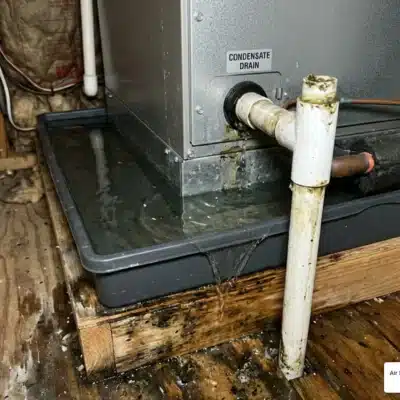
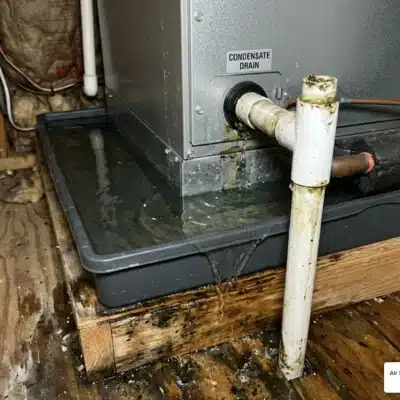
Your AC system does not just cool the air; it also extracts an incredible amount of moisture from it. In humid coastal areas like Palmetto, FL, and Bayshore Gardens, FL, a typical system can pull gallons of water out of the indoor air every single day. This water drains into a condensate pan and flows out of your home through a dedicated drain line.
Over time, algae, mold, and dust can clog this drain line. When the line is blocked, the water has nowhere to go but back into your home. If your system does not have a functional safety float switch, the water will overflow the pan. This can quickly ruin your drywall, warp wood floors, and drip through ceilings. Because mold can begin to grow within 24 hours in the presence of excess moisture, a major condensate leak requires immediate professional attention to protect your property from structural rot.
Refrigerant Leaks and Frozen Evaporator Coils
If you notice a hissing or bubbling sound coming from your AC unit, or if you look at the indoor evaporator coil and see that it is completely encased in ice, you are likely dealing with a refrigerant leak. Refrigerant is the lifeblood of your system, responsible for transferring heat out of your home. When refrigerant levels drop, the pressure inside the system plunges, causing the coil temperature to drop below freezing.
Running an AC with frozen coils or low refrigerant places an immense amount of strain on the compressor. The compressor is the most expensive component in your entire system. If it is forced to pump liquid refrigerant or run without proper lubrication, it will burn out. If you see ice building up on your lines, turn the system off immediately at the thermostat and call for assistance to prevent destroying your compressor.
Troubleshooting Before You Call for Emergency Service
Before you pick up the phone to request an urgent after-hours dispatch, it is always a good idea to perform a few basic, safe troubleshooting steps. You might find that the solution is incredibly simple, saving you the time and stress of an emergency service call. Knowing how to handle an AC emergency starts with verifying that the system is actually receiving power and is set up correctly.
Checking the Thermostat and Power Supply
It sounds simple, but a surprising number of emergency calls are resolved by simply replacing dead batteries in a thermostat. If your thermostat screen is completely blank, pull the cover off and pop in a fresh set of batteries. Next, verify the settings:
- Ensure the system is set to COOL and not HEAT or fan-only mode.
- Check that the temperature setting is at least a few degrees lower than the current indoor temperature.
- Walk out to your electrical panel and make sure the dedicated breaker for both the indoor air handler and the outdoor condenser are in the ON position.
Inspecting the Air Filter and Vents
A heavily clogged air filter is one of the leading causes of sudden system failure. When a filter is completely caked in dust, pet hair, and debris, it restricts the airflow passing over the evaporator coil. Without enough warm indoor air flowing over the cold coil, the moisture on the coil will rapidly freeze.
If you find that your filter is black or completely covered in dust, replace it immediately. If the system has already frozen over, turn the thermostat to OFF and switch the fan setting to ON. This will run the fan without the compressor, helping to safely melt the ice over the next few hours before a technician arrives.
The Risks of Ignoring Urgent AC Issues
It can be tempting to ignore a strange noise or a slow drip coming from your utility closet, especially if the system is still blowing reasonably cool air. However, delaying necessary repairs in a high-demand environment like Sarasota County, FL, almost always backfires. What starts as a minor, easily fixable issue can rapidly cascade into a major system failure that leaves you without cooling for days. Prompt AC repair in Bayshore Gardens, FL can protect your system from far larger headaches when performance changes suddenly.
How Delaying Repairs Leads to System Replacement
HVAC systems are complex, interconnected machines. When one component begins to fail, it places an immediate, unnatural strain on other parts of the system. For example, a weak run capacitor might struggle to start your outdoor fan motor. If you ignore the clicking sounds of a struggling capacitor, the fan motor will eventually overheat and burn out.
Once the fan motor fails, the compressor will quickly follow. A simple capacitor replacement is a quick, routine service. Replacing a burned-out fan motor and a damaged compressor, however, can easily cost enough to warrant a complete system replacement. If your system is older than 12 to 15 years, or if you find yourself paying for multiple emergency repairs within a single season, investing in a new, energy-efficient system is often the most sensible financial decision.
Why Water Leaks and Mold Are a Major Threat in Florida
In our humid local climate, water leaks are never just minor inconveniences. High relative humidity provides the perfect breeding ground for mold spores. When an AC condensate line backs up and overflows into your drywall or carpeting, mold can begin to colonize the area in as little as 24 hours.
Once mold takes hold inside your walls or utility closet, it will release spores directly into your home’s air circulation. This can lead to musty odors, aggravated allergies, and serious respiratory health issues for your family. Repairing the water damage and performing professional mold remediation is incredibly expensive, far exceeding the cost of having a technician clear a clogged drain line early on.
Preventing Emergencies with Regular HVAC Maintenance
The absolute best way to handle an AC emergency is to prevent it from happening in the first place. By taking a proactive approach to your home’s comfort system, you can catch small, hidden issues before they have the chance to disrupt your life during a holiday or a weekend heatwave. Practical fixes for AC emergencies in Florida homes can help you respond calmly when something goes wrong, but consistent preventative care is the ultimate shield against unexpected breakdowns.
The Role of Annual Tune-Ups in Avoiding Breakdowns
Investing in regular, professional HVAC maintenance is incredibly effective. Statistics show that homeowners who prioritize annual or semi-annual tune-ups are up to 50% less likely to experience a total system breakdown during the peak summer season.
During a standard maintenance visit, a professional technician will inspect electrical connections, measure voltage, test capacitors, clean the condensate drain line, and check refrigerant pressures. This allows our team to find and replace worn parts, like a bulging capacitor or a dirty contactor, before they fail completely and leave you stranded in the heat.
Understanding When Is AC Repair an Emergency vs. Routine Maintenance
To manage your household maintenance costs effectively, it helps to understand what requires an immediate after-hours dispatch versus what can be scheduled as a routine visit.
- Routine Maintenance / Scheduled Service: Gradual loss of cooling efficiency over several weeks, a slightly noisy outdoor fan, minor thermostat calibration issues, or a dirty air filter. These issues should be addressed promptly, but they can easily wait for a scheduled appointment during standard business hours, saving you from after-hours diagnostic fees.
- True AC Emergency: Complete system shutdown during extreme heat, burning smells, repeated breaker trips, or active indoor flooding. These situations demand an immediate response to protect your safety, health, and property.
Frequently Asked Questions About AC Emergencies
To help you navigate these stressful situations with confidence, we have compiled answers to some of the most common questions we hear from homeowners in Bradenton, FL, and the surrounding areas. If you are currently dealing with a sudden system issue in Fruitville, FL, prompt AC repair support can help restore your peace of mind.
What temperature is considered an AC emergency in Florida?
Generally, if the outdoor temperature is 90°F or hotter and your indoor temperature has climbed past 80°F with no sign of stopping, you are in an emergency situation. This is especially true if you have vulnerable individuals, such as infants, seniors, or those with medical conditions, living in the home.
Is a refrigerant leak considered an AC emergency?
Yes. A refrigerant leak is an emergency because low refrigerant levels cause the system to work much harder, which can quickly lead to compressor overheating and total mechanical failure. Additionally, breathing in concentrated refrigerant fumes poses serious health risks.
What should I do if my AC is leaking water inside?
You should turn off your system immediately at the thermostat to stop the production of condensation. Once the system is off, clear away any valuables near the leak and call for professional service to clear the clogged condensate drain line before water ruins your ceilings or floors.
Why is my AC blowing warm air during a heatwave?
This is often caused by a failed outdoor run capacitor, a tripped circuit breaker, or a severe refrigerant leak. Because the system cannot reject heat without these components functioning, it will simply circulate warm air through your home.
Can I run my AC if it is making loud grinding noises?
No, you should shut the system down immediately. Loud grinding or screeching noises usually indicate that a motor bearing has failed or that the compressor is experiencing internal damage. Running the system under these conditions can destroy the motor or compressor completely.
How quickly does an emergency HVAC technician typically arrive?
Response times can vary based on weather conditions and local demand, but reputable emergency services typically aim to dispatch a technician to your home within a few hours of your call to ensure your comfort and safety are restored quickly.
Is emergency AC repair more expensive than regular service?
Generally, yes. Emergency services performed after normal business hours, on weekends, or during major holidays typically incur an after-hours diagnostic fee or higher labor rates due to the immediate, on-call availability of the technician.
Can a dirty air filter cause a complete AC breakdown?
Absolutely. A severely clogged air filter starves the system of airflow, causing the evaporator coil to freeze. This ice buildup blocks all cooling, strains the blower motor, and can cause liquid refrigerant to flood back into the compressor, destroying it.
What should I check before calling for emergency AC repair?
Before calling, verify that your thermostat has fresh batteries and is set to COOL. Check your electrical panel for a tripped breaker, and ensure your air filter is clean and your registers are completely open and unobstructed.
How does high humidity affect my AC system’s workload?
High humidity forces your system to spend a significant amount of energy removing moisture from the air before it can effectively lower the indoor temperature. This places extra strain on your condensate drain system and can lead to rapid algae growth inside the drain lines.
Conclusion
When your air conditioner fails unexpectedly, you do not have to face the Florida heat alone. At Air Shield Heating & Cooling, we understand exactly how stressful a sudden system breakdown can be for your family. As a family-owned business serving Bradenton, FL, and all of Manatee County, FL, since 2014, we are committed to keeping our community safe, comfortable, and cool.
Whether you need fast emergency AC repair, a seasonal system tune-up, or a complete system replacement, our experienced team is ready to help. We are proud to offer 24/7 rapid response, free estimates, veteran discounts, and convenient club memberships to keep your system running reliably year-round. Don’t suffer in the stifling heat: contact our professional emergency AC repair technicians today.