
What to Do During an AC Leaking Water Emergency
An AC leaking water emergency can go from a minor inconvenience to serious structural damage faster than most homeowners expect, especially during a Southwest Florida summer when humidity is already pushing 80 to 90 percent. If you’ve just spotted a puddle near your air handler or noticed water dripping from a ceiling vent, here is what you need to know right now:
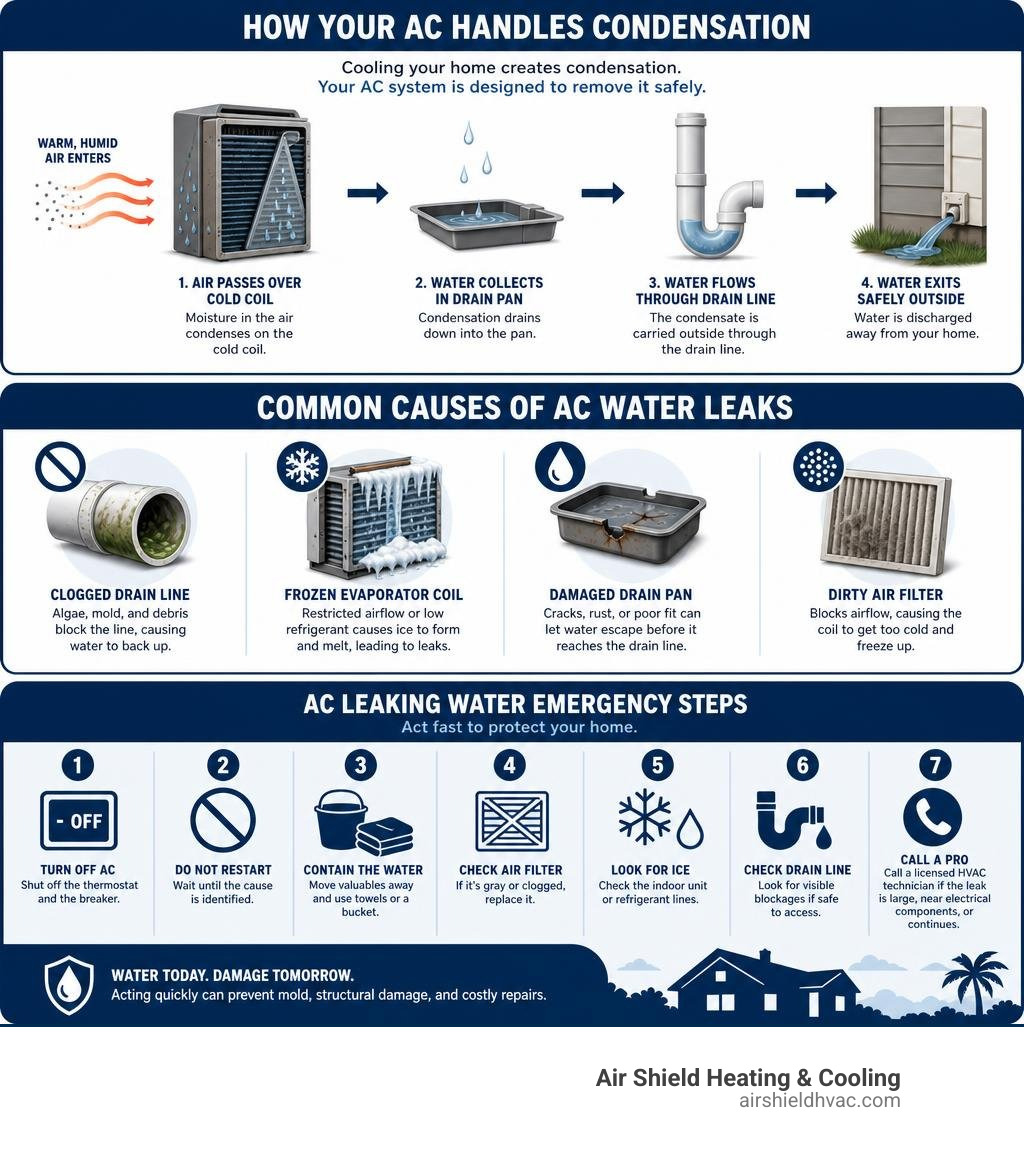
Quick Answer: AC Leaking Water Emergency Checklist
- Turn off your AC at the thermostat and the breaker immediately.
- Do not restart the system until the cause has been identified.
- Move valuables away from the affected area and place towels or a bucket to contain the water.
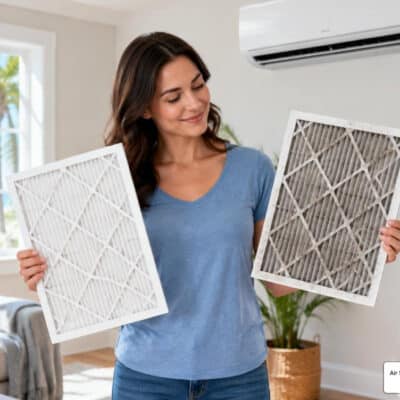
- Check your air filter – if it is gray or clogged, replace it before calling for service.
- Look for ice on the indoor unit or refrigerant lines, which signals a frozen evaporator coil.
- Check the condensate drain line for visible blockages if you can safely access it.
- Call a licensed HVAC technician if the leak is large, near electrical components, or continues after basic steps.
The most common causes of an AC water leak are a clogged condensate drain line, a frozen evaporator coil, or a damaged drain pan. In Manatee County, FL, algae and mold buildup in drain lines account for the vast majority of drainage-related service calls, driven by year-round heat and humidity that keeps AC systems running almost constantly.
What makes this situation genuinely urgent is the timeline. Once building materials stay wet, mold risk can increase within 24 to 48 hours. Water that appears to be a small surface drip can travel behind baseboards, under flooring, and into wall cavities long before it becomes visible. That means acting quickly is not just about protecting your AC system, it is about protecting your home.
At Air Shield Heating & Cooling, our team brings over two decades of hands-on HVAC experience serving Manatee County and surrounding Florida communities. We have responded to countless AC leaking water emergencies where a fast, informed response made the difference between a simple repair and a costly restoration. In the sections below, we will walk you through exactly how to assess what you are dealing with, what you can safely do yourself, and when to call for professional help.
Is an AC Leaking Water Emergency Occurring in Your Home?
Many homeowners in places like Bradenton, FL and Sarasota, FL ask us if a little water around their cooling system is really cause for alarm. The short answer is yes, especially when the water is leaking indoors.
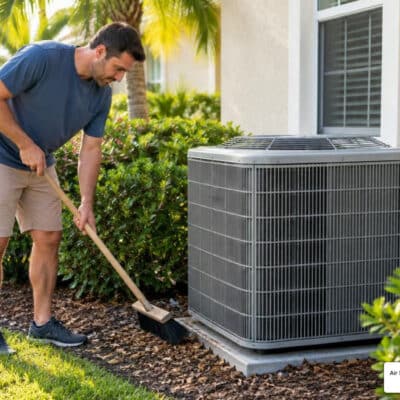
While your outdoor condenser unit might show a small amount of normal condensation pooling nearby on a humid afternoon, any water escaping from your indoor air handler is a sign of trouble. If left unaddressed, that water can quickly lead to severe structural rot, ruined drywall, buckled wood flooring, and saturated ceiling joists.
Even worse, the high-humidity environment of Southwest Florida acts as an incubator for biological growth. Mold spores can begin to colonize wet building materials within 24 to 48 hours of a leak. If you notice damp drywall, musty odors, or bubbling paint near your system, you are likely looking at signs of urgent HVAC issues that require immediate professional attention to protect your family’s health and your home’s structural integrity.
Water Leak vs. Refrigerant Leak
Before you attempt any hands-on troubleshooting, you must determine whether your system is leaking harmless water or chemical refrigerant. A refrigerant leak is a major environmental and health hazard that requires an EPA-certified technician to resolve.
Here is how you can tell the difference:
- The Touch and Texture Test: Water is clear, thin, and evaporates normally. Refrigerant, such as R-410A, has a distinct oily residue that does not dry like water. If you wipe up the liquid and your hand feels greasy, you are likely dealing with refrigerant or compressor oil.
- The Smell Test: Pure water condensation is odorless. If you detect a faint, sweet, or chemical odor near the puddle, it is a strong indicator of a chemical leak.
- The Sound Test: If the leak is accompanied by a persistent hissing or bubbling sound coming from the copper lines, the pressurized refrigerant is actively escaping.
If you suspect a chemical leak, do not touch the liquid or breathe in the fumes. Turn off the system immediately and call for professional assistance.
Is It Safe to Keep Running Your AC?
We cannot stress this enough: do not keep running a system that is actively leaking water indoors. Many homeowners are tempted to leave the system on because they do not want to suffer through the Florida heat, but doing so can cause catastrophic damage.
First, water dripping from an attic installation or a closet unit can easily find its way into electrical components, control boards, or nearby outlets, creating a severe risk of electrical shock or a house fire. Second, running an AC with restricted airflow or low refrigerant forces the compressor to work twice as hard, which can lead to complete compressor failure. Replacing a compressor is one of the most expensive repairs in the industry, and in many cases, it requires replacing the entire outdoor unit.
Taking a moment to understand the reasons to shut down your system can save you thousands of dollars in secondary property damage and system replacement costs.
Common Causes of an AC Water Leak
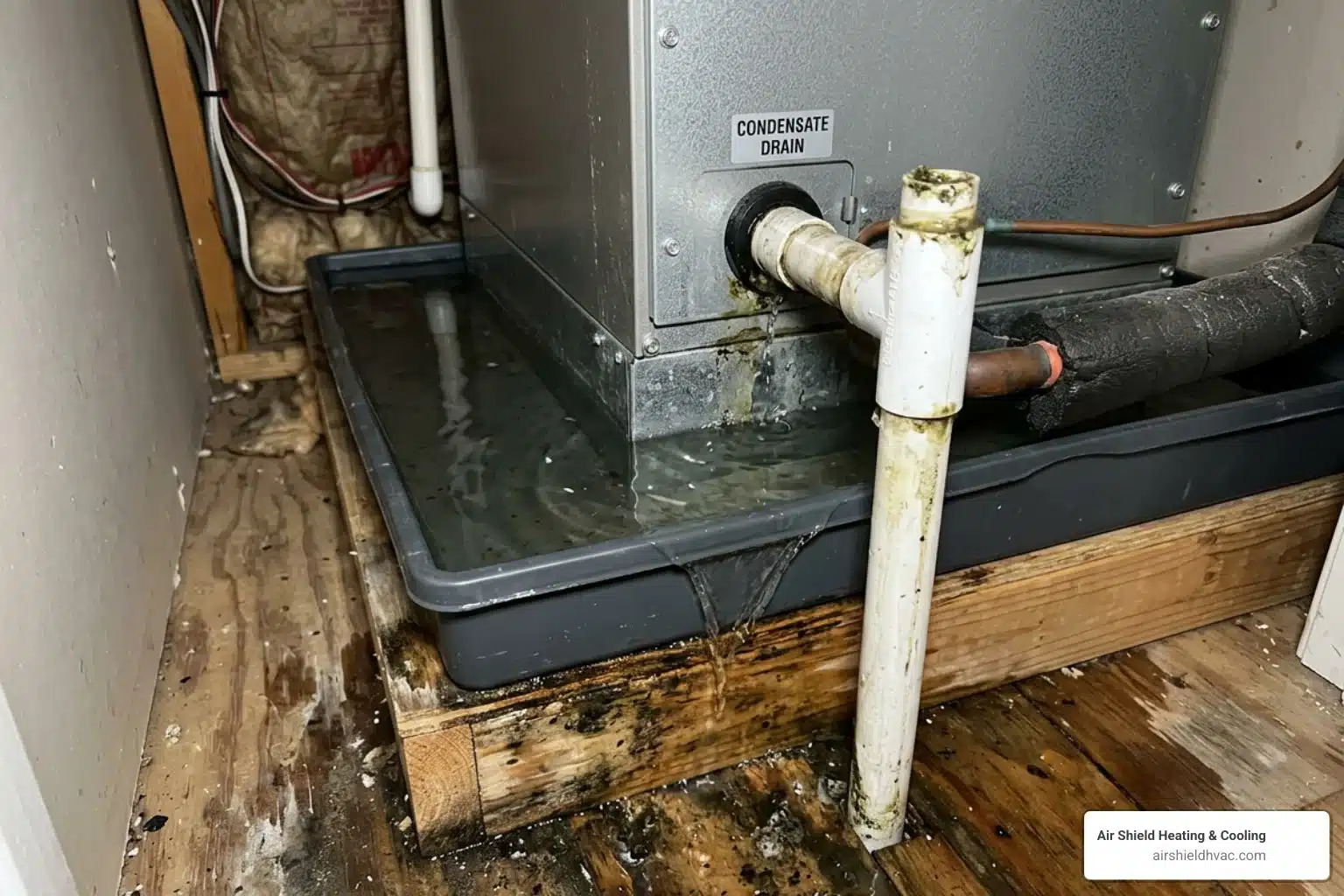
To understand why your air conditioner is dripping, it helps to understand how it works. Your AC does not just cool the air, it also dehumidifies it. As warm, humid air from your home is pulled across the cold evaporator coil, moisture condenses on the coil, much like water droplets forming on a cold glass of sweet tea on a hot July afternoon. Under normal conditions, this water drips into a drain pan and flows safely outside through a PVC pipe called the condensate drain line.
When any part of this drainage system fails, you end up with an AC leaking water emergency.
| Common Cause | Primary Warning Signs | Severity Level | Immediate Action Required |
|---|---|---|---|
| Clogged Drain Line | Water backing up in the primary drain pan, dripping from the air handler closet. | Moderate to High | Shut off system, clear line with vacuum or call a pro. |
| Frozen Evaporator Coil | Visible ice on copper lines, low airflow, water leaking only after turning the system off. | High | Shut off system, switch thermostat to “Fan Only” to thaw. |
| Rusted or Cracked Drain Pan | Water pooling directly underneath older attic or closet units, rusted metal edges. | High | Shut off system, replace drain pan immediately. |
| Low Refrigerant Levels | Hissing sounds, warm air blowing from vents, ice forming on coils. | High | Shut off system, call an EPA-certified technician. |
Clogged Condensate Drain Line
A clogged drain line is the single most common culprit behind residential AC water leaks in Florida. Because our local climate keeps systems running almost constantly, the drain line is always wet. This dark, damp environment is the perfect breeding ground for algae, mold, and bacteria, which eventually combine to form a thick, gelatinous sludge.
A standard central AC system can produce between 5 and 20 gallons of water per day during a humid Southwest Florida summer. When algae and mold growth, which is responsible for roughly 85 percent of all drainage-related service calls in our region, completely blocks that 3/4-inch PVC pipe, all of that water has nowhere to go but back into your home.
Frozen Evaporator Coils
When the evaporator coil gets too cold, the condensation on it freezes solid, turning your indoor unit into a block of ice. Once the system is turned off or the ice buildup becomes too heavy to stay frozen, it melts rapidly, completely overwhelming the drain pan and sending gallons of water spilling into your home.
Coils typically freeze due to two main issues:
- Restricted Airflow: If air cannot flow freely over the coils, they cannot absorb heat, causing the temperature to drop below freezing. This is usually caused by a heavily clogged air filter or blocked return vents.
- Low Refrigerant: When refrigerant levels are low, the pressure inside the coil drops, which causes the coil’s surface temperature to plummet and freeze any moisture that touches it.
Damaged or Rusted Drain Pan
If your HVAC system is located in your attic or a utility closet, it sits on top of a primary drain pan designed to catch condensation. In older systems, particularly those over ten years old, these pans are often made of galvanized steel. Over time, the constant exposure to water causes the metal to corrode, resulting in pinhole leaks or rusted-out corners.
In newer systems, the pans are made of plastic, but they can still crack due to age, heat, or improper installation. When the pan fails, water bypasses the drain line entirely and drips directly onto your ceiling drywall or closet floor.
How to Safely Troubleshoot and Stop an AC Water Leak
If you find yourself facing an AC leaking water emergency, you can perform a few basic troubleshooting steps before calling in the professionals. However, safety must always come first. Never attempt to work on your HVAC system while the electrical power is still connected.
Familiarizing yourself with standard preventative measures for Florida homes will help you keep your system running smoothly and prevent minor issues from turning into major household disasters.
Immediate Steps for an AC Leaking Water Emergency
When you first discover a leak, do not panic. Follow these exact steps to minimize damage:
- Cut the Power: Go to your thermostat and switch the system to “Off.” Next, head to your home’s main electrical breaker panel and flip the breaker labeled for your indoor air handler to ensure there is zero electrical current running to the wet unit.
- Contain the Spill: Place plastic buckets, storage bins, or heavy towels directly under the drip. If the leak is in the attic, do not walk on the drywall ceilings, stick strictly to the wooden ceiling joists to avoid falling through.
- Remove Standing Water: Use a wet-dry vacuum to suck up as much standing water as possible from your floors, carpets, or drain pans. The faster you dry the area, the lower your risk of mold growth.
Clearing a Clogged Drain Line
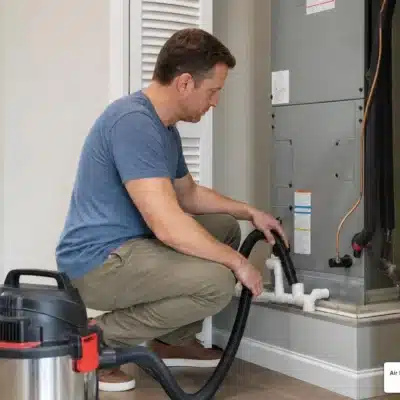
If you suspect a clogged line, you can often clear minor blockages yourself using a standard wet-dry shop vacuum.
Locate the PVC condensate drain line on the exterior of your home, usually near the outdoor condenser unit. Ensure the connection between your vacuum hose and the PVC pipe is airtight by wrapping a towel around the joint. Turn on the vacuum and let it run for 30 to 60 seconds. You should see a mixture of dirty water, algae, and sludge pull into the vacuum canister.
Once the line is clear, locate the T-shaped access cap on the indoor PVC line and pour a cup of distilled white vinegar down the pipe to help reduce remaining algae buildup.
Professional Solutions and Repair Costs
While DIY troubleshooting can resolve minor clogs, complex issues require professional intervention. A licensed technician has specialized tools, such as high-pressure nitrogen flushes and diagnostic cameras, to resolve the root cause of the leak safely and permanently.
During a professional diagnostic assessment, a technician will inspect the entire system integrity, check refrigerant levels, test the safety float switch, and ensure the drain lines are properly sloped to prevent future backups. If your system does not have a float switch, installing one is a highly recommended upgrade. This safety device automatically shuts off your AC if water rises in the drain pan, preventing water damage before it can even start.
If the leak is tied to a failing cooling component, timely air conditioning repair can help restore performance before water damage spreads. For active indoor leaks, ceiling stains, or shutoff issues that cannot wait, emergency AC repair gives homeowners a faster path to safe troubleshooting and system protection.
When to Call a Professional for an AC Leaking Water Emergency
You should immediately stop troubleshooting and call a professional if you experience any of the following:
- Water is dripping near your electrical panel, thermostat, or main light fixtures.
- You see dark water stains spreading across your ceiling drywall or down your walls.
- The leak persists even after you have cleared the drain line and changed the air filter.
- You suspect a refrigerant leak due to a hissing sound, oily residue, or warm air blowing from your vents.
A leaking AC can also point to broader emergency warning signs, especially when water appears near electrical components or airflow suddenly drops. Knowing the urgent HVAC issues that should not be ignored can help you decide when to stop DIY troubleshooting and get help quickly.
Estimated Costs for Fixing an AC Leak
Pricing for AC repairs can vary depending on several factors, including the location of the unit, the age of the system, and the severity of the issue.
Clearing a standard clogged drain line is typically a straightforward process, whereas replacing a rusted-out drain pan or locating and repairing a complex refrigerant leak in the evaporator coil will represent a more significant investment. Homeowners should request a professional estimate for accurate pricing tailored to their specific system and home layout.
Frequently Asked Questions About AC Water Leaks
Can I run my AC if it is leaking water inside?
No, it is not safe to run your AC if it is leaking water inside. Continued operation can lead to severe water damage, toxic mold growth, ruined drywall, and potential electrical hazards if water contacts live wires.
How do I stop my air conditioner from leaking water?
Turn off the system immediately, replace your air filter if it is dirty, and check your outdoor PVC condensate line. If you are comfortable doing so, you can use a wet-dry vacuum to clear clogs from the exterior drain line.
Why is my central AC leaking water from the bottom?
This is typically caused by a clogged condensate drain line, a cracked or rusted primary drain pan, or a frozen evaporator coil that is melting after the system is turned off.
How much does it cost to fix an AC water leak in Bradenton, FL?
Costs can differ based on the size and complexity of the project. A simple drain line flush is relatively inexpensive, while repairing a refrigerant leak or replacing a corroded drain pan will cost more.
How do I know if my AC is leaking water or refrigerant?
Water is clear and odorless. Refrigerant leaves an oily, greasy residue that does not evaporate, often smells slightly sweet or chemical, and may be accompanied by a hissing sound from the copper lines.
Can a dirty air filter cause my AC to leak water?
Yes. A dirty air filter restricts airflow across the evaporator coil, causing the coil’s temperature to drop below freezing. Once the ice melts, it overflows the drain pan.
How fast can mold grow after an AC water leak?
In the warm, humid climate of Southwest Florida, mold spores can begin to grow on wet drywall, wood, or insulation within 24 to 48 hours of water exposure.
Why is my AC leaking water when the unit is turned off?
If your evaporator coil froze while the system was running, turning the unit off allows the ice to melt. This rapid melting produces a large volume of water that often overflows the drain pan.
Can I use a wet-dry vacuum to unclog my AC drain line?
Yes, attaching a wet-dry vacuum to the exterior PVC condensate line is an effective DIY method to pull out algae clogs and sludge.
How often should I have my AC drain lines cleared in Florida?
Because of our high humidity and year-round cooling season, it is highly recommended to have your drain lines professionally cleared at least twice a year to prevent algae buildup.
Conclusion
An AC leaking water emergency is not something you should put off until tomorrow. In the intense heat and humidity of Manatee County, FL, a small drip can quickly escalate into a massive headache involving structural repairs and mold remediation. By turning off your system immediately, performing basic checks, and knowing when to call in the experts, you can protect your home and keep your family comfortable.
Whether you need fast AC repairs, seasonal HVAC maintenance, or a complete system replacement, the team at Air Shield Heating & Cooling is ready to help. As a family-owned business serving Bradenton, FL, Sarasota, FL, and the surrounding areas since 2014, we provide 24/7 emergency response, veteran discounts, and club memberships to keep your home cool and dry. Do not let a leak ruin your peace of mind, contact our professional AC repair technicians today.