
Why Your AC Is Blowing Hot Air in Ellenton, FL (And What to Do About It)
AC blowing hot air is one of the most common and frustrating cooling problems Florida homeowners face, especially during the intense summer heat in Ellenton, FL. If your system is running but your home keeps getting warmer, you are not alone, and in most cases the problem can be identified and resolved quickly.
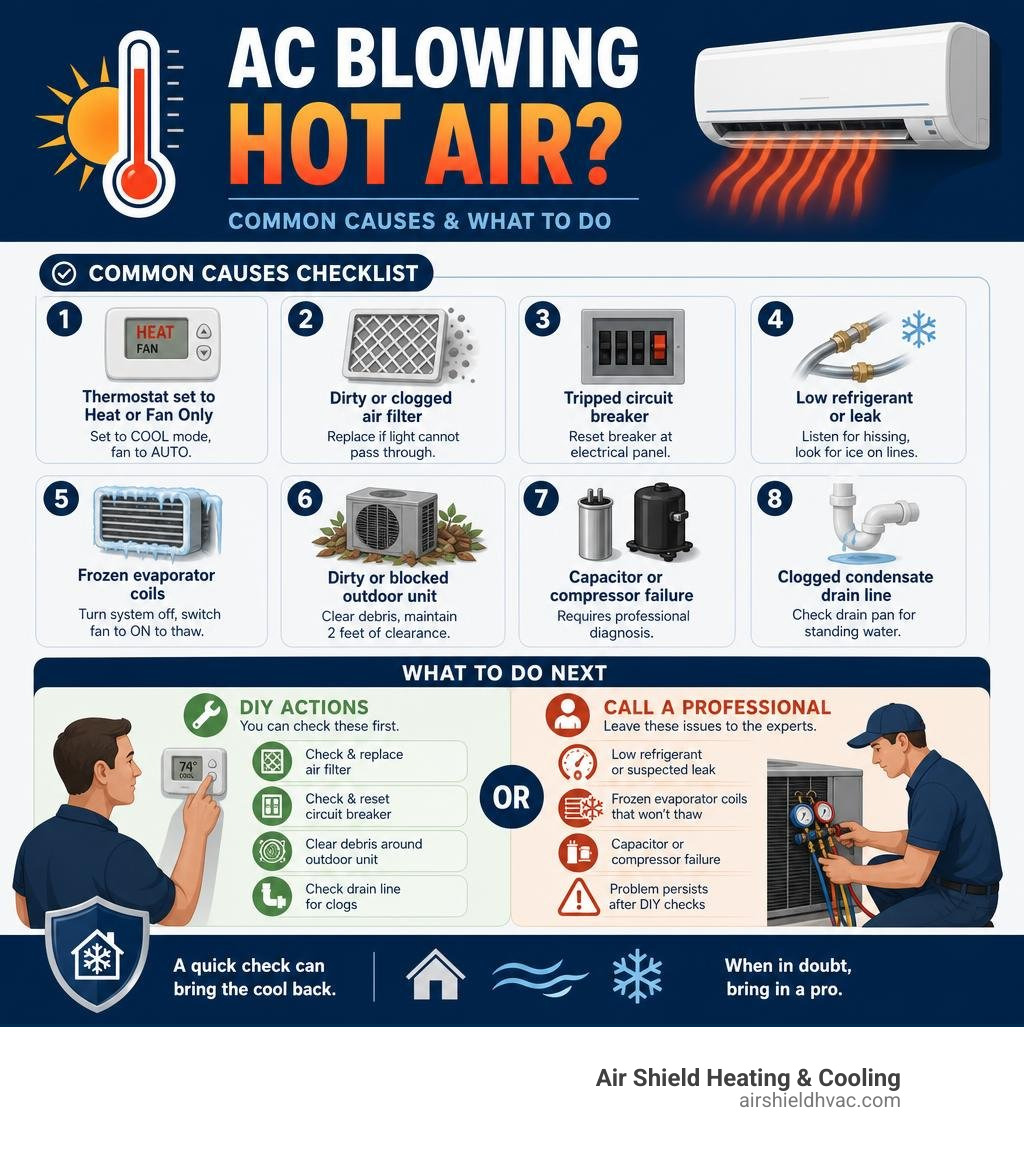
Here are the most common reasons your AC is blowing hot air:
| Cause | Quick Check |
|---|---|
| Thermostat set to heat or fan only | Set to COOL mode, fan to AUTO |
| Dirty or clogged air filter | Replace if light cannot pass through |
| Tripped circuit breaker | Reset breaker at electrical panel |
| Low refrigerant or leak | Listen for hissing, look for ice on lines |
| Frozen evaporator coils | Turn system off, switch fan to ON to thaw |
| Dirty or blocked outdoor unit | Clear debris, maintain 2 feet of clearance |
| Capacitor or compressor failure | Requires professional diagnosis |
| Clogged condensate drain line | Check drain pan for standing water |
When temperatures in Manatee County push into the upper 90s, a cooling system that suddenly starts pushing warm air through your vents is more than an inconvenience. It can become a genuine health and safety concern, particularly for young children, older adults, and pets. Many warm-air service calls are resolved through simple checks homeowners can perform themselves before a technician ever arrives. That said, some causes go deeper than a quick fix, and knowing the difference between the two can save you time, money, and unnecessary discomfort.
In this guide, we cover every major reason your AC might be blowing warm air, walk you through a clear step-by-step troubleshooting process, and explain when it is time to stop troubleshooting and call a professional.
At Air Shield Heating & Cooling, our experienced HVAC team diagnoses and repairs AC blowing hot air problems across Ellenton, FL, and the surrounding Manatee County communities. We have seen this issue in many Florida homes, and we will walk you through exactly what to look for and when to call for backup.
How Your Home Cooling System Works
To understand why your air conditioner is failing to keep you cool, it helps to understand how the refrigeration cycle actually works. Many homeowners believe that an AC creates cold air and pumps it into the home. In reality, your cooling system acts as a heat magnet. It absorbs the thermal energy inside your house and transfers it outdoors, leaving behind a refreshed, cooler indoor environment.
This heat transfer process relies on a continuous loop of refrigerant moving through several essential components:
- The evaporator coil: Located inside your home, usually in the air handler closet or attic, this coil contains cold, low-pressure liquid refrigerant. As warm indoor air is blown across the evaporator coil, the refrigerant absorbs the heat from the air. This process cools the air, which is then blown back into your living spaces.
- The compressor: Often called the heart of the system, this pump is located in the outdoor unit. It takes the low-pressure gas refrigerant that has absorbed heat from indoors and compresses it into a high-pressure, hot gas.
- The condenser coil: Also located in the outdoor unit, this coil allows the hot, high-pressure gas to release its heat to the outdoor air. A large condenser fan blows across the coils to speed up this heat dissipation. As the refrigerant loses heat, it condenses back into a liquid.
- The expansion valve: This component drops the pressure of the liquid refrigerant before it heads back to the indoor evaporator coil, cooling it down significantly so the cycle can start all over again.
- The blower fan: This motor pushes the conditioned air through your ductwork and pulls warm air back into the system through return grilles.
If any single part of this complex heat-transfer process fails, the system can no longer move indoor heat outside efficiently. This interruption is the core reason you end up with your air conditioner running but failing to cool. For a deeper look at the science behind this process, you can use a manufacturer resource such as the Lennox guide on why your AC blows hot air.
Common Causes of an AC Blowing Hot Air
When homeowners call because their home is heating up, our team typically looks for a few usual suspects. While some issues are as simple as a wrong setting on the wall, others involve physical blockages or electrical component failures.
If your system is not reaching the temperature set on your thermostat, these tips for when your AC is not cooling properly can help you narrow down the issue before a service visit.
Let us look closely at the primary reasons why your system might be blowing warm air.

Thermostat Settings and Calibration Issues
It might sound obvious, but incorrect thermostat settings are incredibly common. Sometimes, a family member accidentally switches the system to heat mode during a mild evening and forgets to change it back.
Another frequent issue is the fan setting. If your thermostat fan is set to ON instead of AUTO, the indoor blower fan will run continuously, even when the outdoor unit is not actively cooling the refrigerant. This means that during the periods when the compressor is resting, the system is simply circulating uncooled air through your home. In a humid climate like Ellenton, FL, this can make the air coming out of the vents feel warm and clammy.
Restricted Airflow and Clogged Filters
Airflow is the lifeblood of your HVAC system. When airflow is restricted, the heat transfer process cannot happen. The most common cause of restricted airflow is a dirty air filter.
When an air filter is completely clogged with dust, pet dander, and hair, it acts like a wall. The blower fan struggles to pull air through the system, which causes the static pressure to rise. Because there is not enough warm air passing over the cold evaporator coil, the coil gets too cold and the moisture in the air freezes on contact. This ice buildup blocks the remaining airflow entirely, leading to a system that blows lukewarm air or stops blowing air altogether.
If you notice strange odors coming from your vents during this process, it may help to review common causes of AC smells in your home so you can spot signs of mold, mildew, or drainage issues around damp coils.
Refrigerant Leaks and Frozen Evaporator Coils
Refrigerant is not like gas in a car, it is not consumed or used up over time. It circulates in a closed loop. If your system is low on refrigerant, it means you have a leak.
When refrigerant levels drop, the pressure in the evaporator coil drops with it. This drop in pressure causes the temperature of the coil to fall below freezing, leading to ice buildup. You might hear a hissing or bubbling sound near your indoor air handler or notice ice forming on the copper lines outside. Without enough refrigerant to absorb heat, your system will struggle to cool, eventually blowing warm air while running constantly.
Electrical Failures and Tripped Breakers
Your AC relies on two separate power sources: one for the indoor blower unit and one for the outdoor condenser unit. If the circuit breaker for your outdoor unit trips, the indoor fan will keep running because it is on a different circuit. This results in the indoor fan blowing unconditioned, warm indoor air through your home because the outdoor compressor and fan are completely powerless.
Additionally, electrical components like the capacitor or contactor can fail. The capacitor acts like a large battery that gives the compressor and outdoor fan the electrical boost they need to start running. If the capacitor blows, the outdoor unit cannot turn on, leaving your indoor unit running solo and blowing warm air.
Compressor Failure and Condenser Issues
The compressor is the most critical mechanical component in your system. If the compressor fails, refrigerant cannot circulate, and no heat transfer can occur. Compressor failure is often preceded by unusual sounds like grinding, clicking, or rattling.
If you hear these warning signs, learning about AC noises that point to repair or replacement can help you decide when to shut the system down and schedule help before a total breakdown.
Similarly, if the outdoor condenser unit is buried under overgrown weeds, leaves, or dirt, it cannot release the heat it absorbed from inside your home. This heat buildup can cause the compressor to overheat and temporarily shut down to protect itself, resulting in warm air blowing from your vents.
How to Troubleshoot and Fix Warm Air Issues
Before you pick up the phone to call for professional help, there are several troubleshooting steps you can take. Many warm-air calls can be resolved with simple, safe DIY checks.

If you need fast professional help after the basic checks, air conditioning repair from a local HVAC technician can identify electrical failures, refrigerant leaks, frozen coils, and compressor problems safely.
For urgent cooling failures during Florida heat, emergency AC repair in Ellenton, FL can help restore comfort when warm air is affecting your household, pets, or vulnerable family members.
Follow this systematic step-by-step guide to see if you can restore your cool air.
Step 1: Verify Thermostat Settings
- Check the mode: Ensure your thermostat is explicitly set to COOL.
- Check the temperature: Set the target temperature at least 3 degrees below the current room temperature.
- Check the fan setting: Switch the fan setting from ON to AUTO. This ensures the fan only blows when the system is actively cooling.
- Replace the batteries: If your thermostat screen is blank or fading, install fresh batteries to ensure it is sending a strong signal to your HVAC unit.
Step 2: Inspect and Replace the Air Filter
- Locate the filter: Open your return air grilles or check the slot next to your indoor air handler.
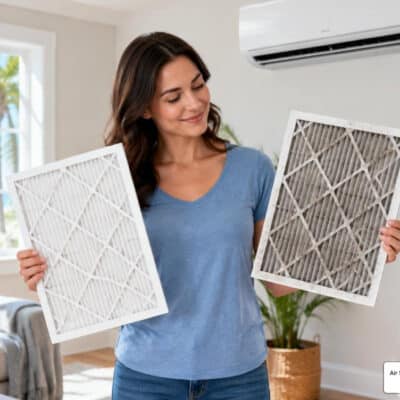
- Perform the light test: Hold the filter up to a light source. If you cannot see light passing through the fibers, the filter is clogged and must be replaced.
- Install a new filter: Make sure the airflow arrows on the side of the new filter point toward the HVAC unit.
Step 3: Check the Outdoor Condenser Unit
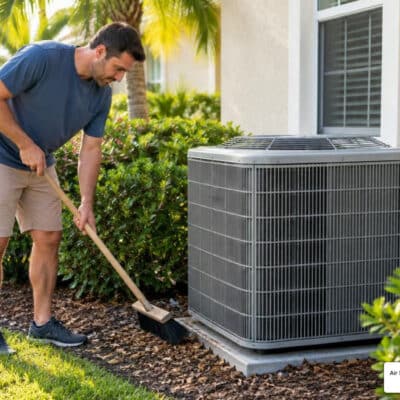
- Clear the perimeter: Ensure there is at least 2 feet of clear space around your outdoor unit. Cut back any weeds, shrubs, or vines.
- Inspect the fan: Look down through the top grate of the outdoor unit. Is the fan spinning? If the fan is stationary but you hear a humming sound, the motor or capacitor may be failing.
- Clean the coils: If the metal fins on the sides of the unit are caked in dirt or grass clippings, turn off the power and gently rinse them with a garden hose. Do not use a pressure washer, as this can bend the delicate aluminum fins.
Step 4: Check the Electrical Panel and Reset the Breaker
- Locate your main electrical panel: Find the breakers labeled for your AC or condenser.
- Identify a tripped breaker: A tripped breaker will usually sit in the middle position, between ON and OFF.
- Reset the breaker: Push the breaker firmly to the OFF position until you hear a click, then flip it back to ON. If the breaker trips again immediately, do not attempt to reset it again. This indicates a serious electrical short or a failing compressor that requires professional help.
Troubleshooting Differences: Home vs. Car Systems
It is worth noting that troubleshooting a home AC is quite different from dealing with a car AC blowing hot air. In a vehicle, the system is much smaller and subjected to constant vibrations and engine heat.
- Refrigerant type: Most modern car systems use R134a or newer eco-friendly refrigerants, which are highly sensitive to minor leaks.
- Compressor drive: A car AC compressor is driven mechanically by the engine belt, whereas your home AC compressor is driven by an electric motor.
- Cabin air filters: Just like your home, cars have cabin air filters that can clog and restrict airflow, but they are located behind the glovebox and require different maintenance schedules.
- DIY limitations: While a homeowner can safely change a home air filter or wash a condenser, car owners often rely on specialized pressure gauges and refrigerant recharge kits that can easily overcharge the system if used incorrectly. For home systems, adding refrigerant always requires a licensed professional.
Frequently Asked Questions About Home Cooling
I get a lot of questions from homeowners in Ellenton, FL, who are trying to figure out why their cooling systems are acting up. Here are the most common questions I hear, along with clear, direct answers to help you understand your system.
Why is my AC blowing hot air but still running?
If your system is running but blowing warm air, it usually means the indoor blower fan is working, but the outdoor condenser unit is not. This can happen due to a tripped outdoor circuit breaker, a blown capacitor, a failed contactor, or a broken compressor. It can also occur if your thermostat fan setting is set to ON instead of AUTO, which keeps the fan blowing even when the cooling cycle is resting.
Should I turn off my AC if it is blowing warm air?
Yes, you should turn off your AC immediately if it starts blowing warm air. Running a malfunctioning system can cause serious, expensive damage. For example, if the system is low on refrigerant, the compressor can overheat and burn out, transforming a minor leak repair into a major equipment replacement. Turn the system off at the thermostat and call a professional to diagnose the issue safely.
Can a dirty air filter cause an AC to blow warm air?
Absolutely. A heavily clogged air filter restricts the airflow passing over your indoor evaporator coil. Without enough warm indoor air to keep the coil warm, the temperature drops, causing the moisture on the coil to freeze. This ice buildup acts as an insulator, blocking the heat transfer process and causing the system to blow warm or lukewarm air.
How do I know if my AC refrigerant is low?
The most common signs of low refrigerant include a noticeable drop in cooling performance, lukewarm air coming from the vents, longer cooling cycles, and ice buildup on the copper refrigerant lines or the indoor air handler. You might also hear a hissing or bubbling sound, which indicates a physical leak in the line.
How much does it cost to fix an AC blowing hot air?
The cost to fix a system blowing warm air can vary depending on several factors, including the specific component that has failed, the age of your system, and the complexity of the repair. Simple fixes like replacing a thermostat or resetting a breaker may be straightforward, while replacing major electrical parts or repairing refrigerant leaks requires a professional estimate for accurate guidance.
How long should I leave the breaker off to reset my AC?
You should leave the circuit breaker in the OFF position for about five minutes. This allows any residual electrical charge in the system’s capacitors to fully dissipate and gives the internal control boards time to reset. After five minutes, flip the breaker back to the ON position and restart your system at the thermostat.
Why does my AC blow cold air at night but warm air during the day?
This issue typically points to a system that is struggling under a heavy thermal load. During the hot afternoon, high ambient temperatures and sun load expose marginal problems like slightly low refrigerant levels, dirty condenser coils, or poor home insulation. At night, when the outdoor air is cooler, the system does not have to work as hard, allowing it to temporarily keep up.
Can a faulty thermostat cause the AC to blow warm air?
Yes. A thermostat with dead batteries, loose wiring, or failed internal sensors can fail to send the cooling signal to your outdoor unit. If the thermostat is uncalibrated, it may also misread the room temperature, preventing the system from turning on the compressor when it should.
What are the signs of a failing AC compressor?
Common signs of a failing compressor include loud grinding or rattling noises when the system starts, an outdoor unit that shakes violently, circuit breakers that trip repeatedly when the AC turns on, and a system that blows warm air despite the outdoor fan spinning.
How often should I schedule professional AC maintenance in Ellenton, FL?
You should schedule professional maintenance at least once a year, ideally in the spring before the intense summer heat hits Manatee County. Regular maintenance includes cleaning the coils, checking refrigerant levels, tightening electrical connections, and clearing the condensate drain line, which can prevent unexpected breakdowns and extend the life of your equipment.
Conclusion
Dealing with an AC blowing hot air in the middle of a Florida summer is never fun, but identifying the problem does not have to be stressful. By understanding how your system works and walking through basic troubleshooting steps, you can often save yourself a service call. However, if the issue involves refrigerant leaks, complex electrical failures, or compressor problems, trying to fix it yourself can be dangerous and may void your equipment warranty.
Whether you need fast AC repairs, seasonal HVAC maintenance, or a complete system replacement, the team at Air Shield Heating & Cooling is ready to help. As a family-owned business serving Ellenton, FL, and the surrounding Manatee County area since 2014, we pride ourselves on providing honest, reliable service with 24/7 response, free estimates, and veteran discounts. If your system is struggling to keep you cool, do not suffer in the heat, contact our professional AC repair technicians today.