
Which Cooling System Is Right for Your Ellenton, FL Home?
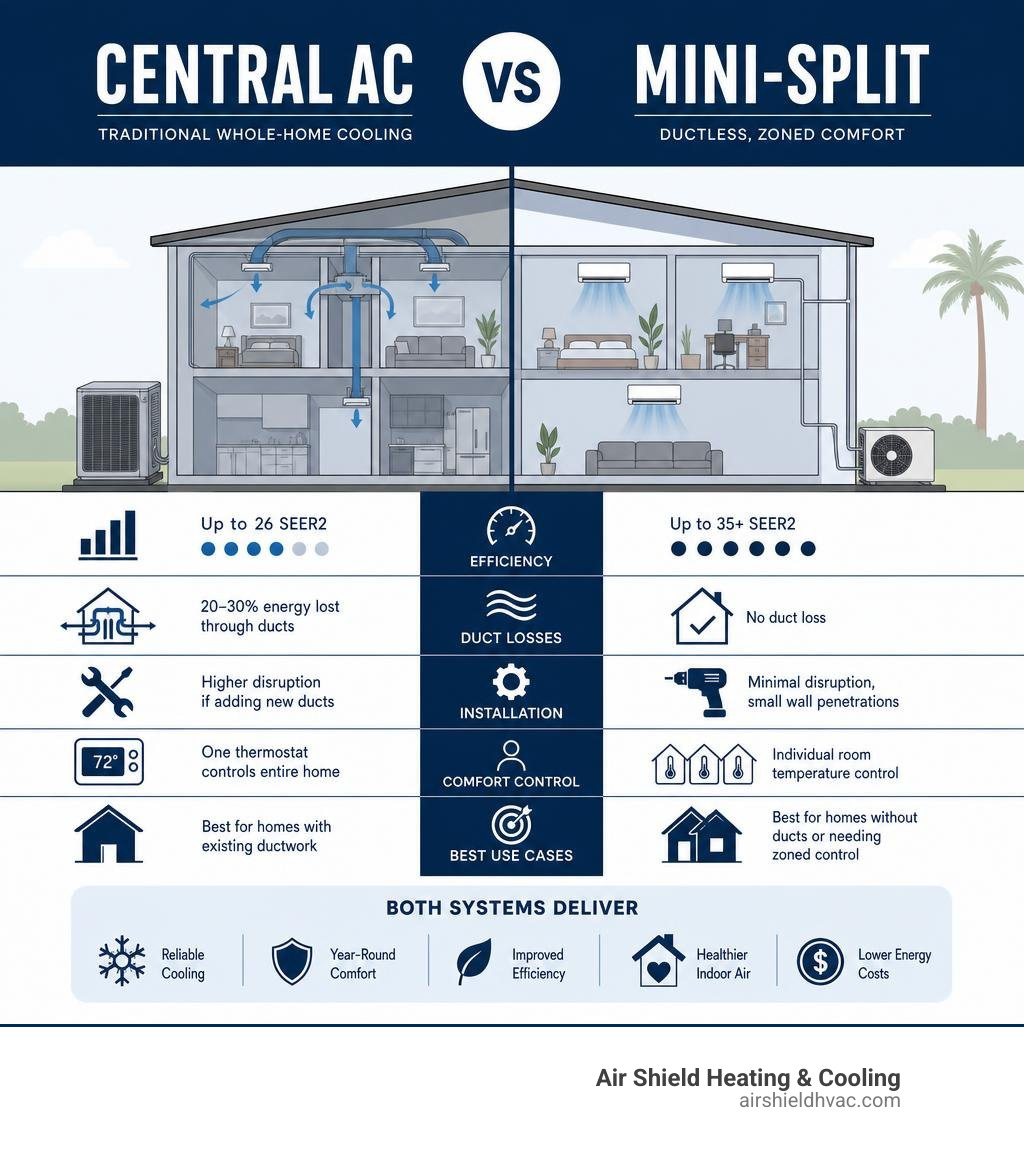
When it comes to the central AC vs mini split debate, the short answer is: it depends on your home’s existing infrastructure, your comfort priorities, and your long-term energy goals. Here’s a quick breakdown to help you orient yourself before diving deeper:
| Factor | Central AC | Mini-Split |
|---|---|---|
| Best for | Homes with existing ductwork | Homes without ducts or needing zoned control |
| Energy efficiency | Up to 26 SEER2 | Up to 35+ SEER2 |
| Duct losses | 20-30% energy lost | No duct loss |
| Whole-home cooling | Yes, from one thermostat | Yes, with multi-zone setup |
| Installation disruption | Higher if adding new ducts | Minimal, small wall penetrations |
| Indoor air filtration | High-MERV replaceable filters | Washable mesh filters per unit |
| Heating capability | Depends on system type | Built-in heat pump on most models |
If you already have well-maintained ductwork, central AC is likely your most straightforward path to whole-home comfort. If your Ellenton, FL home was built before modern duct systems became standard, or you want room-by-room temperature control, a ductless mini-split may be the smarter investment.
Florida summers are not forgiving. In Manatee County, outdoor temperatures routinely push well past 90 degrees for months at a time, and your cooling system works harder here than almost anywhere else in the country. For many homeowners, that means one thing: high energy bills, and a constant question about whether their current setup is actually the most efficient option available.
That question usually comes to a head when a system breaks down, a new addition gets built, or a utility bill arrives that feels impossible to justify. At that point, the choice between upgrading a traditional central air system and switching to a ductless mini-split becomes very real. Both are legitimate solutions, both have genuine advantages, and neither is universally better. The right answer depends entirely on your specific home, your budget, and what comfort actually means to you.
I’m Nick Pazanski, founder of Air Shield Heating & Cooling, LLC, with over two decades of hands-on HVAC experience serving Manatee County and the surrounding Florida communities, including helping countless homeowners navigate the central AC vs mini split decision based on their home’s real-world needs. In this guide, I’ll walk you through everything you need to know to make a confident, informed choice.
Central AC vs Mini Split: Understanding the Core Differences
To make the best decision for your property, you first need to understand how these two systems differ in their core design and operation. While both systems rely on the same basic thermodynamic principles to cool your home, they distribute that cool air in completely different ways.
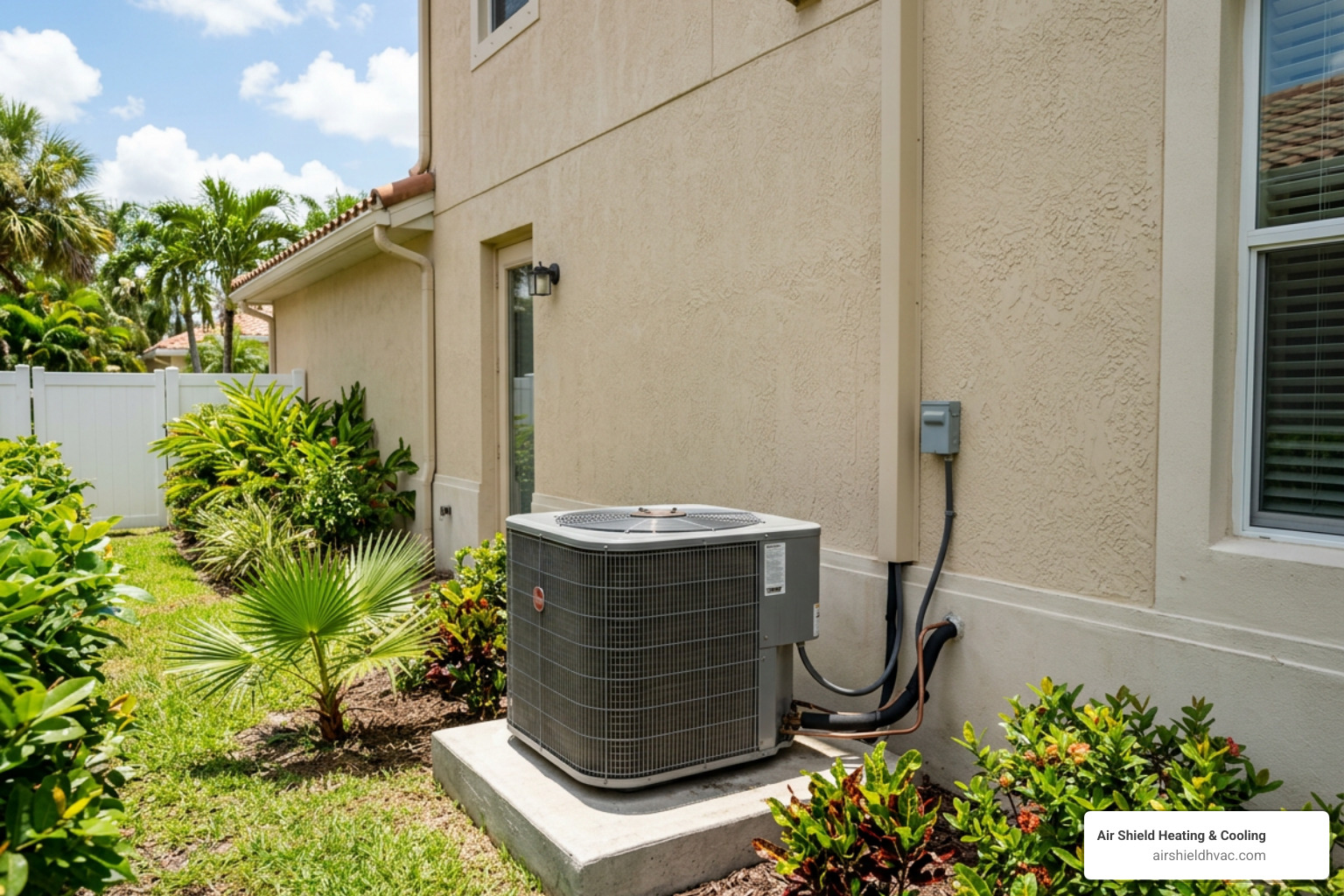
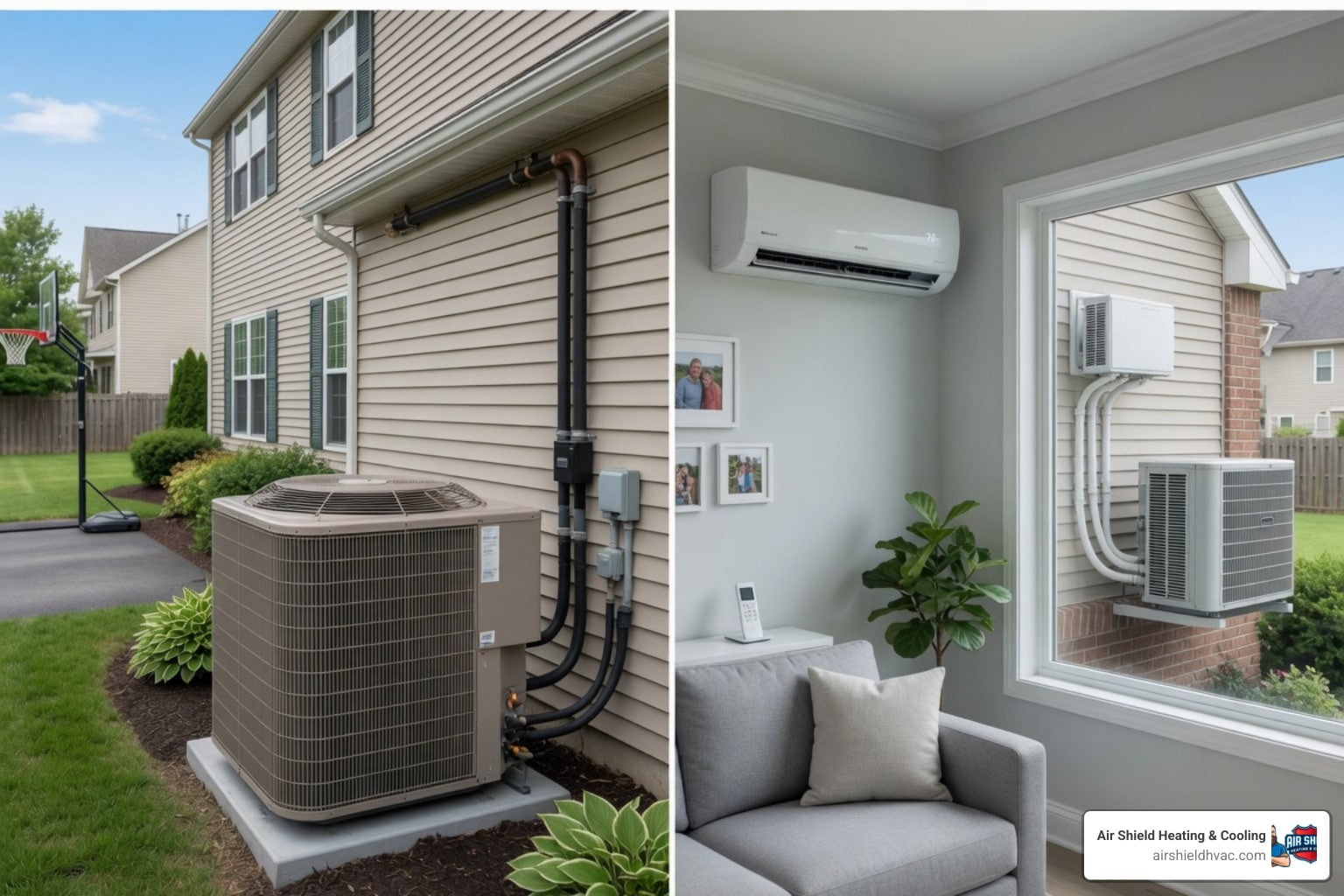
A traditional central AC is a ducted system. It uses a single, centralized indoor air handler connected to a network of hidden ducts to push conditioned air throughout your entire home. An outdoor condenser unit works in tandem with the indoor coil to release heat outside.
A ductless mini-split, on the other hand, does away with the ductwork entirely. It connects an outdoor compressor directly to one or more individual indoor air handlers mounted on your walls or ceilings. These units are linked by small refrigerant lines, power cables, and condensate drains that pass through a tiny three-inch hole in your exterior wall.
If you want to explore the wider landscape of cooling options beyond these two, my guide to other common air conditioner types is a helpful next read.
How Central AC Systems Work
Central AC systems operate on a closed-loop system. The indoor air handler pulls warm air from your living spaces through return vents, passes it over cold evaporator coils to remove heat and moisture, and then pushes the chilled air back through supply ducts.
This process is controlled by a single, centralized thermostat. When the temperature near that thermostat rises above your set point, the entire system kicks on to cool the whole house. If you want a clearer look at the parts involved, our HVAC basics guide breaks it down in plain language.
How Ductless Mini-Splits Work
Ductless mini-splits take a localized approach. Instead of treating your home as one large, single zone, a mini-split system targets individual rooms or areas. Each indoor wall-mounted unit contains its own fan and evaporator coil, allowing it to cool only the room in which it is installed.
Because each indoor air handler operates independently, you gain multi-zone capability by default. You can set the temperature in your master bedroom to a chilly 68 degrees while leaving an unused guest room at 78 degrees. For a closer look at when this setup makes sense, read more about ductless mini-splits for Florida homes.
Installation Costs and Infrastructure Requirements
When comparing a central AC vs mini split system, the upfront installation process is often the deciding factor for many homeowners in Ellenton, FL. The complexity of the installation, local labor costs, and your home layout all play major roles in the final price.
| Infrastructure Feature | Central AC Installation | Mini-Split Installation |
|---|---|---|
| Ductwork Need | Required (must be in good repair) | None (completely ductless) |
| Wall Disruption | High if installing new ducts | Low (small 3-inch hole per zone) |
| Space Required | Attic, closet, or crawlspace | Minimal wall or ceiling space |
| Installation Time | 1 to 3 days | 4 to 8 hours per zone |
Choosing the right system requires balancing these structural needs against your budget. If you are planning a full replacement, our AC installation team can walk you through the options for your home.
Upfront Costs for Homes with Existing Ductwork
If your Ellenton, FL home already has a functional, well-designed ductwork network in place, installing a new central AC is generally the most cost-effective path forward. Replacing an old ducted unit with a modern, high-efficiency central system is a straightforward process that local technicians can complete quickly.
However, if your existing ducts are leaky, undersized, or deteriorating, you may face additional retrofitting costs. For more background on how the equipment, ducts, and controls work together, our guide to how HVAC systems operate can help.
Retrofitting Older Ellenton, FL Homes Without Ducts
Many older, historic properties in the Manatee County area were built long before central air conditioning became common. These homes often feature plaster walls, beautiful exposed wood ceilings, or slab-on-grade foundations that make installing traditional ductwork incredibly difficult and invasive.
Retrofitting a home with brand-new ducts can easily double or triple the total cost of a central AC project, requiring you to cut into ceilings and build soffits that alter the home’s historic charm. In these scenarios, choosing a ductless system is the ideal alternative. It allows you to preserve your home’s architectural beauty while bringing modern cooling to every room. If this sounds like your home, a ductless mini-split installation may be a better fit.
Energy Efficiency and Monthly Utility Savings
In Ellenton, FL, where air conditioning accounts for a massive portion of your summer electricity bills, energy efficiency is not just a buzzword, it is a financial necessity.
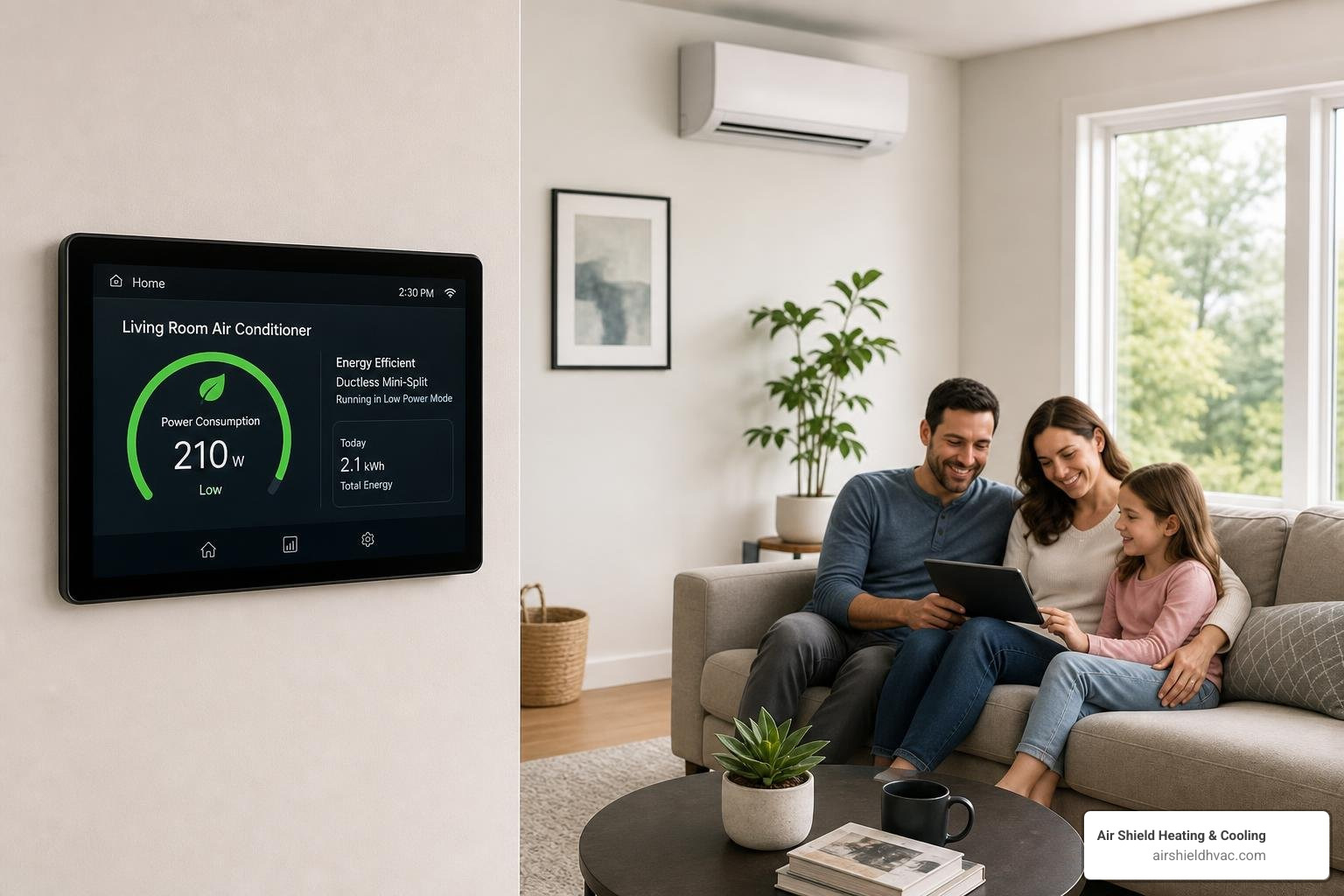
When comparing the operating costs of a central AC vs mini split, the ductless option almost always comes out ahead.
SEER2 Ratings and Inverter Technology
Mini-split systems routinely achieve much higher SEER2 (Seasonal Energy Efficiency Ratio 2) ratings than traditional central air systems. While a high-efficiency central AC might reach up to 26 SEER2, premium ductless mini-splits can achieve ratings of 35 SEER2 or higher.
The secret to this efficiency lies in inverter-driven, variable-speed compressors. Traditional central AC units often operate on an all-or-nothing basis, turning completely on at full power and then completely off. This constant cycling creates massive power surges and wastes energy.
Inverter technology, however, works like a dimmer switch. It slows down or speeds up to maintain a constant, steady temperature, running at ultra-low speeds for long periods to keep your home comfortable without wasting power. If this type of control appeals to you, our guide to smart ductless cooling explains how it works in everyday use.
Eliminating Duct Loss with a Mini-Split
According to the Department of Energy, the typical ducted home loses 20% to 30% of its cooling energy through duct leakage, poor insulation, or conduction as air travels through hot attics and crawlspaces. In a ductless mini-split system, there are no ducts to leak. The cooled air is delivered directly into your living space, ensuring that 100% of the energy you pay for actually cools your home.
Proper system sizing is crucial to maximizing these savings. An oversized or undersized unit will cycle constantly and erase your efficiency gains. Before choosing equipment, it is worth reviewing how HVAC sizing works so your system matches your home.
Comparing Comfort: Zoning, Noise, and Aesthetics
Beyond the financial metrics, your daily comfort, the visual impact of the equipment, and the sound levels in your home are essential factors to consider when choosing a new HVAC system.
Customized Comfort with Zoned Cooling
One of the biggest complaints homeowners have with central AC is the “upstairs-downstairs” temperature battle. If your thermostat is downstairs, your upstairs bedrooms may remain uncomfortably warm.
Ductless mini-splits solve this problem through zoned cooling. Because each room has its own independent thermostat, family members can customize the temperature in their own spaces. You can also turn off the cooling completely in empty guest rooms or home offices, saving money without affecting the rest of the house.
Noise Levels and Visual Impact
If you value peace and quiet, mini-splits are the undisputed champions. Because the noisy compressor is located outside and the indoor air handlers are designed for whisper-quiet operation, many mini-split units run at sound levels between 19 and 26 decibels, which is quieter than a soft whisper in a library. Central AC systems are generally louder due to the sound of rushing air passing through metal ductwork and grilles.
Aesthetically, the choice is highly personal. Central AC is virtually invisible inside the home, with only flat vents on the walls or ceilings. Mini-splits require visible indoor air handlers. Fortunately, modern manufacturers offer low-profile wall mounts, ceiling cassettes that sit flush with your drywall, and floor-mounted consoles to help the equipment blend into your interior design. On the exterior, professional installers use clean, paintable line hides to keep refrigerant lines organized and protected from the Florida sun.
Maintenance, Air Filtration, and Lifespan
Both ducted and ductless systems require consistent care to survive the harsh, humid, salt-air environment of coastal Manatee County, FL. However, their day-to-day maintenance routines and filtration capabilities differ significantly.
Air Filtration and Indoor Air Quality
If you suffer from severe allergies or asthma, indoor air quality is a top priority. Central AC systems have a clear advantage here. Because they feature a powerful centralized blower, they can handle thick, high-MERV (Minimum Efficiency Reporting Value) pleated filters that capture microscopic dust, pollen, pet dander, and mold spores from the entire home’s air volume.
Ductless mini-splits utilize small, washable mesh filters inside each individual indoor unit. While these are excellent at catching larger dust particles and keeping the internal coils clean, they do not offer the same level of fine, whole-home filtration as a high-MERV central media filter.
Routine Maintenance and Lifespan Expectations
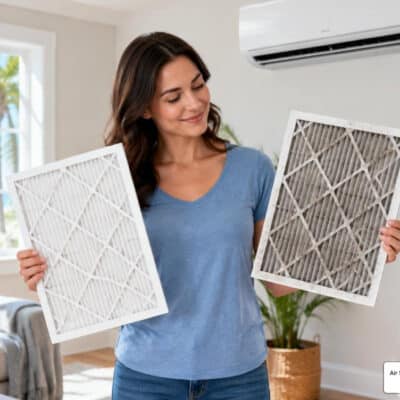
To keep a mini-split running efficiently, you must commit to rinsing the washable mesh filters every two to four weeks. If these filters clog, airflow drops, efficiency plummets, and the coils can freeze. Central AC filters, by contrast, typically only need to be replaced every one to three months.
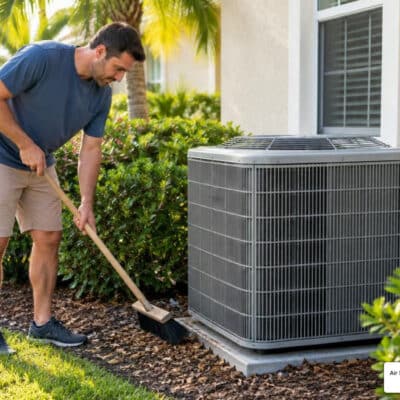
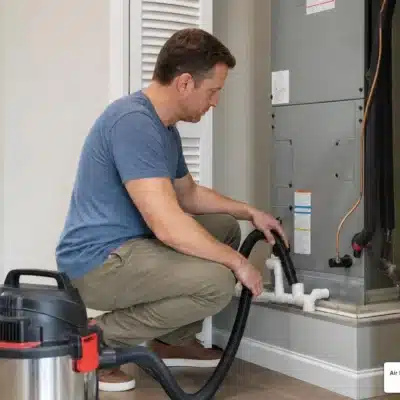
In terms of longevity, both systems generally last between 15 and 20 years if they receive professional preventative maintenance. For homes near the Gulf coast, annual professional coil cleaning is essential to protect both systems from corrosive salt-air exposure.
Frequently Asked Questions
Is a central AC vs mini split system more cost-effective for whole-home cooling?
If your home already has functional ductwork, a central AC is usually more cost-effective upfront. However, if you do not have ducts, or if you want to cool a large home with multiple independent zones, the long-term energy savings of a high-SEER2 mini-split can make it the more cost-effective choice over time.
How do I choose between a central AC vs mini split for an older home?
For historic homes in the Ellenton, FL area, preserving the architectural integrity of plaster walls and original ceilings is key. A ductless mini-split is almost always the better choice here, as it bypasses the need for invasive, expensive duct construction.
Can you combine both systems in a single home?
Absolutely. This is a very common “hybrid” approach. Many homeowners use a traditional central AC for the main living areas of the home, but install a single-zone mini-split to handle hot spots like sunrooms, converted garages, or new room additions.
How long do ductless mini-splits last compared to central systems?
Both systems have a similar average lifespan of 15 to 20 years. However, because mini-splits require more hands-on owner maintenance (cleaning the mesh filters every few weeks), their actual lifespan is highly dependent on how well you keep up with routine care.
Do mini-splits provide heating for Florida winters?
Yes. Most modern mini-splits are heat pumps, meaning they can reverse their operation to pull heat from the outdoor air and warm your home efficiently during our occasional chilly winter nights.
How often do mini-split filters need to be cleaned?
You should slide out and rinse the mesh filters in your indoor air handlers every two to four weeks. This keeps the airflow unrestricted and ensures the system operates at peak efficiency.
Does central AC provide better indoor air quality?
Yes, central AC systems generally provide superior whole-home air filtration because their powerful blowers can accommodate high-MERV pleated filters, which trap much smaller airborne allergens than the washable mesh filters found in mini-splits.
What is the average installation time for each system?
A standard central AC replacement can usually be completed in one day. A multi-zone mini-split installation may take one to two days depending on the number of indoor units and the complexity of routing the refrigerant lines.
Are there tax credits available for high-efficiency HVAC upgrades?
Yes, under the federal Inflation Reduction Act, qualifying high-efficiency heat pump mini-splits may be eligible for tax credits of up to $2,000, while qualified central AC systems may offer smaller tax credits.
How does the Florida climate affect system efficiency?
Our high humidity and extreme summer heat mean AC systems run for extended periods. This makes high-efficiency inverter systems, like those in mini-splits, highly beneficial because they dehumidify constantly while running on minimal electricity.
Conclusion
Choosing between a central AC vs mini split system ultimately comes down to your home’s unique layout, your personal comfort preferences, and your budget. There is no one-size-fits-all answer, but by evaluating your existing ductwork, your desire for room-by-room temperature control, and your long-term energy goals, you can find the perfect solution for your family.
Whether you need fast AC repairs, seasonal HVAC maintenance, or a complete system replacement, the team at Air Shield Heating & Cooling is ready to help. Schedule an AC installation estimate in Ellenton, FL with our experienced, family-owned team today and find the right cooling system for your home.