Why Your AC Keeps Turning On and Off: Understanding AC Short Cycling Causes
AC short cycling causes range from something as simple as a clogged air filter to more serious problems like low refrigerant or a failing compressor. If your air conditioner is turning on, running for just a few minutes, and then shutting off before your home actually cools down, here is a quick look at what is most likely behind it:
Most common AC short cycling causes:
- Dirty or clogged air filter: restricts airflow, causes the system to overheat and shut down early
- Low refrigerant levels: triggers the low-pressure safety switch, causing repeated shutoffs
- Oversized AC unit: cools the space too quickly without completing a full dehumidification cycle
- Thermostat malfunction or poor placement: sends inaccurate temperature readings to the system
- Frozen evaporator coils: blocks heat transfer and forces the system offline
- Failed electrical components: worn capacitors, contactors, or control boards interrupt normal operation
- Faulty or failing compressor: overheats and trips safety shutoffs repeatedly
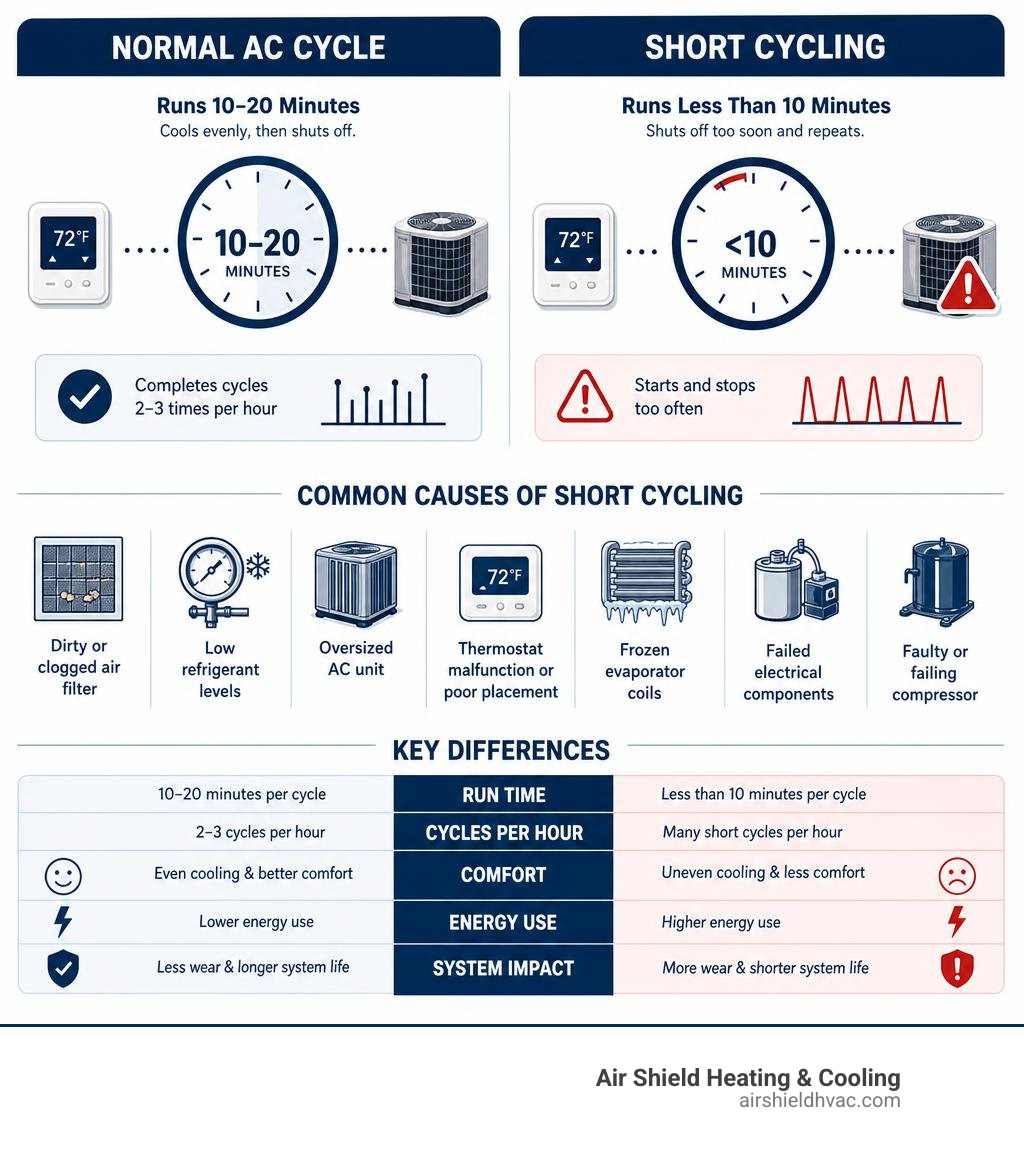
A normal AC cooling cycle runs anywhere from 10 to 20 minutes, with a healthy system completing roughly two to three cycles per hour. When your system is shutting off in under 10 minutes and restarting almost immediately, that is short cycling, and it is not something to ignore.
In Manatee County, FL, where summer heat and humidity push AC systems hard for months at a time, short cycling puts extra strain on equipment that is already working at its limits. Beyond the discomfort of uneven temperatures and sticky indoor air, short cycling can increase your monthly energy bills by a significant margin and shorten the lifespan of your system’s most expensive components, particularly the compressor.
The Air Shield Heating & Cooling team has spent years helping homeowners across Ruskin, FL and the wider Manatee County area diagnose and resolve the most common AC short cycling causes. In this guide, we will walk you through how to identify the problem, understand what is driving it, and decide on the right next step.
What Is AC Short Cycling and Why Is It Bad?
During normal operation, your air conditioner works in predictable, balanced cycles. When the indoor temperature rises above the setting on your thermostat, the system kicks on, runs for 10 to 20 minutes to evenly distribute cool air, and then shuts down once the target temperature is met. This cycle repeats a few times every hour to maintain a steady, comfortable climate.
Short cycling completely disrupts this rhythm. Instead of running long enough to complete a full cooling cycle, your AC starts up, runs for just a few minutes, sometimes as little as three to five minutes, and abruptly shuts down. Moments later, it starts up again.
This constant starting and stopping is highly detrimental to your HVAC system. The startup phase is the most demanding part of an air conditioner’s operation, drawing the highest amount of electrical power. When your system is forced to start up repeatedly, your energy consumption spikes. In fact, short cycling can increase your monthly cooling costs by up to 30 percent, which can easily translate to an extra fifty dollars or more on your utility bills during our hot Florida summers.
Beyond the financial impact, short cycling causes severe wear and tear on critical components. The compressor, which is essentially the heart of your cooling system, is designed for steady, sustained runs. Forcing it to cycle on and off rapidly accelerates mechanical wear, which can slash several years off the equipment’s overall lifespan.
Furthermore, short cycling ruins your indoor comfort. An AC system does not just cool your home, it also removes moisture from the air. However, dehumidification only happens effectively when the system runs long enough for the evaporator coils to stay cold and condense moisture out of the air. When cycles are cut short, the humidity remains trapped inside, leaving your home in Ruskin, FL or Bradenton, FL feeling damp, sticky, and clammy. If you are noticing uneven cooling, weak airflow, or sticky indoor air, the Air Shield Heating & Cooling team can help with AC troubleshooting and repair before the issue escalates.
Identifying the Primary AC Short Cycling Causes
Determining the exact reason your air conditioner is cycling too quickly requires looking at several interlocking components. The issue could stem from restricted airflow, a chemical imbalance in the refrigerant lines, an electrical failure, or a control issue at the thermostat.
To help you visualize what might be happening with your unit, I have put together a quick comparison table of the most common issues we diagnose in the field:
| Common cause | Primary symptom | Typical cycle time | Severity level |
|---|---|---|---|
| Clogged air filter | Weak airflow, ice on indoor coils, warm air drafts | 3 to 8 minutes | Low (DIY fixable) |
| Low refrigerant | Hissing noises, icy lines, uneven cooling | 2 to 5 minutes | High (requires a pro) |
| Oversized AC unit | Rapid cooling, high indoor humidity, constant cycling | 5 to 8 minutes | Critical (requires replacement) |
| Bad thermostat placement | Temperature swings, cycling near supply vents | 2 to 6 minutes | Medium (requires relocation) |
| Failed capacitor | Clicking sounds, hard starting, system hums | Under 3 minutes | High (requires component swap) |
Let’s dive deeper into each of these specific causes to understand how they trigger this frustrating behavior.
Clogged Air Filters as Common AC Short Cycling Causes
A dirty or clogged air filter is the single most common cause of AC short cycling, accounting for the vast majority of residential service calls we receive. Your air conditioner needs a steady, unrestricted volume of warm return air flowing over the indoor evaporator coils to function correctly.
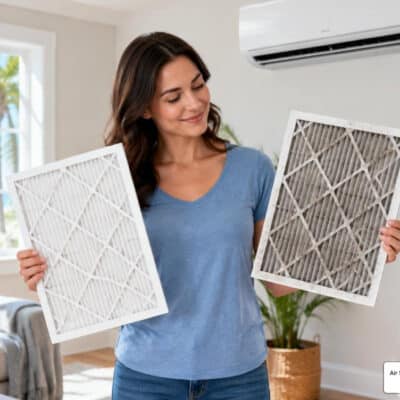
When a filter becomes packed with dust, pet dander, and local Florida pollen, it acts as a barrier to that airflow. Without enough warm air passing over the evaporator coils, the temperature of the coils drops rapidly. This causes the moisture that condenses on the coils to freeze, turning the condensation into a solid block of ice.
As the ice builds up, it further restricts airflow, causing the system to choke. To prevent catastrophic damage to the compressor, safety switches inside the unit will trigger an automatic shutdown. Once the system turns off, the ice may begin to melt slightly, pressure levels normalize, and the system attempts to start up again, only to repeat the rapid freeze and shutdown loop.
Restricted airflow is one of the easiest short cycling risks to prevent, and seasonal service gives a technician the chance to catch dirty coils, blocked returns, and weak airflow before they damage the system. Keeping up with preventative HVAC maintenance is especially important for homes in Ruskin, FL, where cooling systems run hard through long, humid summers.
Low Refrigerant Levels and System Leaks
Refrigerant is the lifeblood of your air conditioner. It operates in a closed, pressurized loop, absorbing heat from your indoor air and releasing it outside. Because it is a closed loop, your system should never naturally “lose” refrigerant. If levels are low, it means you have a leak somewhere in your copper lines or coils.
When refrigerant levels drop, the pressure inside the system falls below normal operating limits. Your AC is equipped with a safety device called a low-pressure switch. This switch is designed to protect the compressor from running dry and overheating.
When the system turns on with low refrigerant, the pressure quickly drops below the safe threshold, and the low-pressure switch cuts power to the compressor. Once the system shuts down, the internal pressure slowly rises back up. Seeing that the pressure has temporarily normalized, the system attempts to start back up, only to drop in pressure and shut down again within a minute or two.
Running an AC with a low refrigerant charge puts the compressor at extreme risk of burning out. If you suspect a leak, it is critical to schedule professional AC repair immediately so the leak can be located, repaired, and recharged to the manufacturer’s specifications.
Why Oversized Systems Are Frequent AC Short Cycling Causes
There is a common misconception among homeowners that when it comes to air conditioners, bigger is always better. In reality, an oversized AC unit is a major liability, especially in humid regions like Ruskin, FL and Bradenton, FL.
An air conditioner that is too large for the square footage of your home will cool the indoor air incredibly fast. It blasts a massive volume of cold air into the living spaces, satisfying the thermostat in a matter of minutes. However, because the run time is so brief, the system never has the chance to pull humidity out of the air.
This results in a home that feels cold but incredibly damp and clammy. Even worse, as soon as the system shuts off, the heavy humidity in the air makes the temperature feel warmer than it actually is, prompting the thermostat to kick the system back on almost immediately.
To prevent this, HVAC professionals use a detailed calculation called a Manual J load calculation to size systems to a home’s layout, insulation levels, and window placements. If your current unit was installed without these calculations, short cycling may remain a recurring issue. If rapid cycling comes with frequent repairs, rising bills, or poor humidity control, our blog on the signs your AC is ready for replacement can help you understand when a properly sized system may be the better long-term fix.
Thermostat Malfunctions and Improper Placement
Your thermostat is the brain of your HVAC system. If it is receiving incorrect information, it will send faulty commands to your air conditioner.
One of the most common non-mechanical reasons for short cycling is poor thermostat placement. If your thermostat is installed in direct sunlight, near a drafty window, or directly under a supply register, it will experience “ghost readings.”
For example, if a cold blast of air from a nearby vent hits the thermostat immediately after the AC turns on, the thermostat will assume the entire house has reached the target temperature and shut the system down. Within minutes, the localized cold air dissipates, the thermostat realizes the room is actually warm, and it turns the AC back on.
Additionally, old or dying batteries, loose wiring, or outdated internal sensors can cause the thermostat to lose calibration and cycle the system erratically. If you are dealing with these control issues along with weak cooling or warm air, these tips for an AC that is not cooling properly can help you rule out simple thermostat and airflow problems before calling for service.
Electrical Failures and Worn Components
Your air conditioner relies on a complex network of electrical components to start and run smoothly. Over time, the intense heat and continuous operation in Florida can cause these parts to degrade.
The most common electrical failure we see is a bad run capacitor. Think of the capacitor as a temporary battery that provides the electrical boost needed to keep the compressor and fan motors running. When a capacitor begins to fail, it can lose its ability to hold a steady electrical charge. This causes the compressor to struggle to stay running, leading to intermittent power losses and rapid cycling.
Other electrical culprits include worn contactors, the switches that control electrical flow to the compressor, and failing control boards. Loose or corroded wiring connections can also create intermittent electrical resistance, causing the system’s safety controls to trip and shut the unit down unexpectedly.
Troubleshooting and Preventing AC Short Cycling
While many AC short cycling causes require professional diagnostics, there are a few simple steps you can take as a homeowner to troubleshoot the system and potentially resolve the issue yourself:
- Inspect and replace the air filter: Check your filter immediately. If it looks gray, dusty, or clogged, swap it out for a fresh one. In our dusty, humid climate, we recommend changing standard filters every 30 to 60 days.
- Clear your vents and registers: Walk through your home and ensure that all supply and return vents are fully open and unobstructed by furniture, heavy curtains, or rugs. Closing too many vents can restrict system airflow and mimic a clogged filter.
- Check the thermostat: Replace the batteries in your thermostat to rule out low-voltage communication issues. Ensure it is set to “Cool” and the fan is set to “Auto” rather than “On.”
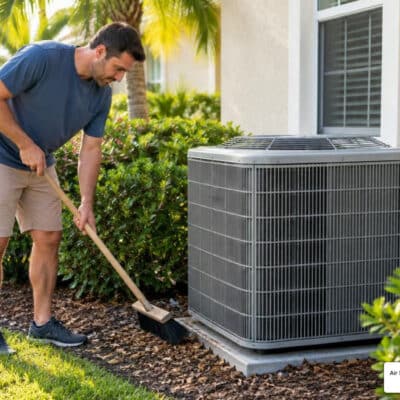
- Inspect the outdoor condenser unit: Ensure there are no leaves, grass clippings, or dirt blocking the metal fins of your outdoor unit. You can gently spray the outdoor coil with a garden hose to wash away debris.
- Thaw the coils: If you notice ice on your indoor unit or copper lines, turn the system completely off at the thermostat and set the fan to “On.” Let the fan run for a few hours to safely melt the ice before attempting to run the cooling mode again.
Taking these steps early can save you from unnecessary service calls. For more proactive help, our AC maintenance tips before spring explain how filter changes, coil cleaning, and system checks can reduce short cycling risks before Florida’s peak cooling season.
When to Call a Professional HVAC Technician
If you have replaced your filter, cleared your vents, and verified your thermostat settings, but your system continues to turn on and off rapidly, it is time to call in a professional.
Handling refrigerant requires specialized licensing and tools. If your system has a leak, a certified technician must locate the breach, repair the copper tubing, evacuate the system, and recharge it with the exact weight of refrigerant specified by the manufacturer. Attempting to add refrigerant without proper training can destroy your compressor.
Electrical issues also pose safety risks. Testing live high-voltage lines, checking capacitor capacitance, and diagnosing control board faults require specialized multimeters and safety gear. Furthermore, if your system is short cycling due to an oversized unit, a professional load calculation is the only way to determine the correct capacity your home actually needs.
Annual service is the best time to catch weak capacitors, dirty coils, low refrigerant symptoms, and airflow restrictions before they turn into complete system failures. The Air Shield Heating & Cooling team can help with ongoing maintenance, and our article on how annual HVAC checkups protect your system explains why regular professional attention is so important for avoiding repeat short cycling and extending AC lifespan.
Frequently Asked Questions About AC Short Cycling
What Is AC short cycling?
AC short cycling is an abnormal operating pattern where an air conditioner turns on and off in rapid, brief intervals without completing a full, balanced cooling cycle. Instead of running for the typical 10 to 20 minutes, a short cycling system will shut down after just a few minutes and restart shortly after.
Can a dirty filter cause my AC to short-cycle?
Yes, a dirty air filter is the most common cause of short cycling. It restricts the return airflow entering the system, causing the indoor evaporator coils to drop in temperature and freeze, or causing the system to overheat, both of which trigger automatic safety shutdowns.
How do I stop my AC from short-cycling?
You can start by replacing your air filter, ensuring all indoor vents are open and unblocked, checking your thermostat batteries, and clearing debris from around your outdoor condenser. If these basic steps do not resolve the issue, you will need a professional technician to diagnose deeper mechanical or electrical problems.
Will I need a new AC unit if it keeps turning on and off?
Not necessarily. Many causes of short cycling, such as dirty filters, bad capacitors, or minor refrigerant leaks, can be repaired affordably. However, if the short cycling is caused by an oversized unit or a completely failed compressor, a system replacement is often the most cost-effective long-term solution.
How long should a normal AC cycle last?
A normal, healthy cooling cycle should run for 10 to 20 minutes. Under normal weather conditions, your system should cycle on and off roughly two to three times per hour to maintain your thermostat’s set temperature.
Is AC short cycling dangerous for my system?
While not directly dangerous to your safety, short cycling is highly damaging to your equipment. It subjects the compressor to intense electrical and mechanical strain, drastically increases your energy consumption, and can lead to premature system failure.
Can low refrigerant cause short cycling?
Yes. Low refrigerant levels cause the pressure inside your system to drop. This triggers the low-pressure safety switch, which cuts power to the compressor to protect it from running dry and overheating, leading to rapid on-and-off cycling.
How does short cycling affect my energy bills in Bradenton, FL?
Because an air conditioner draws the most electrical power during its startup phase, repeating this process multiple times an hour causes your energy usage to skyrocket. This can easily add fifty dollars or more to your monthly power bills during peak cooling months.
Why does my home feel humid when the AC is short cycling?
An air conditioner needs to run continuously for at least 10 to 15 minutes for the evaporator coils to stay cold enough to pull moisture out of the air. When cycles are cut short, the system cools the air slightly but fails to remove the humidity, leaving your home feeling sticky and damp.
How often should I change my air filter to prevent short cycling?
For standard one-inch pleated filters, we recommend checking them monthly and replacing them every 30 to 60 days. If you have pets, allergies, or live in a high-dust area in Manatee County, FL, you may need to replace them more frequently.
Conclusion
Understanding the primary AC short cycling causes is the first step toward reclaiming your indoor comfort and protecting your pocketbook. Whether the fix is as simple as swapping out a dirty air filter or requires a professional touch to resolve a refrigerant leak or failing electrical component, addressing the issue early prevents minor glitches from turning into catastrophic system failures.
Whether you need help with rapid cycling, uneven cooling, humidity issues, or an AC system that will not stay on, the team at Air Shield Heating & Cooling is ready to help. Contact our professional AC repair technicians today to keep your home cool and comfortable all year long.