Why Seasonal Gas Furnace Maintenance Matters for Safety and Efficiency
A practical gas furnace inspection checklist PDF covers the core safety and performance areas that keep your heating system reliable: burners and ignition controls, flue draft and combustion air, electrical safeties and blower operation, and supply-to-return temperature rise. Reviewing those items before heavy seasonal use helps you catch small problems before they become safety hazards or expensive repairs. When mild autumn temperatures start to dip across West Central Florida, turning on your heating system should bring immediate comfort, not safety concerns or unpleasant surprises. Seasonal preventative care is the most reliable way to make sure your equipment runs reliably. Taking the time to prepare your furnace for cooler months protects your household from avoidable hazards while extending the operating lifespan of your investment.
A natural gas heating system relies on a controlled combustion process, electrical sequencing, and forced-air circulation. When any of these components fall out of calibration, performance drops quickly. Adhering to established industry maintenance criteria, such as the ANSI/ACCA Standard maintenance protocols, ensures every critical component receives a comprehensive evaluation before heavy seasonal demand sets in.
Regular heating maintenance translates directly into lower winter utility expenses. When burners are clean, airflow is unrestricted, and safety controls operate as engineered, your equipment uses less fuel to reach your desired indoor temperature. Consistent tune-ups also preserve your manufacturer warranty coverage, which often requires documented proof of annual maintenance by a certified professional.
Potential Hazards of Skipping Routine Inspections
Skipping seasonal maintenance can lead to serious safety and structural problems. The most critical risk is a compromised heat exchanger. Over time, metal fatigue, corrosion, and overheating can cause microscopic cracks in the combustion chamber walls. When a heat exchanger cracks, dangerous combustion gases, including odorless and invisible carbon monoxide, can enter your living spaces.
Understanding why heating system repairs matter helps you recognize that routine maintenance is primarily a safety precaution. Unchecked gas connections and aging supply piping can develop slow natural gas or liquid propane leaks, creating severe fire and explosion hazards. Dust accumulation across electrical controls, failing capacitors, and loose wiring can cause premature component burnout or electrical short circuits. Furthermore, maintaining proper physical clearance around the heating cabinet is vital to prevent accidental fire hazards from stored household items.
Efficiency Gains and Operating Cost Reductions
A neglected heating system works significantly harder to produce the same amount of heat as a well-calibrated unit. Restricted airflow caused by dirty filters, clogged blower wheels, or imbalanced ductwork forces the blower motor to draw excessive electrical current, increasing wear on moving parts.
Proper burner tuning ensures complete fuel combustion, converting every unit of fuel into clean, usable heat. The table below illustrates how a well-maintained system compares to a neglected system across key operational parameters:
| Performance Metric | Well-Maintained Gas Furnace | Neglected Gas Furnace |
|---|---|---|
| Combustion Efficiency | High efficiency (optimized fuel burn) | Reduced efficiency (unburned fuel waste) |
| Airflow Resistance | Low (clean filter and blower wheel) | High (restricted static pressure) |
| Temperature Rise (Delta T) | Within manufacturer nameplate limits | Out of balance (risk of high-limit trip) |
| Carbon Monoxide Risk | Minimal (clean combustion and intact flue) | Elevated (soot buildup, cracked chamber) |
| Equipment Wear Rate | Minimal (smooth mechanical operation) | Accelerated (frequent component strain) |
| Operational Noise | Quiet and steady cycling | Rattling, squealing, or delayed ignition |
Essential Elements in a Gas Furnace Inspection Checklist PDF
A complete gas furnace inspection checklist PDF provides a thorough framework for assessing mechanical integrity, electrical circuits, and combustion performance. Whether you are reviewing service records or conducting initial checks, every reputable inspection covers several primary component groups.
Combustion Chamber, Burners, and Ignition System
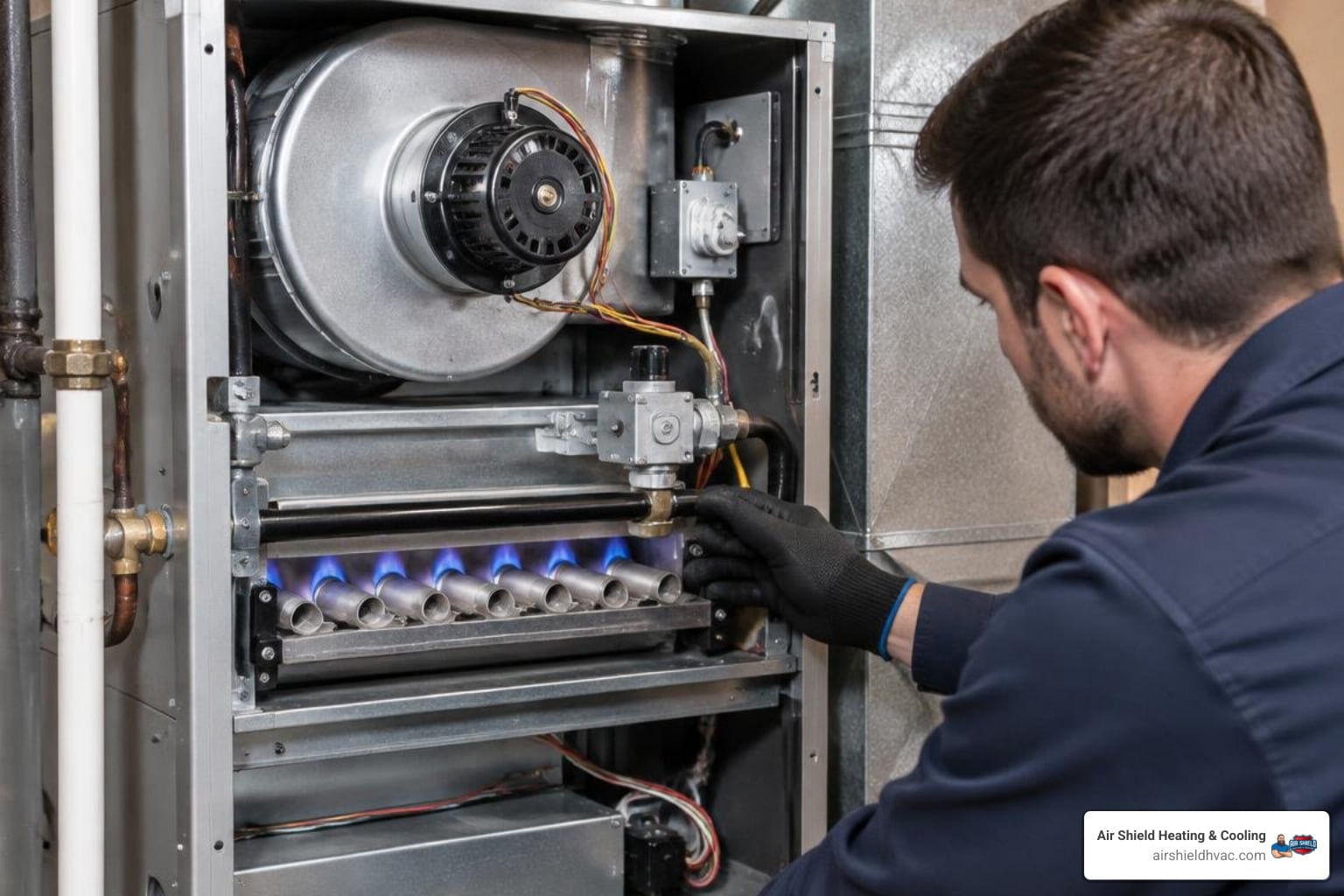
The heart of any gas-fired furnace is the combustion assembly. During an inspection, the burners, flame sensor, hot surface igniter or pilot assembly, and gas manifold require detailed visual and mechanical evaluations.
Technicians use a furnace inspection checklist from InterNACHI to verify that:
- Burner ports are clear of rust, lint, and oxidation.
- The flame sensor is clean and generating appropriate microamp signals.
- The hot surface igniter shows no structural hairline fractures.
- Gas manifold pressure aligns with manufacturer specifications (typically 3.5 inches water column for natural gas and 9 to 13 inches water column for LP gas).
- The flame pattern displays a stable, crisp blue appearance without erratic yellow tipping or floating.
Ventilation, Flue Draft, and Combustion Air
Proper exhaust ventilation is critical for household safety. The inspection evaluates the flue pipe, draft inducer fan, and vent connector pitch. Flue pipes must maintain a consistent upward slope of at least 1/4 inch per foot toward the exterior termination to prevent corrosive condensation pooling in non-condensing systems.
Code requirements dictate that indoor combustion air volume must provide at least 50 cubic feet per 1,000 BTU/h of the appliance’s total input rating. Inspectors verify whether the furnace is a Category I appliance (negative vent pressure, non-condensing, using metal vent pipes) or a Category IV appliance (positive vent pressure, condensing, utilizing sealed plastic PVC/CPVC pipes) to ensure the exhaust venting complies with safety standards.
Electrical Controls, Blower Assembly, and Safety Switches
A reliable heating system relies on redundant safety controls to shut down fuel delivery if unsafe conditions occur. Key checks include testing the primary high-limit switch, rollout switches, and the inducer fan pressure switches.
The electrical evaluation also assesses:
- Inducer and blower motor operating amperage against nameplate ratings.
- Run capacitor values to ensure they fall within acceptable microfarad tolerances.
- The condition of the control board and integrated blower door interlock switch.
- Identifying early warning signs of heating failure, such as burned wiring harnesses, loose connections, or buzzing contactors.
Air Distribution, Filters, and Temperature Rise (Delta T)
Airflow dynamics directly impact system efficiency, indoor air quality, and heat exchanger longevity. The temperature rise, commonly called Delta T, is the difference between the supply air temperature leaving the furnace and the return air temperature entering it.
To evaluate airflow and temperature rise:
- Measure the return air temperature in the ductwork just before the air filter.
- Measure the supply air temperature in the main plenum past the heat exchanger, ensuring the probe is out of direct line of sight of radiant heat.
- Calculate Delta T by subtracting the return temperature from the supply temperature.
- Compare your calculated Delta T against the minimum and maximum range listed on the furnace data plate (frequently a 30-degree difference).
- If Delta T is excessively high, inspect for restricted air filters, closed supply registers, or a dirty blower wheel.
- If Delta T is too low, evaluate duct leakage, excessive airflow speed, or reduced gas input.
Step-by-Step Guide: Professional vs DIY Inspection Tasks
Knowing where homeowner maintenance ends and professional diagnostic service begins is essential for home safety. A printable checklist helps you track routine tasks while clearly identifying issues that require certified tools.
How to Use the Gas Furnace Inspection Checklist PDF for DIY Pre-Checks
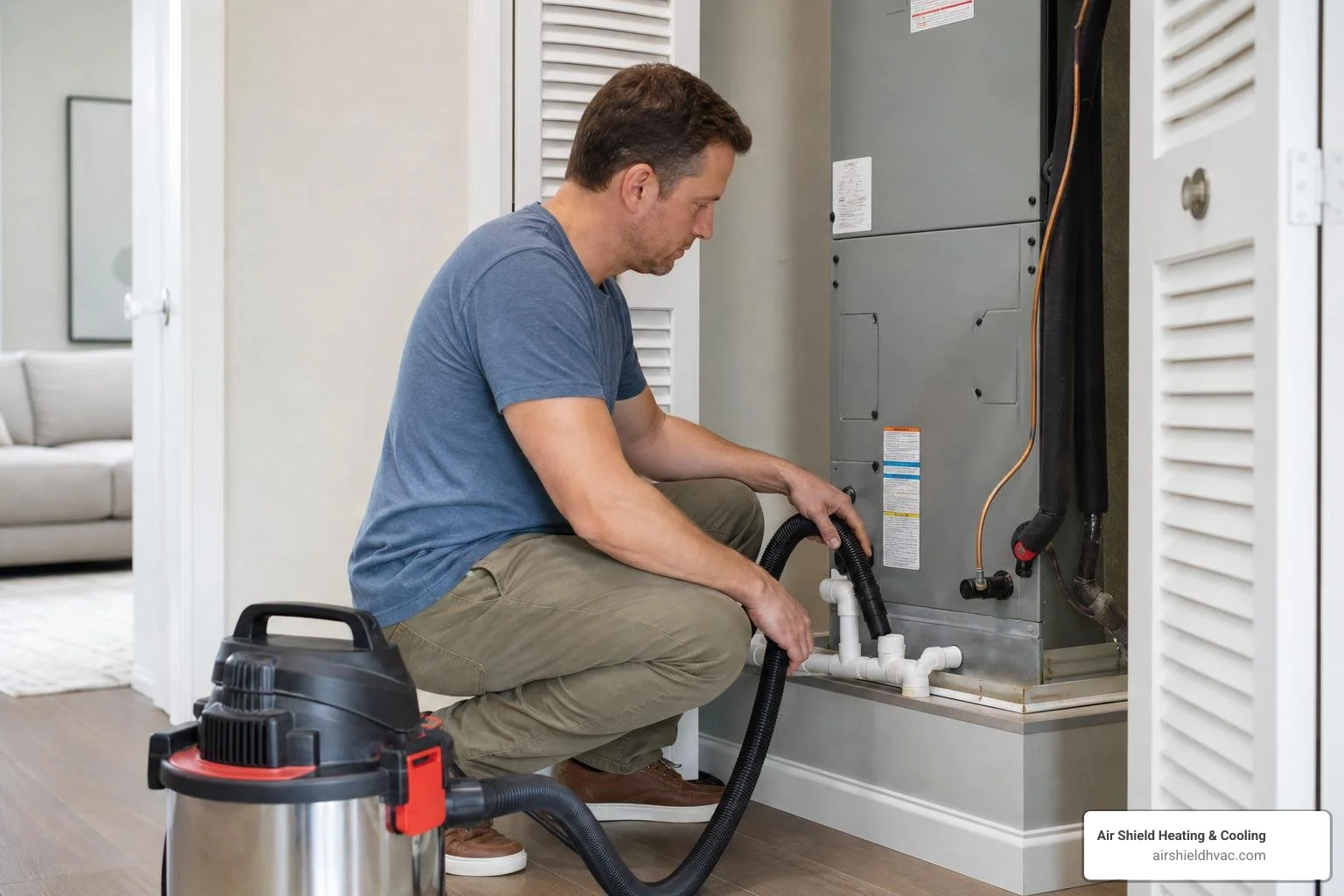
Homeowners can easily complete non-invasive inspections before the heating season begins. These visual checks prevent common malfunctions and keep your system clean:
- Inspect the Cabinet Exterior: Check for loose access panels, exterior rust, or physical damage.
- Replace the Air Filter: Swap out clogged disposable filters or wash reusable media to maintain unrestricted airflow.
- Verify Thermostat Operation: Set the thermostat to heat mode and raise the setpoint above room temperature to confirm the ignition sequence starts smoothly.
- Clear Surrounding Areas: Maintain clear space around the furnace cabinet, keeping boxes, paint cans, and cleaning chemicals far away.
- Review Regional Performance Factors: Stay alert for common heating issues in local homes, such as heavy dust accumulation from extended summer dormancy or moisture buildup in humid utility spaces.
If you notice lingering gas odors, persistent metallic squealing, rapid system cycling, or soot marks during your visual check, shut down the system at the disconnect switch and contact a licensed professional immediately. Whenever safety concerns arise, complex HVAC, electrical, or structural systems are involved, specialized diagnostic tools are required, or you are unsure how to complete a task safely, always rely on a certified technician.
Technical Checks Reserved for Certified HVAC Technicians
Complex mechanical and gas adjustments require specialized diagnostic equipment, safety training, and licensing. Certified technicians handle advanced tasks that should never be attempted as DIY projects:
- Combustion Analysis: Measuring stack oxygen, carbon dioxide, ambient carbon monoxide, and flue gas temperature using a calibrated electronic analyzer.
- Gas Pressure Calibration: Using a digital manometer to adjust inlet and manifold gas pressures to precise factory tolerances.
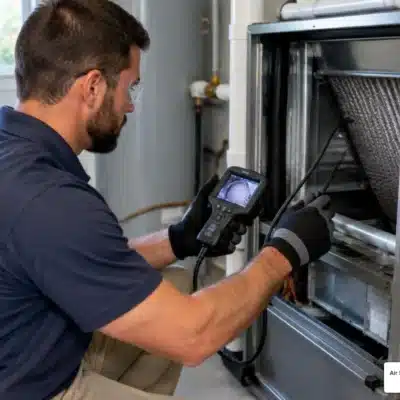
- Heat Exchanger Integrity Testing: Inspecting internal metal cells using specialized articulating fiber-optic borescopes and dye tests to detect hairline fractures.
- Electrical Diagnostics: Measuring line voltage, live circuit resistance, and safety limit switch trip points.
- Professional repairs: Performing precision diagnostics and furnace repair to restore safe, dependable performance.
Code Requirements, Clearances, and Combustion Standards
Residential building and mechanical codes establish strict standards for gas furnace installations to protect homes from fire, electrical, and carbon monoxide risks.
- Working Clearances: Codes generally require an unobstructed working space in front of the control side of the furnace that is at least 30 inches wide and 30 inches deep, with an access pathway of at least 24 inches.
- Attic and Crawspace Access: Attic installations require an access opening of at least 22 by 30 inches, continuous solid flooring pathways, and an accessible service light switch near the unit.
- Garage Elevations: In residential garages, gas appliances with an ignition source must typically be elevated so the burner is at least 18 inches above the floor level to minimize the risk of igniting heavier-than-air gasoline vapors.
- Habitable Room Standards: Residential codes require heating systems to maintain a minimum temperature of 68 degrees Fahrenheit in all habitable rooms, measured 3 feet above the floor and 2 feet from exterior walls during design winter conditions.
- Gas Piping and Sediment Traps: Fuel lines must include a manual shutoff valve, a union, and a sediment trap (drip leg) installed downstream of the manual shutoff and upstream of the gas valve to catch debris before it reaches the control manifold.
Downloading and Documenting with Your Gas Furnace Inspection Checklist PDF
Keeping a clear service history helps you maintain equipment efficiency and preserves valuable warranty protection. Whenever an inspection is completed, store the signed checklist alongside your utility records and installation paperwork.
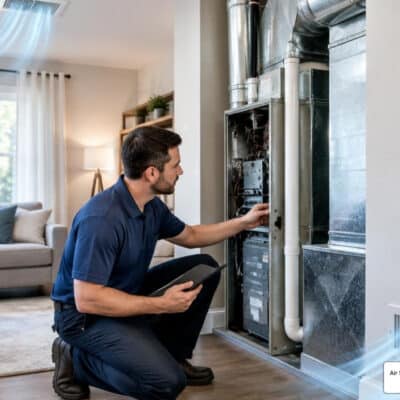
A seasonal heating maintenance appointment gives a qualified HVAC technician time to assess combustion safety, airflow, electrical controls, and other manufacturer-recommended service items before colder weather arrives.
Organized maintenance records simplify equipment change-outs, provide documented proof for warranty claims, and may help with energy-efficiency utility rebates.
Frequently Asked Questions About Gas Furnace Inspections
What is included in a gas furnace inspection checklist PDF?
A comprehensive checklist covers visual exterior cabinet safety, air filter condition, thermostat calibration, burner and ignition cleanliness, flue pipe venting draft, safety switch operations, electrical voltage and amperage, gas supply line integrity, and supply-to-return temperature rise measurements.
How often should a residential gas furnace be inspected?
A residential gas furnace should receive a professional inspection at least once a year, ideally in the autumn before the heating season begins. Regular annual checkups ensure all safety controls, combustion components, and electrical connections remain in peak working condition.
Can a homeowner perform a furnace inspection using a printable checklist?
Homeowners can safely handle basic visual checks, such as replacing air filters, clearing combustible items from around the cabinet, inspecting visible duct joints, and testing thermostat response. However, gas pressure testing, combustion analysis, electrical testing, and internal heat exchanger inspections must be handled by a licensed HVAC professional.
What is Delta T in a gas furnace inspection and why is it important?
Delta T represents the temperature rise between the return air entering the furnace and the heated supply air leaving the unit. Verifying that this difference matches the manufacturer nameplate range confirms adequate airflow across the heat exchanger and prevents premature component failure or high-limit safety trips.
How much indoor combustion air does a gas furnace require by code?
Standard mechanical codes require a minimum indoor combustion air volume of 50 cubic feet for every 1,000 BTU/h of the appliance’s total input rating. If a furnace is located in a confined space that does not meet this volume, dedicated combustion air ducts from outside or an unconfined space must be installed.
What are the main signs of a cracked heat exchanger in a furnace?
Common indicators include soot accumulation inside the burner compartment, an erratic or flickering burner flame when the blower fan turns on, visible corrosion or cracks on external cells, unexpected carbon monoxide alarm activations, and persistent unpleasant chemical or exhaust odors during heating cycles.
What are the standard manifold gas pressures for natural gas and LP systems?
Standard residential manifold operating pressure is typically around 3.5 inches of water column for natural gas systems and between 9 and 13 inches of water column for liquid propane (LP) systems. A licensed technician must measure and adjust these pressures using a calibrated digital manometer.
How much does a professional gas furnace inspection typically cost?
Inspection costs vary depending on the depth of the diagnostic testing, equipment type, accessibility, and whether the service includes routine tune-up adjustments. Many homeowners choose seasonal maintenance membership plans to keep these annual visits straightforward and affordable.
Why is furnace maintenance necessary for homes in Bradenton, FL?
Even in warmer coastal climates, heating systems experience long periods of summer disuse where humidity, dust accumulation, and insect activity can impact electrical contacts, burners, and safety controls. An annual checkup ensures the equipment fires safely and cleanly whenever chilly winter cold fronts move through the area.
When should a homeowner choose furnace replacement over repair?
Replacement is generally recommended when a furnace exceeds 15 years of age, experiences a cracked heat exchanger, requires frequent and expensive component replacements, or operates at poor energy efficiency that leads to high fuel bills.
Conclusion
A well-documented inspection process is the key to safe, efficient, and reliable home heating. Utilizing a structured checklist allows you to monitor equipment health, prevent hazardous operating conditions, and ensure your system is fully prepared to keep your home warm when colder weather arrives. Routine care protects your household against carbon monoxide leaks, lowers ongoing energy expenses, and prolongs the lifespan of your heating equipment.
At Air Shield Heating & Cooling, the team provides dependable, family-owned service for homeowners in Bradenton, FL, Sarasota, FL, Palmetto, FL, Lakewood Ranch, FL, and surrounding communities. For a detailed seasonal tune-up, prompt safety testing, or equipment replacement, contact our professional heating maintenance technicians to help keep your home comfortable.