5 Critical Signs You Need Lakewood Ranch, FL Emergency HVAC Repair During a Freeze
During a sudden Florida freeze, Lakewood Ranch emergency HVAC repair becomes necessary if your heating system produces persistent burning odors, encases the outdoor condenser in thick ice, emits loud grinding sounds, repeatedly trips circuit breakers, or short-cycles while indoor temperatures steadily fall. If you notice any of these warning signs, turn off your system immediately at both the thermostat and the main electrical breaker panel to prevent catastrophic electrical fires or permanent compressor damage, then reach out for prompt professional assistance.
While Manatee County homeowners spend the vast majority of the year relying heavily on cooling, unexpected winter cold snaps force heating components to operate under heavy loads after sitting dormant for many months. Understanding when AC repair is actually an emergency can protect your household from severe property damage, inflated electric bills, or uncomfortably chilly indoor conditions. Below are the five primary warning indicators showing that your heating equipment requires immediate professional evaluation.
Burning Smells or Aux Heat Failure: When to Call Lakewood Ranch, FL Emergency HVAC Services
When you first switch your thermostat over to heating mode at the start of a cold front, detecting a faint, dusty odor for fifteen to twenty minutes is typical. This brief scent is caused by harmless dust burning off the electric heating coils inside your air handler.
However, if your system emits a pungent, acrid odor reminiscent of melting plastic, scorched wiring, or electrical ozone that lingers continuously, you may have an active safety hazard. Electrical connections can overheat under sudden current demands, or internal auxiliary heat strips may suffer a mechanical short circuit. Recognizing these important emergency AC repair warning signs helps protect your home from dangerous electrical fires. If any unusual odor does not clear within minutes, shut off power at the main electrical panel right away.
Frozen Heat Pump Coils and Faulty Defrost Cycles
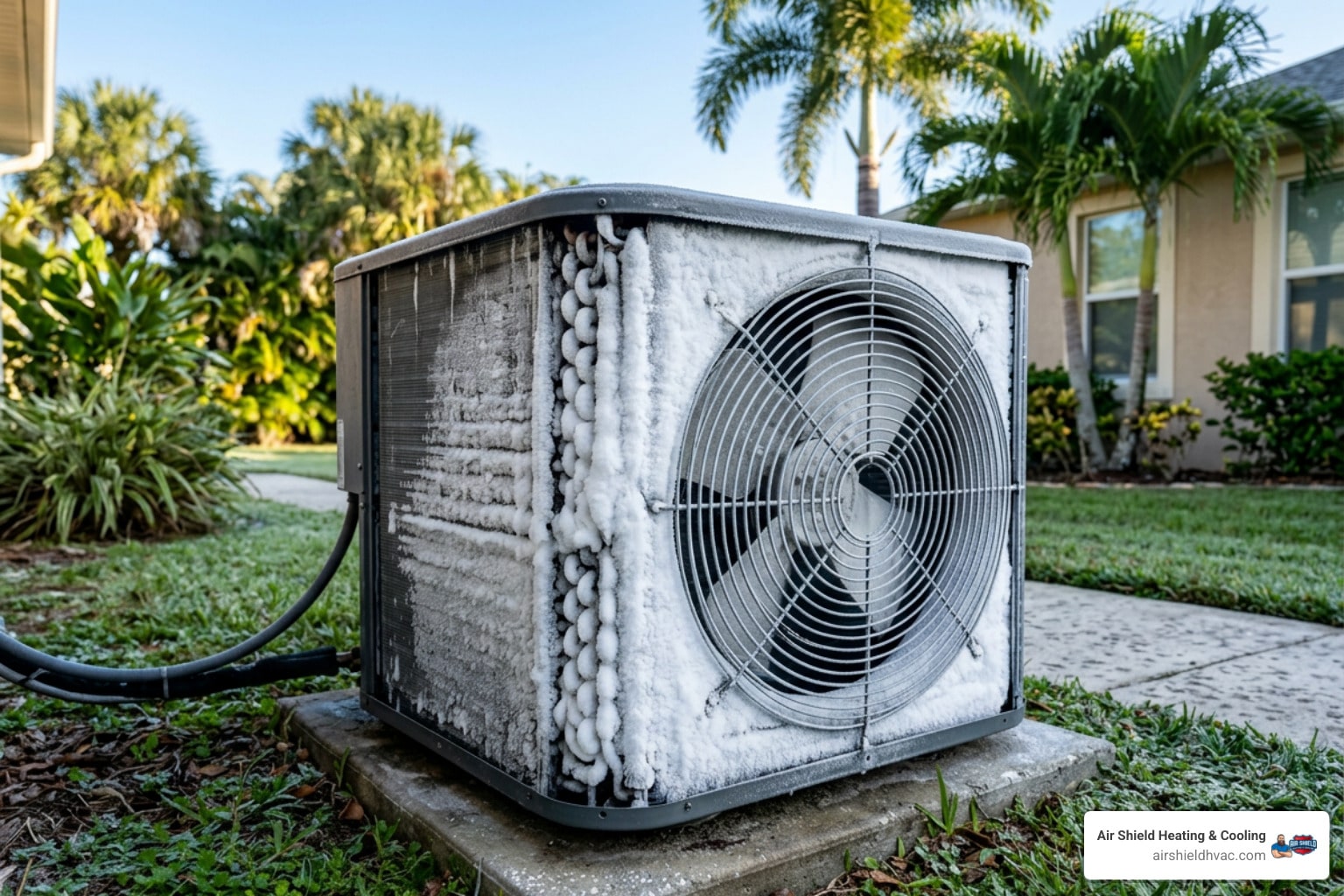
During freezing weather, seeing a thin, light layer of frost along the exterior heat pump coil is a standard part of the thermodynamic heating process. Modern heat pump units feature an integrated defrost control board designed to melt this frost periodically by reversing refrigerant flow for a few minutes.
If your outdoor unit becomes completely encased in a thick shell of solid ice, key components such as the defrost board, ambient temperature sensors, or four-way reversing valve may have failed. Solid ice blocks heat transfer completely, forcing the compressor to run under extreme head pressures until it suffers severe mechanical breakdown. When severe icing occurs, requesting emergency AC repair for Florida cold snaps is essential to prevent permanent compressor failure.
Rapid Indoor Temperature Drops and Short-Cycling
When outside temperatures plunge into the thirties or forties, your HVAC system should maintain steady, continuous comfort. If the unit turns on, runs for two minutes, shuts off abruptly, and repeats this cycle over and over while indoor temperatures plummet, the equipment is short-cycling.
This behavior is commonly caused by:
- A tripped high-limit safety switch reacting to internal overheating
- A restricted blower motor unable to circulate air across heating elements
- Thermostat calibration errors causing improper temperature readings
- Refrigerant pressure faults disrupting standard heat absorption
Short-cycling accelerates wear on internal relays, switches, and motors. Arranging timely AC repair for winter heating problems restores balanced airflow and comfortable warmth before living areas become excessively chilly.
Loud Screeching, Clanging, or Grinding Noises
Under normal operation, residential heating equipment produces a steady, subdued whoosh of air moving through ductwork. Sudden, aggressive mechanical noises indicate severe distress inside the cabinet:
- High-pitched squealing or screeching often points to failing blower motor bearings.
- Metallic clanging or banging usually means a loose fan blade is striking surrounding metal.
- Harsh grinding or rattling points to severe compressor damage or failing electrical relays.
Continuing to operate your system while it produces these noises can escalate minor mechanical repairs into total equipment replacement. Power down the system immediately.
Constant Breaker Tripping and Electrical Malfunctions
If your heating system trips its breaker once, resetting it carefully is reasonable. However, if the breaker trips again immediately or during the next heating cycle, do not attempt to reset it repeatedly.
Circuit breakers trip to prevent electrical wiring from overheating and causing structural fires. A locked compressor rotor, shorted heat strip, or failed capacitor drawing excessive electrical current will cause safety trips. Persistent electrical overloads require diagnosis by a certified HVAC professional with dedicated testing equipment.
What Homeowners Should Do While Waiting for Urgent Repair
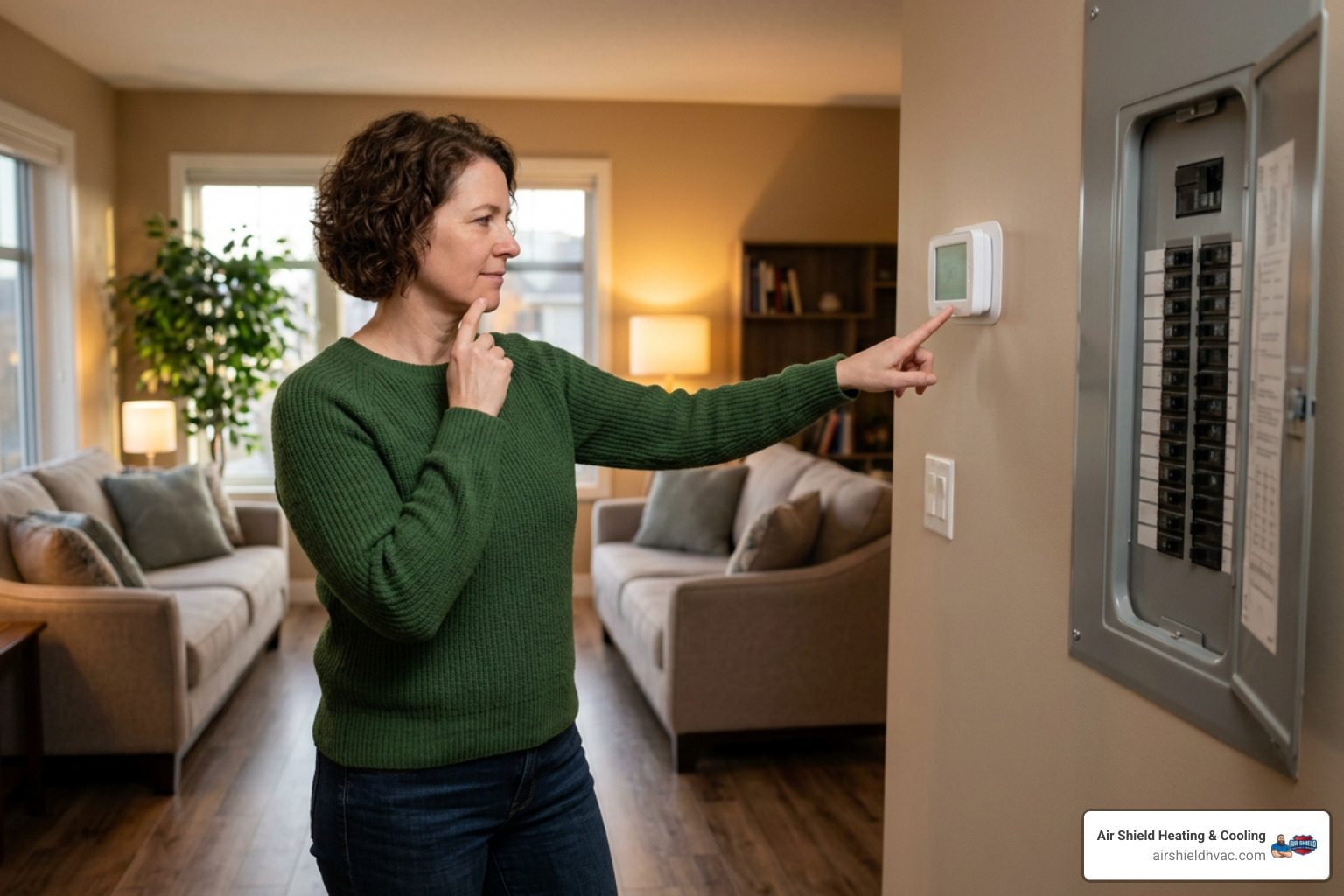
After reaching out to an emergency technician, taking a few proactive measures protects your property, retains indoor heat, and keeps your family safe and comfortable. Knowing how to handle emergency AC and heating repairs helps you remain calm and prevent secondary issues.
Essential Safety Steps Before the Technician Arrives
Household safety is always the highest priority during an unexpected heating failure:
- Power Down Problematic Equipment: If you noticed burning smells, heard mechanical grinding, or spotted standing water around your indoor air handler, shut off the HVAC system at both the thermostat and the main circuit breaker.
- Use Supplemental Heaters Responsibly: When operating portable electric space heaters, position them on level, hard flooring at least three feet away from bedding, drapes, and upholstered furniture. Never leave portable heaters unattended or running overnight, and plug them directly into dedicated wall receptacles rather than extension cords, in accordance with U.S. Consumer Product Safety Commission guidance for using space heaters safely.
- Preserve Indoor Heat: Close interior blinds, curtains, and doors to unoccupied rooms to trap warmth in central living spaces. Placing rolled towels along exterior door bottoms blocks cold drafts effectively.
- Keep Family Members Comfortable: Gather household members and pets in a central room, and review our emergency repair survival guide for practical ways to maintain warmth safely.
Quick Troubleshooting Checks to Avoid False Alarms
Before a technician arrives, checking several basic components may help you identify minor issues safely. Simple troubleshooting fixes for Florida HVAC emergencies can occasionally resolve harmless operational errors:
- Check Thermostat Mode and Batteries: Confirm the thermostat is set to “HEAT” rather than “COOL” or “OFF,” and verify the fan is set to “AUTO.” If your digital screen appears dim or completely blank, installing fresh alkaline batteries may immediately restore system control.
- Inspect the Return Air Filter: A clogged filter severely chokes return airflow, causing heat to build up inside the air handler until the high-limit safety switch trips. Replacing a dirty filter with a clean one may permit the system to restart safely.
- Verify the Condensate Safety Float Switch: If excess moisture collected in your drain pan during cooling season, an activated float switch can cut low-voltage power to your heating controls.
- Examine the Outdoor Disconnect: Ensure the exterior power disconnect box beside the heat pump has not been inadvertently switched off during recent landscaping or exterior cleaning.
Understanding Response Times and Service Costs in Lakewood Ranch, FL
When sudden cold weather arrives in Manatee County, FL, service call requests rise quickly. Knowing what to expect regarding response windows and service rates helps you manage unexpected heating repairs with confidence.
| Symptom | Primary Cause | Immediate Homeowner Action | Urgency Level |
|---|---|---|---|
| Persistent Electrical Burning Odor | Scorched wiring or failed heating strip | Turn off power at main breaker panel immediately | High / Emergency |
| Solid Ice Encasing Outdoor Unit | Defrost cycle failure or bad reversing valve | Switch thermostat to Emergency Heat; turn off cooling | High |
| Loud Metal Screeching / Clanging | Failed motor bearings or broken fan blade | Turn system off at thermostat immediately | High |
| Rapid Short-Cycling (Runs 2 mins) | Tripped high-limit switch or dirty air filter | Replace air filter; check supply vents for blockages | Medium |
| System Blowing Lukewarm / Cool Air | Thermostat calibration or mild sensor drift | Check thermostat settings; monitor indoor temperature | Low to Medium |
Winter cold fronts frequently coincide with holiday weekends, which explains why emergency HVAC repair demand rises during holidays across central Florida neighborhoods.
Average Rates for Lakewood Ranch, FL Emergency HVAC Service Calls
Emergency HVAC service involves standard components. When an emergency technician is dispatched after hours or on weekends, a diagnostic fee covers immediate travel, system testing, and electrical diagnostics.
Total service costs depend on the required replacement parts, such as capacitors, relays, contactors, blower motors, defrost circuit boards, or auxiliary heat elements. For an overview of how after-hours scheduling and regional labor factors influence overall rates, review our breakdown of after-hours HVAC repair costs.
Local Response Windows Across Manatee County, FL
When you request emergency HVAC care in Lakewood Ranch, FL, fast response times minimize indoor discomfort. Because service teams are dispatched locally, technicians easily reach neighborhoods such as Lakewood National, Country Club East, Waterside, Lorraine Lakes, and Greenbrook.
Local dispatching keeps typical emergency response times between 60 and 120 minutes under normal winter weather conditions. For full-service heating and cooling support across our regional service territory, view our Lakewood Ranch HVAC services.
Preventing Future Breakdowns with System Upgrades and Seasonal Care

While emergency repairs solve sudden heating failures, adopting regular maintenance practices helps avoid costly service calls altogether. Learning how to prevent HVAC emergencies in Florida homes keeps your system running smoothly through every season.
When to Choose Equipment Replacement Over Costly Emergency Repairs
If your heat pump system is more than ten to twelve years old and requires recurring, expensive component repairs, continuing to invest in short-term fixes may not be cost-effective. Modern split-system heat pumps offer excellent seasonal energy efficiency, lower monthly operating expenses, and dependable manufacturer warranty coverage.
If your existing equipment operates on phased-out refrigerants or has suffered major compressor failure, it may be time to review professional heat pump replacement and installation options tailored specifically for Florida homes.
Protection Through Comprehensive Maintenance Plans
The most dependable way to avoid sudden winter breakdowns is regular seasonal maintenance. A comprehensive heating tune-up includes:
- Measuring electrical draw on heating strips, blowers, and compressor circuits
- Inspecting electrical contactors, wiring terminals, and capacitors for signs of thermal wear
- Washing outdoor coils to maintain proper defrost cycles and heat absorption
- Calibrating thermostats to ensure accurate temperature sensing
- Flushing condensate lines and inspecting safety float switches
Enrolling in structured HVAC maintenance plans versus DIY upkeep ensures your heating and cooling equipment receives thorough inspection while providing priority scheduling during peak winter cold snaps.
Frequently Asked Questions About Winter HVAC Emergencies
What are the most common heating emergencies in Lakewood Ranch, FL during winter?
The most frequent heating emergencies during Florida cold snaps involve failed electric auxiliary heat strips, seized blower motors caused by dust buildup, malfunctioning defrost control boards that allow outdoor heat pumps to freeze solid, and severely restricted air filters triggering high-limit safety switches.
How quickly can an emergency HVAC technician arrive in Lakewood Ranch, FL?
Local dispatch teams across Manatee County, FL typically arrive within one to two hours of your call. Service vans carry diagnostic equipment and common replacement components to complete most urgent repairs during the initial visit.
Is a burning smell normal when turning on the heat for the first time?
A faint burning dust scent lasting fifteen to twenty minutes is completely normal during the first seasonal startup as harmless dust burns off heating elements. However, a sharp, pungent odor of melting plastic or burning wires indicates electrical issues requiring immediate shutdown.
What should I do if my heat pump is covered in thick ice during a freeze?
Never try to chip away ice with sharp tools, which can easily puncture aluminum fins and copper refrigerant tubing. Instead, switch your thermostat to “EMERGENCY HEAT” to keep your home warm, and contact a licensed technician to inspect the defrost cycle.
What are typical emergency HVAC repair costs in Lakewood Ranch, FL in 2026?
Emergency repair costs generally include an after-hours diagnostic dispatch fee alongside the specific parts and labor needed for the repair. Total costs vary depending on whether the issue involves an electrical capacitor, a defrost board, or a major mechanical component.
How do I determine if my heating issue requires emergency service or can wait?
A heating problem is an emergency if you notice electrical burning odors, hear loud grinding or clanging noises, experience recurring circuit breaker trips, or if vulnerable household members face falling indoor temperatures during freezing weather.
What types of heating systems are most common in Lakewood Ranch, FL homes?
Most residential properties in Lakewood Ranch, FL rely on split-system electric heat pumps equipped with auxiliary electric resistance heat strips. Ductless mini-split heat pumps are also commonly used for room additions and multi-story layouts.
Can a clogged air filter cause my heating system to shut down completely?
Yes. Severe airflow restrictions prevent heat from dispersing away from electric heat strips or indoor coils. Internal temperatures quickly rise, triggering the high-limit switch to cut power to prevent equipment damage.
How can I keep my home warm while waiting for emergency HVAC service?
Keep exterior doors and windows tightly closed, shut curtains to insulate against glass drafts, place rolled towels at door thresholds, gather family members in a central room, and use portable space heaters safely by plugging them directly into wall outlets.
How do seasonal maintenance plans help avoid winter heating emergencies?
Regular maintenance allows technicians to test electrical connections, clean outdoor coils, lubricate moving parts, and verify defrost operation before cold weather arrives, reducing unexpected failures during severe winter cold snaps.
Conclusion
Winter cold snaps in Florida may be brief, but when temperatures suddenly drop, having dependable heating is essential for household comfort and safety. Recognizing early warning signs of equipment failure, practicing safe immediate troubleshooting, and knowing when to call certified technicians ensures your home stays protected no matter what the weather brings. When heating emergencies occur, trust Air Shield Heating & Cooling for prompt, professional service: contact us today to schedule service or request an estimate with our experienced local team.