
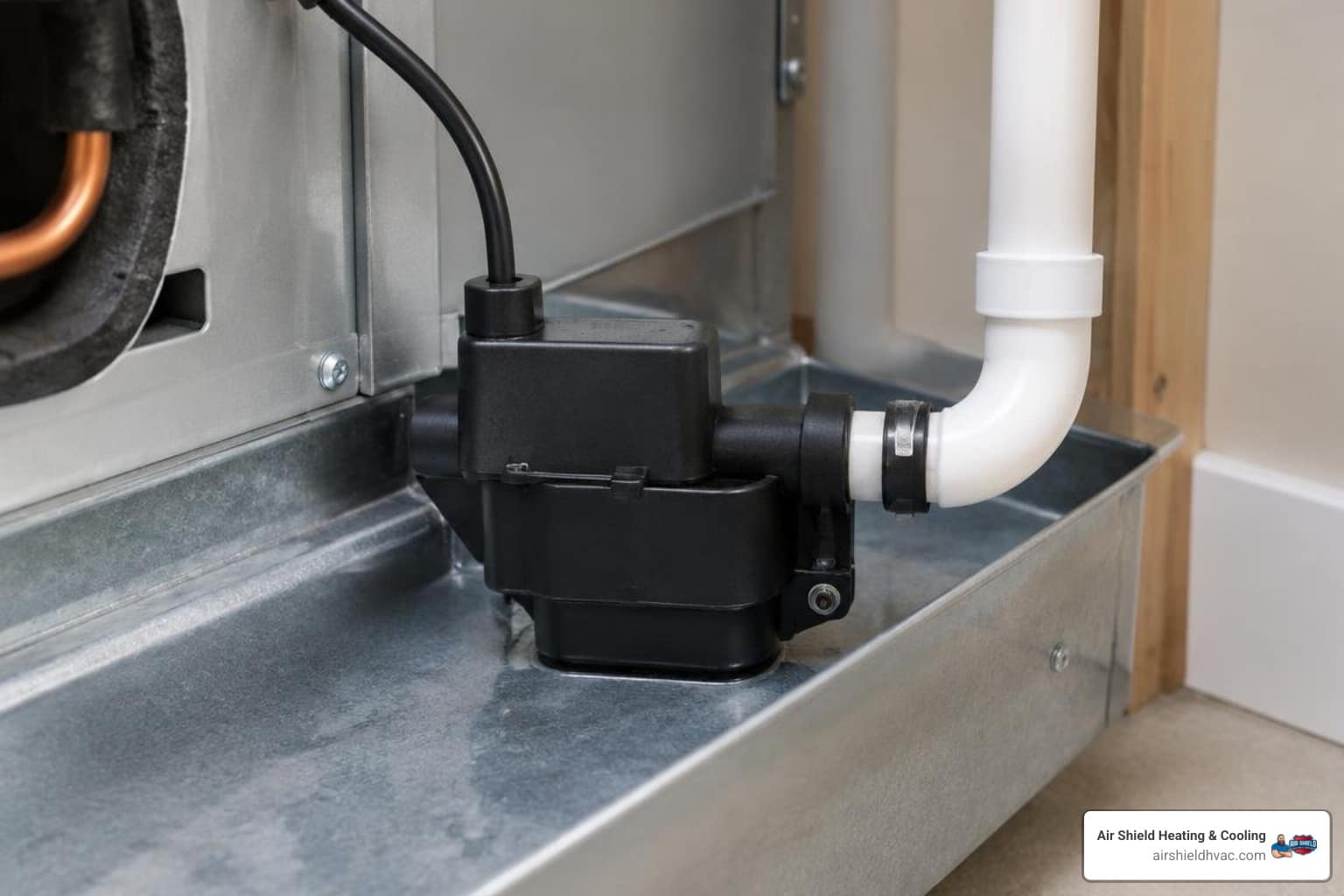
Why Your HVAC Float Switch Keeps Shutting Off the AC
If your HVAC float switch keeps shutting off your cooling system, you are likely dealing with standing water in your drain pan or a clogged condensate drain line. An HVAC float switch acts as an essential safety cutoff that stops cooling operation the moment water rises beyond safe levels, preventing destructive water overflows inside your property. Bypassing this switch to restore cooling temporarily is extremely risky and should never be done. If the drain appears clear but your system continues shutting down, an experienced technician should evaluate the underlying electrical and mechanical cause.
In the hot and humid climate of Manatee County, FL, a residential AC system can generate anywhere from 5 to 20 gallons of condensation every single day during periods of heavy operation. While an unexpected AC shutdown on a hot afternoon is frustrating, that safety cutoff prevents thousands of dollars in water damage to your ceilings, drywall, and flooring.
The team at Air Shield Heating & Cooling has seen how a properly installed HVAC float switch helps protect homes from catastrophic water leaks. Recurring trips need thorough diagnosis rather than a temporary workaround.
What Is an HVAC Float Switch and How Does It Work?
An HVAC float switch is a specialized safety control installed on your air handler’s condensate drainage assembly. Its primary purpose is straightforward: monitor water levels within the condensate collection system and shut down cooling equipment before backed-up water overflows onto finished ceilings, drywall, insulation, and subflooring.
The mechanical mechanism of a standard float switch features a lightweight, buoyant float (often called a bobber) containing an internal permanent magnet. This bobber rests inside a vertical pipe fitting or sits directly within an auxiliary drain pan. Sealed inside the stationary central stem is a sensitive magnetic reed switch. Under normal operating conditions, gravity holds the bobber at the base of the stem, keeping the electrical circuit closed and allowing standard 24 VAC low-voltage electricity to flow between your thermostat and the indoor control board.
When dirt, biological algae, mold, or mechanical debris block the drainage piping, condensation cannot drain away and backs up toward the evaporator coil. As the water level rises, the buoyant bobber floats upward along its stem. Once the internal magnet reaches a calibrated height, it breaks the electrical contact inside the reed switch. By interrupting the 24-volt control circuit, the switch instantly commands the cooling system to stop running, preventing further water production.
When a float switch keeps interrupting cooling, homeowners may need Bradenton, FL AC repair to identify whether the issue involves the drain line, wiring, or another HVAC component. The U.S. Environmental Protection Agency’s guidance on controlling moisture and preventing mold growth offers additional context on why prompt condensate drainage repairs matter.
| Switch Type | Operating Mechanism | Typical Mounting Location | Primary Advantage |
|---|---|---|---|
| Inline Float Switch | Magnetic reed switch with buoyant bobber | Primary 3/4-inch Schedule 40 PVC drain line | Detects downstream drain clogs early before pan fills |
| Auxiliary Pan Switch | Ratcheting or bracket-mounted magnetic float | Secondary emergency drain pan lip (1 to 2 in. pan depth) | Protects against cracked primary pans and severe overflows |
| Electronic Sensor Puck | Solid-state conductivity probes | Bottom of metal or plastic auxiliary drain pans | Drill-free installation with instant moisture detection |
| Auxiliary Port Switch | L-shaped or threaded magnetic float switch | Unused auxiliary drain outlet on the evaporator coil | Trips before primary drain pan spills over its exterior rim |
Most inline residential models use standard 3/4-inch Schedule 40 PVC slip fittings, integrate pre-wired 6-foot 18-gauge lead wires, and carry UL 508 safety listings rated for 24 VAC circuits at 1.25 amps inductive load across 6,000 switching cycles.
How an HVAC Float Switch Shuts Down Your System
When water lifts the float, the interruption of the 24 VAC circuit stops cooling immediately. Depending on how your installer configured your system’s low-voltage control wiring, this safety shutdown triggers one of two primary behaviors:
- Complete Control Power Cut (Breaking the R Wire): The switch breaks the constant 24-volt red wire supplying power to your thermostat. Your digital thermostat display goes completely blank, and both the indoor blower fan and outdoor compressor shut down together.
- Cooling Demand Interruption (Breaking the Y Wire): The switch breaks the yellow cooling call wire. The outdoor condensing unit turns off to stop cooling, but the indoor blower continues to circulate unconditioned room air.
If your digital thermostat screen suddenly goes dark, a tripped safety control is often the root cause. The common causes of an AC that stops working can help homeowners recognize when a backed-up condensate pan may be cutting system power.
Types of Condensate Safety Switches
Not every air handler uses the exact same safety mechanism. The most common varieties include:
- Inline Drain Line Switches: Installed directly in the primary PVC line with a removable inspection cap for quick maintenance and visual checks.
- Secondary Drain Pan Switches: Mounted over the lip of an auxiliary drain pan using an adjustable ratcheting bracket that accommodates pan depths from 1 inch to 2 inches.
- Electronic Solid-State Sensors: Devices that use electronic contact points rather than moving parts, detecting moisture immediately when standing water bridges the sensor probes.
- Auxiliary Port Switches: Feature an L-shaped adapter designed to thread directly into the secondary drain port on the front of the evaporator coil casing.
Common Causes of a Constantly Tripping AC Float Switch
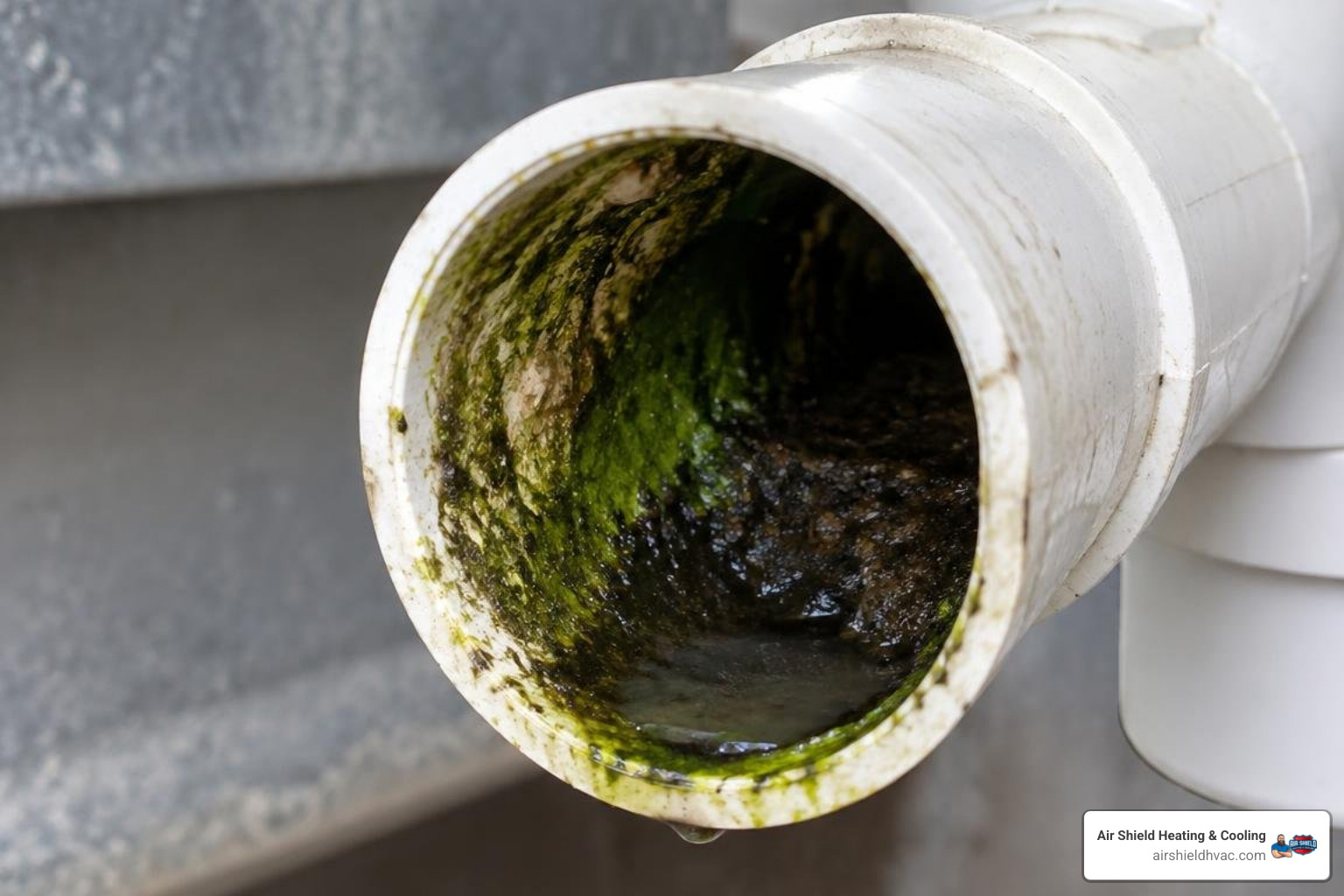
When an HVAC float switch triggers repeatedly, it is usually responding correctly to a real drainage restriction. In humid Gulf Coast communities such as Bradenton, FL, Palmetto, FL, and Lakewood Ranch, FL, cooling systems extract immense volumes of moisture from indoor air. That constant moisture creates a prime breeding environment for algae, bacterial zooglea slime, dust accumulation, and mold growth inside the drainage piping.
Recurring drainage backups are often preventable with the maintenance habits covered in these AC drain line clog prevention tips for Parrish, FL homes. If water is already overflowing past the indoor cabinet, turn off the system breaker immediately to prevent water intrusion into structural building materials.
Dirty Air Filters and Frozen Evaporator Coils
A tripped safety switch does not always stem from a simple pipe clog. A heavily clogged air filter can trigger an identical shutdown through an airflow-related chain reaction:
- A dust-choked air filter starves the indoor blower motor of adequate return airflow.
- Without sufficient warm air moving across the evaporator coil, the refrigerant cannot absorb necessary heat, causing coil surface temperatures to drop below 32 degrees Fahrenheit.
- Moisture condensing on the metal fins freezes into a solid block of ice.
- When the system cycles off, that ice melts rapidly, generating a sudden surge of water that overwhelms the shallow drain pan and trips the safety switch.
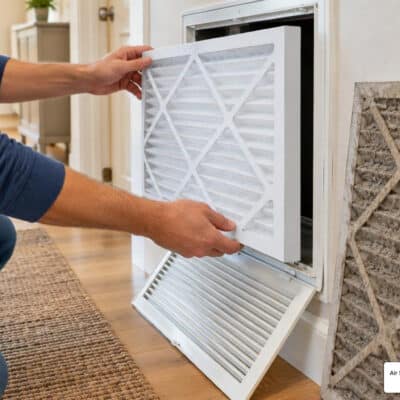
Airflow restrictions and frost buildup can signal a more serious problem. These signs that an AC is freezing up can help homeowners decide when professional diagnosis is needed before component damage worsens.
Improper Drain Line Slope and Switch Faults
Proper drain line pitch is essential for continuous gravity drainage. Standard PVC condensate drain lines require a downward slope of at least 1/8 inch to 1/4 inch per foot. When horizontal piping in an attic lacks adequate pipe strapping, the PVC can sag under the weight of water. These low spots collect standing water, creating airlocks and triggering false safety trips.
Mechanical components can also wear out over time. If biological slime and dust coat the switch stem, the bobber can stick in the raised position even after the pipe empties. In other instances, internal electrical contacts degrade after years of operation, causing intermittent open circuits and erratic AC short cycling.
Float Switch Installation Locations and Code Requirements
Proper placement of safety switches is strictly governed by modern building codes, including the International Mechanical Code (IMC). IMC Section 307.2.3.1 mandates secondary overflow protection whenever equipment damage or structural damage can occur from condensate pan overflow. Furthermore, IMC Section 307.2.5 requires that drain lines have an accessible cleanout point that does not require cutting PVC pipes during routine service.
Professional HVAC installations generally employ one or more of three strategic locations:
- The Primary Drain Line: An inline tee fitting placed immediately downstream of the primary P-trap detects clogs before liquid backs up into the internal coil casing.
- The Auxiliary Drain Port: An L-shaped switch installed directly into the secondary port on the coil casing trips if water rises above the primary drain opening.
- The Auxiliary Drain Pan: A pan switch mounted to the emergency metal or plastic pan beneath horizontal attic units prevents ceiling sheetrock damage if the primary internal pan cracks or overflows.
In high-risk horizontal attic installations throughout Sarasota, FL, Ellenton, FL, and Sun City Center, FL, the most reliable configuration often uses two safety switches in series: one monitoring the primary line and a second guarding the auxiliary pan. A qualified emergency AC repair technician can assess the appropriate protection for the system.
Breaking the R Wire vs. Breaking the Y Wire
One important technical consideration during installation is whether the safety switch should interrupt the constant 24-volt power feed (R wire) or the compressor cooling call (Y wire). Each approach has distinct operational effects:
| Wiring Configuration | System Response When Tripped | Pros | Cons | Best Suited For |
|---|---|---|---|---|
| Breaking the ‘R’ Wire | Cuts all 24 VAC power to the thermostat; display goes blank; all heating and cooling stops | Immediately alerts homeowner via blank screen; prevents high-humidity re-evaporation from blower | Thermostat loses power and scheduling; temporary loss of all climate control | Humid climates (e.g., Florida) where blower air over a wet coil increases indoor humidity |
| Breaking the ‘Y’ Wire | Cuts power to the outdoor compressor contactor; indoor blower fan continues running | Blower continues circulating air; keeps smart thermostats powered online | Homeowner may not notice cooling failure immediately; fan can blow humidity back into living spaces | Dry, arid climates where air circulation helps evaporate minor moisture without high humidity issues |
In Florida’s humid climate, breaking the R wire is widely considered the superior installation standard. When the blower fan continues running over a flooded, warm evaporator coil, it picks up gallons of stagnant moisture and pushes it directly back into your home, rapidly driving indoor humidity past healthy thresholds.
Troubleshooting and Maintenance Guide for Homeowners
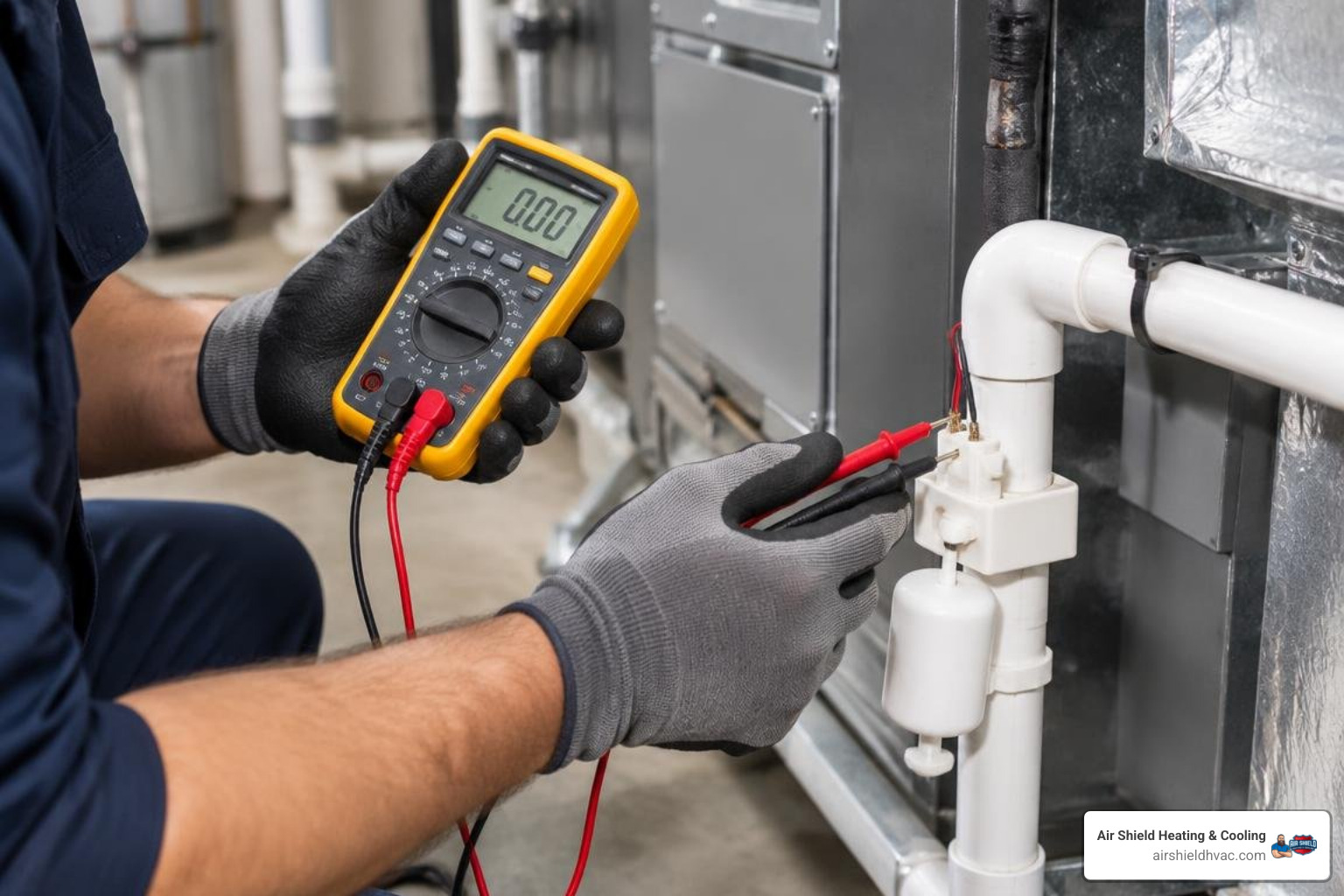
When your cooling system unexpectedly powers down, basic troubleshooting can help you identify whether a drainage safety switch is responsible.
Safe DIY Steps to Check Your System
- Inspect the Primary Switch: Locate the PVC tee fitting near your indoor air handler. Remove the top cap of the switch. If you see standing water filling the pipe neck, a downstream clog is present.
- Check the Secondary Drain Pan: Look underneath your air handler or furnace. If the metal or plastic emergency pan contains standing water, your primary drain line has backed up.
- Clear the Exterior Drain Line: Go outside to where your PVC condensate pipe exits your home’s foundation (common near your outdoor condenser in communities like Venice, FL, Ruskin, FL, and Riverview, FL). Attach a standard wet/dry vacuum to the exterior drain exit using a towel or rubber adapter to seal the opening. Run the vacuum for 3 to 5 minutes to pull out accumulated algae, sediment, and trapped water.
- Flush with White Vinegar: Once standing water drains away, pour one cup of regular distilled white vinegar into your drain cleanout access port to break down biological sludge.
A seasonal DIY AC maintenance checklist for Florida homeowners can help with basic upkeep between professional visits. Always prioritize personal safety: contact a licensed professional if safety concerns arise, specialized tools are required, HVAC, plumbing, electrical, roofing, or structural systems are involved, or you are unsure about performing maintenance correctly.
Proper HVAC Float Switch Maintenance and Inspection
To ensure your safety devices respond properly when needed, include them in your regular maintenance routine:
- Perform Visual Cleanliness Checks: Inspect the switch housing every three months to verify that bacterial slime, pet hair, and mineral scale are not encrusting the buoyant bobber.
- Conduct a Manual Trip Test: While the air conditioner is actively cooling, gently lift the float assembly upward. The indoor system and thermostat should immediately power down. When you release the float, the unit should restore power after its standard 5-minute compressor time delay.
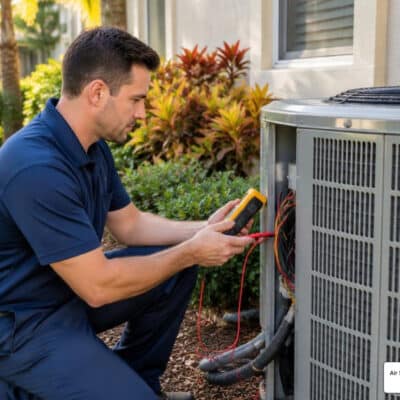
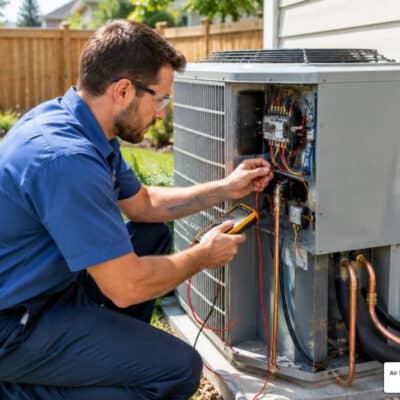
- Check Electrical Continuity: Use a digital multimeter set to ohms or continuity mode across the switch’s two lead wires. The meter should display near-zero resistance when the float rests at the bottom and show an open circuit (infinite resistance) when lifted.
Following a practical AC maintenance schedule in Florida helps homeowners plan seasonal tune-ups and catch drainage concerns early.
The Dangers of Bypassing an AC Safety Switch
When an air conditioner shuts off in sweltering 90-degree weather, it can be tempting to disconnect the float switch wires and twist them together to force the system to run. Never bypass a condensate safety switch.
Bypassing this safety control removes your home’s only defense against water damage. An operating air conditioner will continue dumping 5 to 20 gallons of water daily directly into your attic or utility closet. Within hours, uncontained overflow can cause ceiling drywall to collapse, saturate insulation, warp hardwood flooring, and ruin structural framing.
Undetected moisture also fosters rapid mold colonization inside ductwork and wall cavities. Taking proactive care of your drainage system is the most effective way to protect your property and avoid costly structural repairs.
Frequently Asked Questions About HVAC Float Switches
Can an air conditioner run without an HVAC float switch?
Technically yes, an air conditioner can operate without a float switch, but doing so leaves your home completely vulnerable to severe water damage. Without a switch, a clogged drain line will cause continuous condensate overflow into your ceilings, walls, and flooring.
How do I reset a tripped AC float switch?
Most modern magnetic reed float switches reset automatically once water drains from the pipe or collection pan. As the water level drops, gravity lowers the magnetic bobber back to its resting position, restoring the 24-volt electrical circuit.
Why is my thermostat screen blank when the float switch trips?
Installers frequently wire the float switch in series with the low-voltage red power wire (R wire). When water lifts the float, it breaks constant 24 VAC power to the thermostat, causing the display screen to turn off completely as an immediate warning.
What size pipe fitting does a standard AC float switch use?
Standard residential inline float switches use 3/4-inch Schedule 40 PVC slip fittings, matching the universal pipe diameter used for central air conditioning condensate drainage lines.
Should an HVAC float switch break the R or Y wire?
In humid climates, breaking the R wire is preferred because it shuts down both the compressor and the indoor blower fan, preventing trapped moisture from being blown back into the home. In dry climates, breaking the Y wire keeps the blower running to circulate air while stopping active cooling.
How does a dirty air filter cause an AC float switch to trip?
A clogged air filter restricts return airflow over the evaporator coil, causing surface temperatures to drop below freezing. When the resulting block of ice melts during an off-cycle, the sudden rush of water overwhelms the drain pan and trips the switch.
Can I use bleach to clear a clogged AC drain line and float switch?
Avoid using concentrated chlorine bleach in PVC drain lines. Bleach can degrade PVC glue, release harsh fumes into your home through the return air plenum, and damage delicate plastic float switch components. Distilled white vinegar is a safer, highly effective alternative.
How do technicians test an AC float switch for proper operation?
Technicians test float switches by manually lifting the float while the system is running to verify it cuts low-voltage power, or by testing continuity across the switch leads with a multimeter to ensure resistance drops to zero when resting and opens when raised.
What is the difference between a mechanical float switch and an electronic water sensor?
A mechanical float switch uses a physical bobber with an internal magnet that rises on water to open a magnetic reed switch. An electronic sensor uses solid-state metal probes that detect electrical conductivity the moment standing water touches them.
Where is the HVAC float switch located on an air handler?
The switch is typically found screwed into the auxiliary drain port on the front of the evaporator coil casing, glued inline along the primary 3/4-inch PVC drain line near the P-trap, or clipped directly to the rim of the secondary metal emergency drain pan beneath the unit.
Protect Your Home from Unwanted Drain Overflows
An HVAC float switch is a small component that plays a critical role in preventing major water damage. When your safety switch trips, it indicates your drainage system needs attention before water damages your ceilings, walls, or floors. Regular drain line cleanings, timely air filter replacements, and annual safety inspections ensure your cooling system operates reliably throughout the hottest summer days.
If your air conditioner keeps shutting off unexpectedly or you notice standing water pooling around your indoor unit, Air Shield Heating & Cooling provides drainage diagnostics and float switch service across Manatee County, FL, Sarasota County, FL, and nearby communities. Contact our professional HVAC drain and AC repair technicians to protect your system from costly water damage.