
What to Do When Your AC Unit Fan Is Not Spinning
If your AC unit fan is not spinning, turn the thermostat off. Do not keep running the AC or try to push the blades. You can check the thermostat settings and look for debris around the outdoor unit without opening it. A failed capacitor is a common cause, but a motor or electrical problem can look similar, so call an HVAC technician if the fan remains still.
The team at Air Shield Heating & Cooling has helped Manatee County homeowners address problems like an AC unit fan not spinning. This guide explains which checks are safe to perform and when it is time to call for professional repair.
Immediate Dangers: What to Do When the Fan Stalls
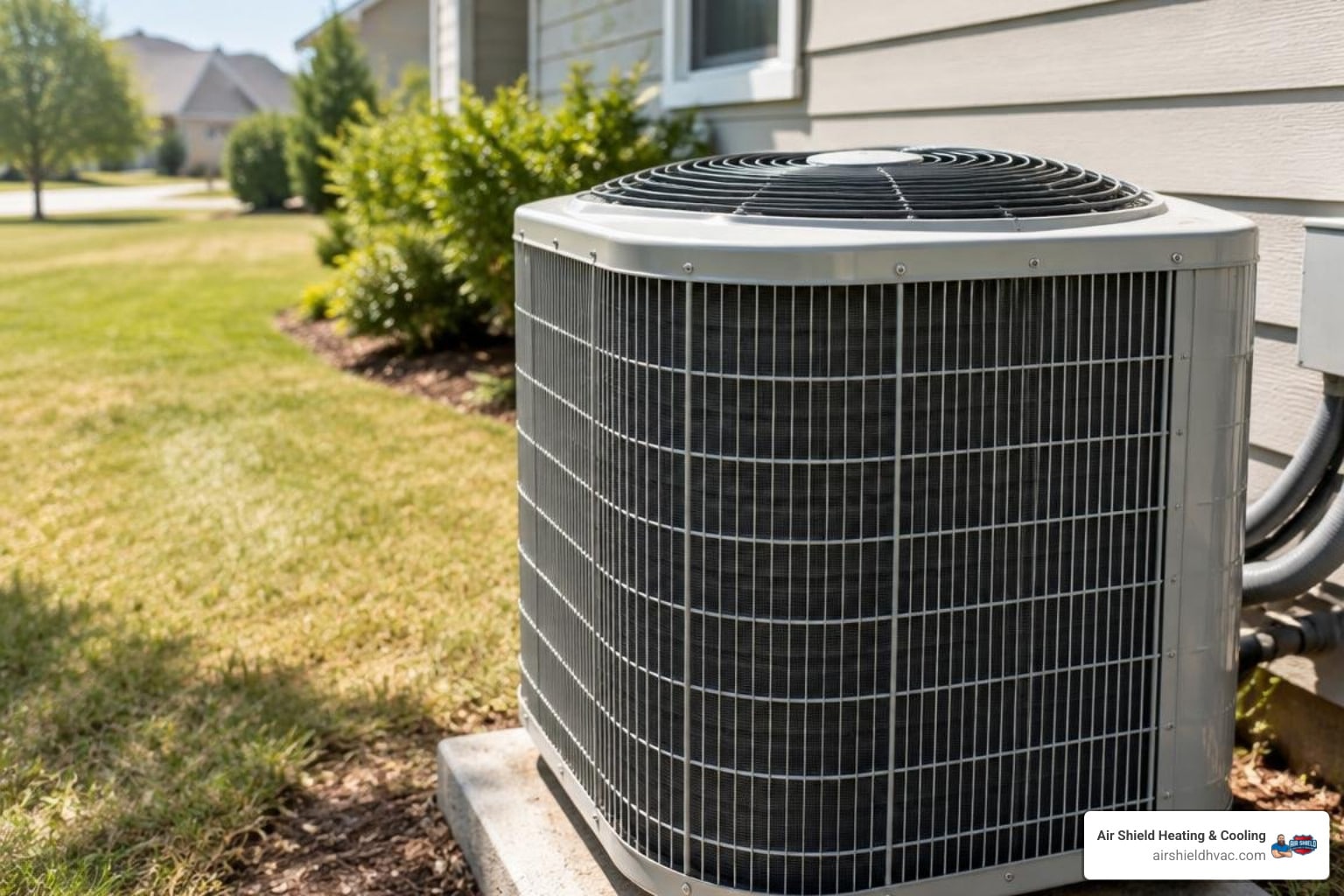
When your outdoor condenser fan suddenly stops spinning on a sweltering afternoon, your entire cooling system is under immediate mechanical distress. Many homeowners assume that as long as the indoor blower continues pushing air through the vents, keeping the unit turned on won’t hurt anything. In reality, the outdoor fan is responsible for exhausting all the heat extracted from inside your home. Without that fan actively pulling air across the condenser coils, trapped heat builds up within seconds, driving internal pressures to extreme levels and risking severe mechanical damage.
What to Do Immediately When Your AC Unit Fan Is Not Spinning
If you step outside and notice your outdoor fan blades are stationary while the unit hums, vibrates, or stays completely silent during an active cooling cycle, you must act right away.
- Switch the Thermostat Off: Head inside immediately and move your thermostat system switch to “OFF.” Do not just raise the temperature setting; turn the system completely off so it stops calling for cooling.
- Understand the Urgency: In our intense Florida climate, a complete loss of heat rejection during peak afternoon hours can quickly transform a routine repair into an emergency situation. Knowing when AC repair is an emergency in Florida can save you from catastrophic equipment loss and hazardous indoor temperatures.
- Pull the Outdoor Electrical Disconnect: Locate the metal disconnect box mounted on the exterior wall next to your condenser unit. Open the cover and pull the disconnect plug or flip the switch to the off position. This isolates the outdoor unit from line voltage.
- Switch Off the Dedicated Circuit Breaker: Go to your main electrical panel inside the home or garage and locate the double-pole breaker labeled for your outdoor AC or condenser. Flip it to the full “OFF” position to guarantee no electrical current reaches the stalled equipment.
Taking these steps within the first two minutes helps protect the critical electrical windings inside your outdoor motor and compressor. Once the system is safely off, the team can provide professional AC repair services to identify the cause and prevent further damage.
Why Running an AC with a Stalled Fan Destroys the Compressor
The compressor is the heart of your air conditioning system, pumping refrigerant through a continuous cycle of compression and expansion. When the condenser fan stalls, the refrigerant cannot shed its accumulated heat to the outside air. Consequently, the refrigerant returns to the compressor at dangerously high temperatures and pressures.
This scenario creates extreme head pressure. As heat builds, the compressor motor works against immense resistance, drawing massive amounts of electrical current known as locked rotor amps. While modern units have internal thermal overload switches designed to cut power before a complete meltdown occurs, repeatedly stressing these safety limits causes the lubricating oil inside the compressor to burn and break down.
When the oil loses its lubricating properties, internal bearings grind together, creating metal shavings that circulate throughout the entire closed refrigerant loop. Recognizing the early signs your AC compressor is failing helps prevent an isolated fan issue from cascading into an expensive whole-system replacement.
Why Is Your AC Unit Fan Not Spinning? Most Common Causes
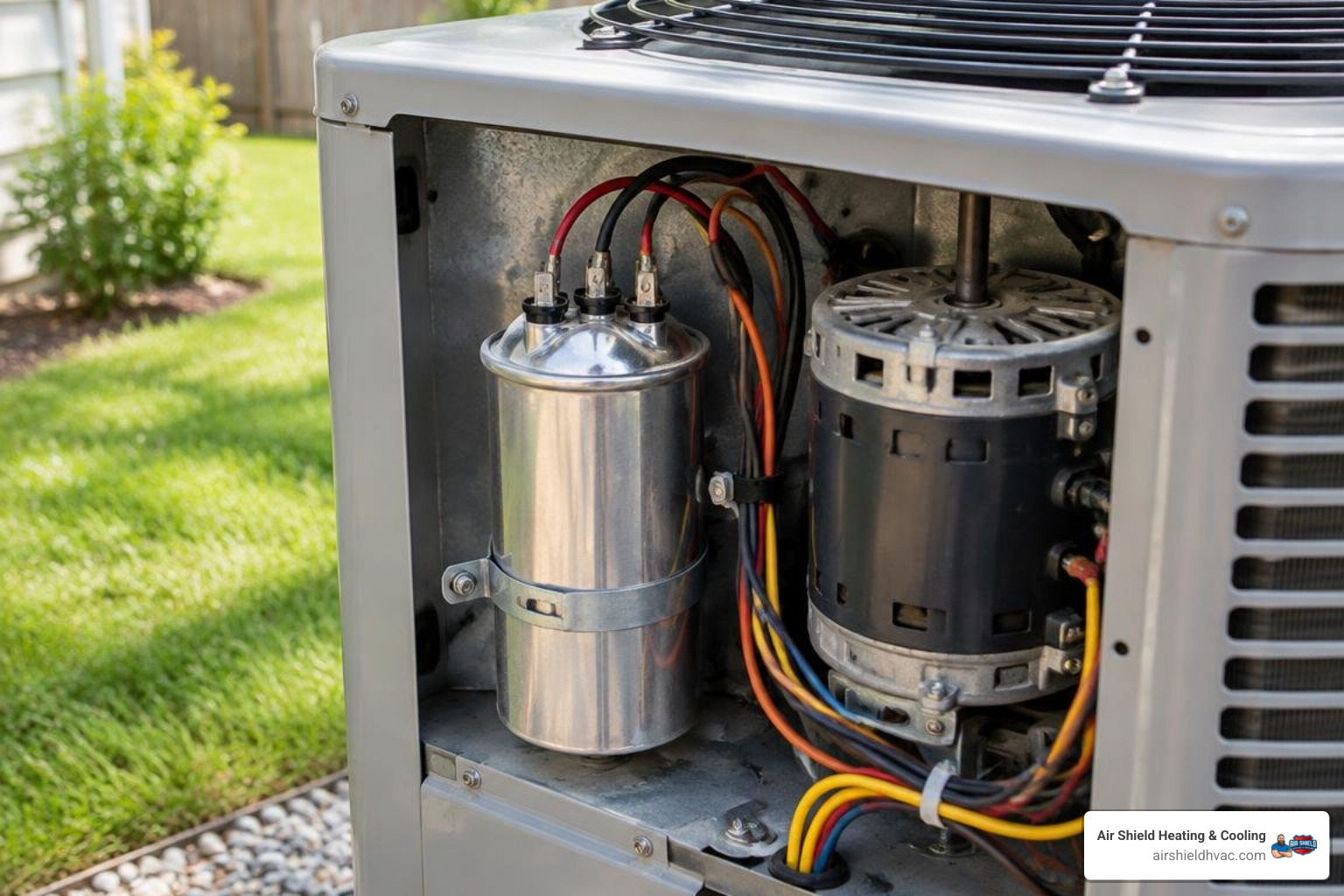
An outdoor fan can stall for several distinct mechanical and electrical reasons. While some issues stem from natural wear and tear, others are accelerated by severe environmental conditions like prolonged heatwaves, coastal salt air, and heavy regional humidity. Understanding how each component fits into the overall refrigeration circuit helps you recognize why a professional diagnosis matters.
Failed Dual Run Capacitor
The dual run capacitor is a cylindrical metal component located inside the electrical access panel of your outdoor unit. Think of it as a specialized storage bank for electrical energy that provides continuous starting torque and running current to both the condenser fan motor and the compressor.
Capacitance is measured in microfarads. Over time, internal chemical degradation caused by ambient summer heat and electrical surges causes this microfarad rating to decline. An HVAC industry standard dictates that if a capacitor’s microfarad reading drops by more than 10 percent below its rated specification, it can no longer reliably start or run the motor. For instance, if a capacitor rated for 35 microfarads drops down to 22 microfarads, the compressor might manage to kick on while the fan motor simply hums in place, completely unable to break its stationary inertia.
Physical symptoms of a dead or dying capacitor include:
- A distinct bulging or domed top on the cylindrical canister
- Oily dielectric fluid leaking around the electrical terminals
- Burnt or corroded spade terminal connectors
- A persistent electrical buzzing sound when the system attempts to start
Understanding the variables behind AC capacitor replacement cost in Florida makes it clear that swapping out a weak capacitor during routine service is one of the most affordable ways to protect your overall cooling equipment.
Burned-Out Condenser Fan Motor and Locked Rotor Amps
If the capacitor tests within normal manufacturer tolerances, the issue often lies directly within the condenser fan motor. Fan motors operate under high thermal stress, spinning thousands of hours each season. Over time, the internal insulation surrounding the copper motor windings can break down, leading to an electrical short circuit or an open winding.
When a fan motor’s internal windings short out or its bearings physically seize, the motor enters a state known as locked rotor amps (LRA). In this condition, the stalled motor draws five to six times its standard operating current in a continuous, failed attempt to begin spinning. This intense current generates rapid heat buildup within the motor housing, reaching temperatures well over 150 degrees Fahrenheit. If a motor continually pulls 20 percent over its rated nameplate amperage, it is suffering from irreversible thermal winding breakdown and must be replaced.
Faulty Contactor, Tripped Breakers, and Power Sags
The electrical contactor is a heavy-duty relay switch that acts as the gateway for 240-volt power. When your indoor thermostat calls for cooling, it sends a low-voltage 24-volt signal to the contactor coil, magnetically pulling down a set of metal contact points to send high-voltage electricity directly to the fan motor and compressor.
Because contactors open and close under high electrical loads, electrical arcing naturally occurs over time. This arcing pits, blackens, and corrodes the contact surfaces. In severe cases, the contacts can become so heavily oxidized that electricity cannot cross the gap to power the fan motor. Alternatively, ants and other small insects can get drawn into the magnetic coil, physically blocking the contacts from closing.
When a contactor fails or suffers from voltage drops during regional grid strain, it produces rapid electrical clicking or contactor chatter. Homeowners experiencing these symptoms can learn how to diagnose loud AC sounds to pinpoint the root electrical issue.
Physical Debris and Mechanical Bearing Seizure
Outdoor condensers pull enormous volumes of air through their aluminum fins every hour. In areas with dense landscaping, fallen oak leaves, palm fronds, Spanish moss, twigs, and weed growth can easily penetrate the protective top wire grille. A sturdy stick or accumulated yard debris can physically wedge between the fan blades and the fan shroud, stopping the assembly from rotating.
Furthermore, mechanical wear inside the motor bearings can cause sudden physical stalls. Modern residential condenser fan motors built since 2000 feature permanently sealed ball or sleeve bearings that do not require manual lubrication. Over years of exposure to rain, grit, and heat, the internal factory grease dries out. When the bearings run dry, metal-on-metal friction increases until the motor shaft completely seizes. If you want to understand how airflow blockages affect your system, learning why your AC stopped blowing cold air explains how external mechanical drag disrupts indoor cooling performance.
Safe Homeowner Troubleshooting vs. Dangerous DIY Mistakes
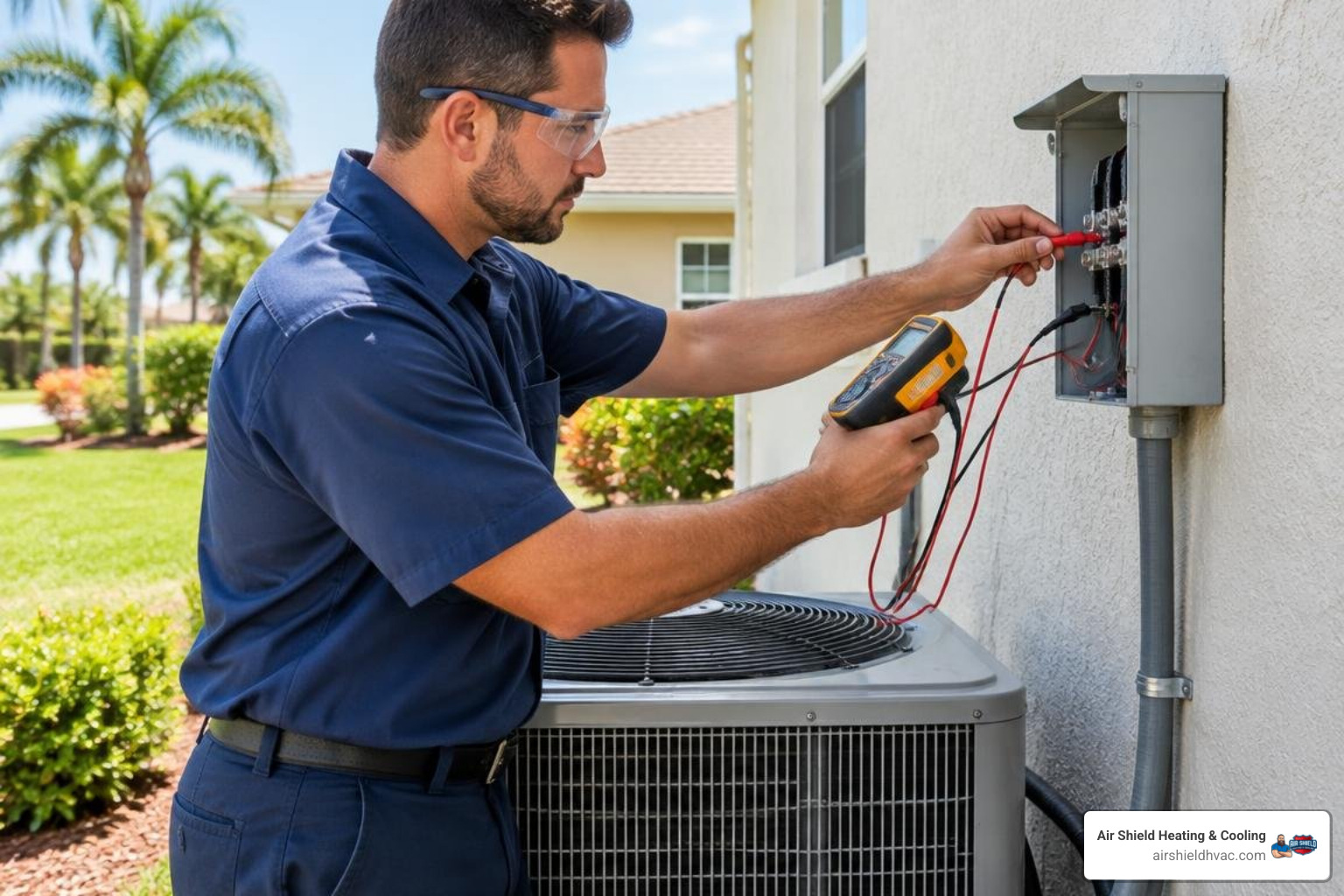
When an AC fan stops working, it is natural to want to investigate the problem yourself. However, working around an outdoor condenser presents serious safety risks. The outdoor unit operates on high-voltage 240-volt electrical power, and run capacitors hold a lethal electrical charge long after the breaker is switched off. If safety concerns arise, specialized tools are required, electrical components are involved, or you feel unsure about any step, contact the team for emergency AC repair services immediately.
Safe Checks You Can Perform in Five Minutes
Before calling for service, there are a few simple, safe, non-invasive troubleshooting steps you can perform without opening electrical panels or touching live components:
- Check the Thermostat Display: Ensure your thermostat is firmly set to “COOL” mode rather than “HEAT” or “OFF,” and confirm that the setpoint temperature is configured at least 3 to 5 degrees below the current room temperature.
- Inspect the Circuit Breaker Panel: Check if the outdoor AC breaker has tripped. A tripped breaker will sit in a middle position between “ON” and “OFF.” Firmly flip it all the way to “OFF” before resetting it to “ON” once. If it trips again immediately, leave it off and call a professional.
- Check the Air Filter: A completely blocked indoor air filter severely restricts airflow, leading to frozen evaporator coils that can trigger high-pressure or low-pressure safety limit switches, shutting down the outdoor fan.
- Inspect the Float Switch: Check your indoor air handler’s condensate drain pan. If the drain line is clogged with algae, the safety float switch will trip, cutting power to the outdoor contactor to prevent home water damage.
- Visual Inspection of the Fan Grille: Look down through the top fan grille with a flashlight (while the unit power is switched off) to confirm no foreign tree branches, children’s toys, or loose metal wire are physically pinning the blades.
If you are experiencing broader system issues, following a structured guide on what to do when your AC stopped working will help you systematically rule out basic thermostat and drainage issues before scheduling a service visit.
Diagnostic Checks When the AC Unit Fan Is Not Spinning but the Motor Hums
If you hear a distinct low-pitched hum coming from the outdoor cabinet while the fan blades sit still, this is a classic sign of an electrical start failure. To help you safely evaluate the situation, compare your observations against the following diagnostic indicators:
| Observed Symptom | Potential Root Cause | Safe Action to Take |
|---|---|---|
| Outdoor unit hums loudly, fan is still, air from vents is warm | Weak or blown dual run capacitor | Turn off thermostat; schedule professional capacitor testing |
| Total silence outside; indoor blower runs normally | Tripped disconnect, float switch open, or bad contactor | Check indoor drain line and main breaker; call a technician |
| Fan blade moves stiffly or makes a grinding noise when pushed (power off) | Dry, worn, or seized sealed motor bearings | Do not run unit; schedule condenser fan motor replacement |
| Breaker trips instantly the second outdoor unit tries to engage | Direct electrical short in motor windings or compressor | Leave breaker off; requires urgent professional diagnostic |
| Fan runs intermittently and feels scorching hot to the touch | Failing motor thermal overload switch or voltage sag | Turn off system immediately to prevent motor burnout |
Keeping up with standard maintenance using a DIY AC maintenance checklist can help you spot early signs of wear, such as dirty coils and loose wiring connections, before total fan failure occurs.
Why Pushing Fan Blades and DIY Electrical Testing Is Dangerous
One common piece of internet advice is the so-called “stick trick,” where a homeowner uses a long stick or screwdriver to manually push the fan blades to get them spinning. While this might temporarily overcome the motor’s starting inertia if the run capacitor has failed, it is an extremely dangerous and counterproductive practice.
First, the moment the motor catches electrical current, the metal blades accelerate instantly to over 1,000 RPM. If your tool slips or gets caught in the spinning assembly, it can shatter the blade hub, send sharp metal fragments flying, or cause severe hand and wrist injuries. Second, running a motor with a failed capacitor forces its auxiliary windings to pull continuous high amperage, quickly burning out the motor windings entirely.
DIY electrical testing carries even greater hazards. Capacitors store hundreds of volts of electricity even after the main circuit breaker is flipped off. Discharging a capacitor incorrectly with a standard screwdriver can cause an intense electrical arc flash, resulting in severe burns, eye damage, or lethal shock.
Additionally, never attempt to spray household lubricants or penetrating oils into the motor casing. Modern fan motors utilize sealed bearing systems that cannot absorb external oils. Spraying flammable solvents into an electrical motor housing simply attracts dust and sand, degrades internal wire insulation, and creates a genuine electrical fire hazard.
Repair vs. Replace: Costs, Timelines, and the $5,000 Rule
When an HVAC technician diagnoses a non-spinning condenser fan, you will typically face a choice between replacing specific electrical components, replacing the fan motor assembly, or considering a broader system upgrade if your equipment is approaching the end of its operational life.
Component Replacement Costs and Service Timelines
Most outdoor fan repairs can be completed quickly during a single service visit, as experienced technicians carry universal motors, multi-tap capacitors, and standard contactors directly on their service trucks.
A standard capacitor or contactor replacement typically takes less than an hour to safely discharge, test, install, and verify under active cooling load. A complete condenser fan motor replacement, which involves removing the top fan grille, pulling the fan blade hub with a specialized puller tool, mounting the new motor, and setting proper blade pitch and clearance, typically requires one to two hours of professional labor.
Applying the $5,000 Rule for Aging Air Conditioners
If your air conditioner is more than a decade old and suffers from a major component failure such as a seized motor alongside a compromised compressor, you must weigh short-term repair expenses against long-term replacement value. The HVAC industry frequently uses the $5,000 rule to help homeowners make an objective financial decision:
To apply the rule, multiply the estimated repair cost by the age of your air conditioning system in years. If the resulting number exceeds 5,000, investing that money into a modern, energy-efficient replacement system is generally the more sensible choice.
For example, if your air conditioner is 12 years old and requires a substantial repair that totals $500, multiplying 12 by 500 gives a score of 6,000. Because 6,000 is greater than 5,000, replacing the aging unit is recommended over sinking more repair funds into equipment that is nearing the end of its useful design life. A professional evaluation can help you avoid spending money on recurring breakdown cycles.
Frequently Asked Questions About AC Condenser Fan Issues
Why is my outside AC unit buzzing but the fan is not spinning?
A buzzing sound from your outdoor condenser when the fan is stationary usually indicates that the unit is receiving electrical power, but the dual run capacitor has failed. Without the starting phase shift provided by the capacitor, the motor cannot generate the torque needed to rotate the blades, resulting in a continuous electrical hum.
Can running an AC with a stationary fan cause an electrical fire?
While rare due to built-in thermal overload switches, running a stalled fan motor forces it to draw locked rotor amps continuously. This extreme electrical draw generates severe heat in the motor windings and wiring harness, which can melt wire insulation and create an electrical fire hazard if the circuit breaker fails to trip.
Why does my indoor blower run when the outdoor condenser fan is off?
Your indoor air handler and outdoor condenser operate on completely separate electrical circuits and individual 240-volt breakers. If an outdoor component like a capacitor, contactor, or motor fails, or if an outdoor safety switch opens, the indoor blower will continue circulating room-temperature air through your ductwork.
How can I tell if my AC capacitor is blown without a multimeter?
While a certified technician uses a multimeter to measure microfarad values accurately, visible signs of a blown capacitor include a visibly bulging or domed top lid, oily brown dielectric fluid leaking from the terminals, or melted plastic wire connectors at the electrical panel.
Is it safe to spray household lubricant on a seized AC fan motor?
No, you should never spray household lubricants into an outdoor AC fan motor. Modern condenser fan motors use permanently sealed bearings that cannot accept external oil. Spraying aerosol lubricants into the motor housing breaks down internal wire varnish, attracts dirt, and presents a fire hazard.
What causes outdoor fan motor capacitors to fail in peak summer heat?
Capacitors contain delicate chemical electrolytes and insulating dielectric films that degrade rapidly when exposed to high operating temperatures. During intense heatwaves, elevated outdoor temperatures combined with prolonged continuous run cycles cause internal pressure to build, leading to premature capacitor failure.
How long does a technician take to replace an outdoor condenser fan motor?
A professional HVAC technician can typically replace an outdoor condenser fan motor in one to two hours. The process includes disconnecting high voltage, removing the top grille, using a hub puller to detach the fan blade, mounting the new OEM or universal motor, wiring the harness, and verifying operating amperage.
Why didn’t my circuit breaker trip when the AC fan stalled?
Circuit breakers are designed to trip during sudden, massive electrical shorts or prolonged high-amperage overloads. A stalled fan motor drawing locked rotor amps may pull an electrical current just beneath the breaker’s trip rating, allowing the motor to remain energized and overheat without triggering the breaker.
How much does it cost to fix an outdoor AC fan that won’t turn?
The overall cost to fix a non-spinning AC fan depends entirely on the root cause. Minor electrical repairs like replacing a run capacitor or contactor are very affordable, whereas replacing a completely burned-out condenser fan motor or repairing compressor damage requires a larger investment in parts and labor.
When is a non-spinning AC fan considered an emergency repair in Bradenton, FL?
A non-spinning outdoor fan is considered an emergency repair in Bradenton, FL, during the hot summer months when indoor temperatures can rapidly climb to dangerous levels, posing health risks to elderly residents, children, or pets, and risking irreversible heat damage to the central compressor.
Conclusion
A non-spinning outdoor condenser fan is a clear warning sign that your cooling system requires prompt attention. Leaving the unit running while the fan is stalled places massive thermal stress on your compressor and can quickly turn a straightforward electrical fix into an expensive system failure. Performing basic external checks like inspecting your air filter and thermostat settings is safe, but handling high-voltage wiring, testing capacitors, or replacing seized motors should always be left to certified professionals.
For homeowners in Bradenton, FL, and surrounding communities across Manatee County, FL, the team at Air Shield Heating & Cooling provides prompt, dependable service to restore your home comfort. If your outdoor fan has stopped spinning or your system is blowing warm air, contact our professional AC repair technicians to protect your cooling investment today.